Google often says "quality content" when they reject AdSense sites. But what does that really mean? It can feel confusing! This guide will show you exactly what makes content "quality" in Google's eyes.
We looked at thousands of sites that got approved or rejected. We found clear patterns. Once you know these patterns, you can make your site much better!
What You Will Learn:
- What Google means by quality content
- What your content needs to have
- Examples of good vs bad content
- How to check your own content
- Common mistakes to fix
What Google Says About Quality
Google has rules about what makes content good. Let's look at them!
From AdSense Policy
The official Google AdSense policies say:
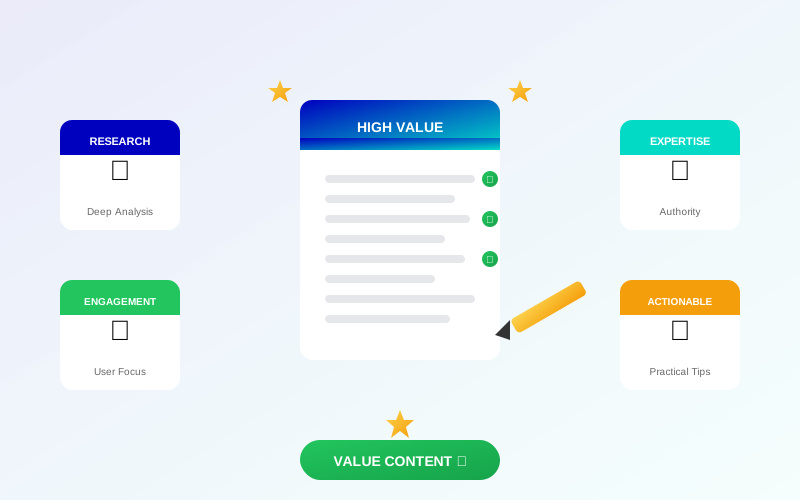
- Your content must be original and helpful
- Each page needs unique, useful info
- Content should be the star, not the ads
- Visitors should enjoy using your site
From Search Quality Guidelines
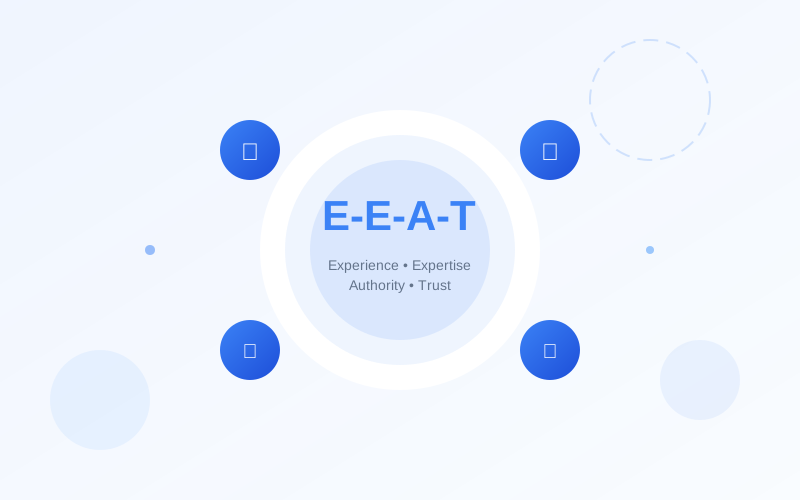
Google checks content using E-E-A-T rules. Read our full E-E-A-T guide for blog monetisation to learn more:
- E-E-A-T: Experience, Expertise, Authority, Trust
- Purpose: Does your page do what it promises?
- Effort: Did you work hard on this content?
- Helpfulness: Will readers find this useful?
"We want to reward sites that provide substantial value, original reporting, research, or analysis."
— Google Search Central
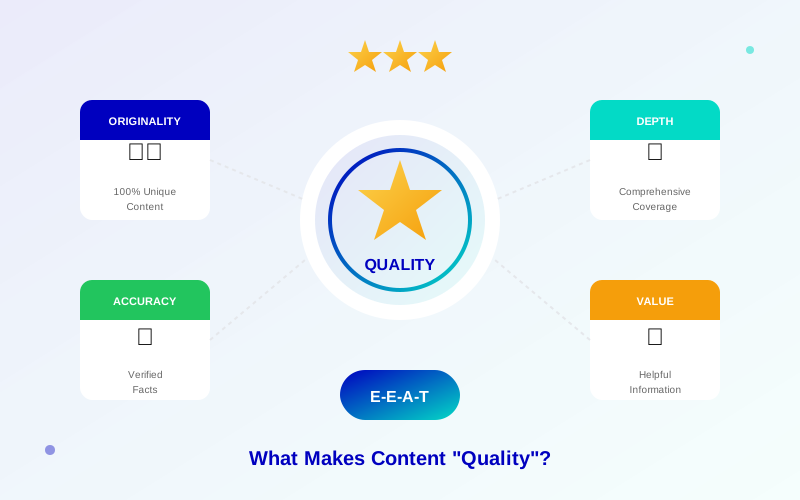
What Makes Content Quality?
1. Originality
Quality content is NOT:
See also: AdSense Approval Checklist 2026: 15 Steps to Get Approved Fast →
- Copied from other websites
- Rewritten without adding anything new
- Made by AI without much editing
- Just a bunch of quotes with no thoughts
Quality content IS:
- Written in your own style
- Based on what you know and learned
- Sharing new ideas or info
2. Depth and Completeness
Good content covers topics fully. The number of articles matters for AdSense, but depth matters just as much:
- Answers the main question completely
- Answers other questions readers might have
- Gives background info when needed
- Uses examples and proof
3. Accuracy
Quality content has correct facts:
- Numbers and claims can be checked
- Info is fresh and up-to-date
- Sources are listed when needed
- Wrong ideas are cleared up
4. Clarity and Readability
Quality content is easy to read:
See also: Google AdSense Best Practices 2026: What Works Now (and What Doesn't) →
- Organized well with clear sections
- Written for your readers' level
- Uses headings, lists, and short paragraphs
- Has no spelling or grammar mistakes
5. Reader Focus
Quality content helps readers:
- Solves a problem or answers a question
- Gives steps readers can actually follow
- Respects the reader's time
- Helps people instead of stuffing in keywords
Good Quality vs Bad Quality Examples
Example Topic: "How to Bake a Chocolate Cake"
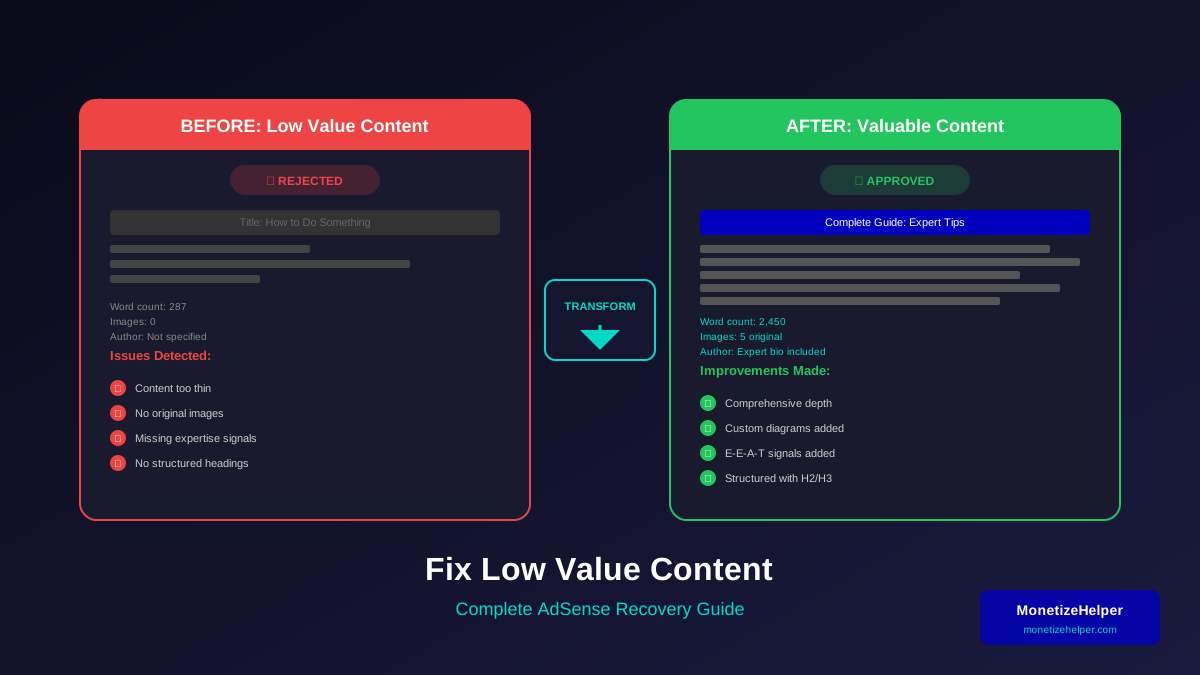
Bad Quality Version
- Only 200 words
- Vague list of stuff ("some flour, sugar")
- No amounts or baking times
- Basic steps copied from somewhere else
- No pictures
- No helpful tips
Good Quality Version
- 1,200+ words
- Exact amounts for each item
- Clear steps with times
- A recipe you actually tested yourself
- Photos showing each step
- Tips, other ways to make it, and how to fix problems
- Nutrition facts
Example Topic: "Best Laptops for Students"
Bad Quality Version
- Laptop list with specs copied from Amazon
- Boring words like "great laptop"
- No real testing or thinking
- Clearly just trying to sell stuff
Good Quality Version
- Explains what students really need
- Picks different laptops for different uses
- Honest good and bad points for each
- Compares prices and value
- Based on real testing or deep research
- Updated with today's models and prices
How to Check Your Content
Look at each article and ask these questions:
The Quality Checklist
- ☐ Is this content original (not copied)?
- ☐ Does it cover the topic fully?
- ☐ Is the info correct and current?
- ☐ Would a reader find this truly helpful?
- ☐ Is it better than some other articles out there?
- ☐ Does it have examples or proof?
- ☐ Is it easy to read and well organized?
- ☐ Is it free of big mistakes?
- ☐ Would you share this with a friend?
The "So What?" Test
After each point you make, ask "So what?" If you can't explain why readers should care, add more details.
The Competitor Check
Search for your topic on Google. Does your content offer something new? If not, why would Google show yours?
Learn more in AdSense YouTube vs Website: Which Earns More Money in 2026? →
Common Quality Problems
Thin Content
Thin content is a top reason Google rejects AdSense sites. Pages with too little info include:
- Less than 300 words on big topics
- Titles that promise more than you give
- Filler words just to make it longer
Copied Content
The same info over and over:
- Same text on many pages
- Content stolen from other sites
- Just slightly changed versions of other content
Keyword Stuffing
Using keywords too much:
- Keywords crammed into every sentence
- Content written for Google, not people
- Weird sentences just to fit keywords in
Old Information
Content that isn't correct anymore:
Learn more in Free vs Self-Hosted Blogs for AdSense: Which One Gets Approved? →
- Old numbers and facts
- Products or services that don't exist now
- Tips that don't work anymore
Bad User Experience
Problems with how content looks:
- Big blocks of text with no breaks
- Too many ads in the way
- Hard to find what you need
How to Make Your Content Better
For New Content
- Do lots of research before you write
- Make an outline of your main points first
- Add real examples and data
- Write for real people, not search engines
- Edit and check for mistakes carefully
- Add pictures and images where they help
For Content You Already Have
- Check all pages using the quality list
- Find your weakest content
- Make it much better or delete it
- Update old info
- Add images, examples, and facts
- Combine short, similar articles into one
Minimum Standards for AdSense
Every site is different, but these tips help:
Word Count Guidelines
- Blog posts: At least 800+ words
- Main guides: 1,500+ words
- Product reviews: 1,000+ words
- How-to guides: 1,200+ words
How Much Content
- Have 15-25 good articles before you apply
- Finish all main pages (About, Contact, Privacy)
- Don't leave any empty sections
Fresh Content
- Post on a regular schedule
- Have new content from the past month
- Don't let your site look abandoned
Frequently Asked Questions
How long should my articles be?
Focus on covering topics fully, not just word count. Most good articles are 800-2,000 words. Very short posts often don't have enough info.
Can AI write quality content for AdSense?
AI can help, but pure AI content often misses what makes content special. Google wants to see your own voice. Always edit a lot and add what you know.
Learn more in AdSense vs Alternatives: Which Ad Network Pays You More? →
How many articles do I need to get approved?
Quality beats quantity! But 20-30 solid articles is a good goal. 10 great articles can work better than 50 okay ones.
Does every page need to be high quality?
Yes! Google looks at your whole site. Even a few bad pages can hurt your chances.
How do I know if my content is good enough?
Be honest with yourself. Would you be happy to find your page on Google? Would you send it to a friend? If not, make it better!