How many articles do you need for AdSense approval? Google won't give you a magic number. But we looked at hundreds of approved sites in 2025. And we found some clear patterns! The short answer: good articles matter more than lots of articles. But you still need enough to show your site has value.
This guide will help you figure out how many articles you need. We'll share real data. We'll explain why Google cares about how much content you have. And we'll tell you when your site is ready to apply.
What You Will Learn:
- The minimum number of articles you should have
- Why Google cares about how much content you create
- How long your articles should be
- Quality signals that matter more than article count
- When your site is truly ready to apply
What the Data Shows
We studied successful AdSense applications in 2025. Here's what we found:
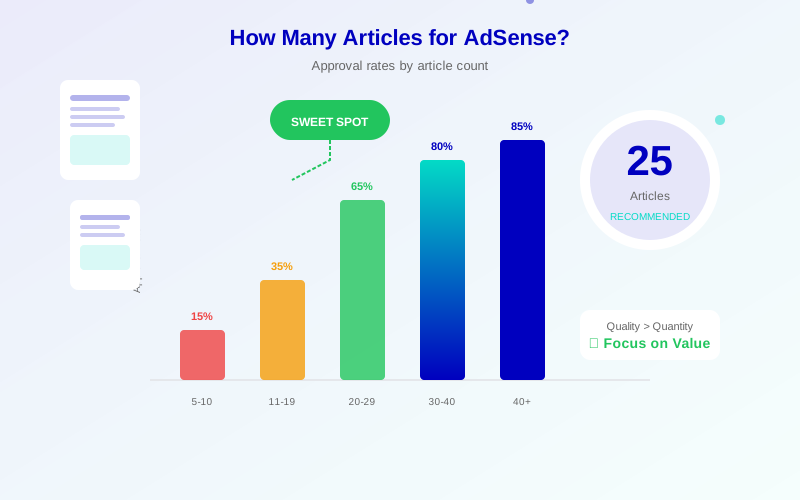
Approval Rates by Article Count
- 5-10 articles: About 15% get approved
- 11-19 articles: About 35% get approved
- 20-29 articles: About 65% get approved
- 30-40 articles: About 80% get approved
- 40+ articles: About 85% get approved
The best range is 25-35 articles. After 40, adding more articles doesn't really help your chances.
"We look for sites with enough content to review. There's no magic number. But having lots of original content helps us see your site's value to readers and advertisers."
— Google AdSense Program Policies
How Many Articles Do You Need?
Here's what we recommend based on real data:
Bare Minimum: 15 Articles
Some sites get approved with just 15 articles. But this is rare. At this level, every single article must be amazing.
Safe Minimum: 20 Articles
With 20 good articles, Google can properly check out your site. This is where your chances start to look good.
Our Top Pick: 25-30 Articles
This range gives you the best balance. You show commitment without doing too much work before you know if you'll get approved.
See also: AdSense Approval Checklist 2026: 15 Steps to Get Approved Fast →
Best Odds: 30-40 Articles
Want the best chance on your first try? Aim for this range. It gives Google lots of content to review. It also shows you're serious about your site.
Why Google Cares About How Much Content You Have
Google looks at your article count for a few key reasons:
More Data to Review
With more articles, Google can better judge your writing style and topic focus. More content helps them make a confident decision.
Shows You're Committed
Creating 25+ articles takes time and effort. Publishers who do this work are more likely to keep their sites going. That's what Google wants to see.
More Space for Ads
More pages mean more places to show ads. Google wants publishers who can get lots of ad views.
Better for Visitors
A site with lots of content gives visitors more value. This matches Google's goal of connecting people with great content.
See also: Google AdSense Best Practices 2026: What Works Now (and What Doesn't) →
Quality Beats Quantity: What Really Matters
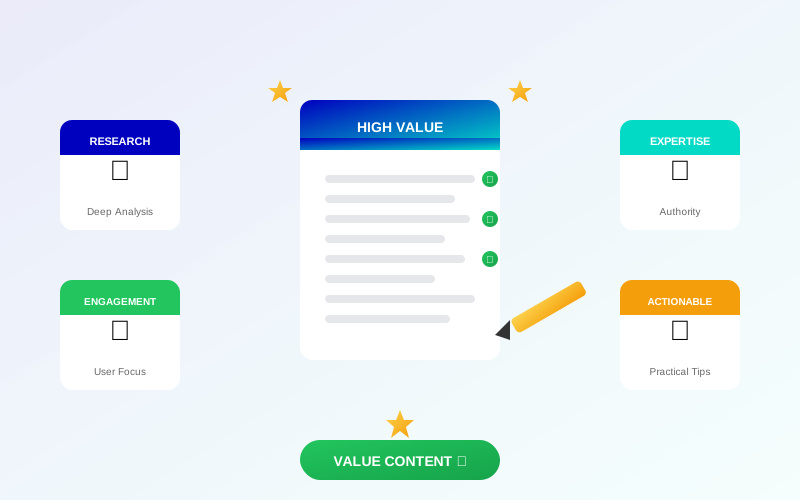
Having 50 weak articles is worse than having 20 great ones. Learn what Google calls quality content. Here's what makes an article good:
Cover Your Topic Well
Each article should fully explain its topic. Aim for 800-1,500 words for regular articles. Write 1,500-3,000 words for detailed guides.
Write Original Content
Every word must be your own. Google can spot copied or spun content. They can also tell when AI wrote something without real insight.
Help Your Readers
Does your article solve a problem? Does it answer a question? Will readers be happy they found it? These things matter.
Format Your Articles Well
Use headings, bullet points, images, and short paragraphs. This shows you care about making content easy to read.
E-E-A-T Signals
E-E-A-T stands for Experience, Expertise, Authority, and Trust. These things matter a lot! Our E-E-A-T guide for blog monetisation explains this in detail. Add author bios, cite your sources, and check your facts.
Learn more in AdSense YouTube vs Website: Which Earns More Money in 2026? →
"I've seen sites with 50 articles get rejected. I've also seen sites with 18 articles get approved. The difference was always quality. Focus on making each article truly useful."
— Experienced AdSense Publisher
How Long Should Your Articles Be?
Article length and article count work together. Here's how to think about total content:
Minimum Per Article
Each article should have at least 600 words. We prefer 800+ words. Anything shorter looks too thin.
Total Word Count Goal
Try to have 20,000-30,000 total words across your whole site. This gives Google plenty to review.
Mix Up Your Content
Include different types of articles:
- 3-5 big guide articles (1,500-3,000 words each)
- 15-20 regular articles (800-1,200 words each)
- 5-10 shorter focused pieces (600-800 words each)
Spreading Out Your Topics
How you organize articles across topics matters too:
Learn more in Free vs Self-Hosted Blogs for AdSense: Which One Gets Approved? →
Stick to Your Niche
Sites with a clear focus do better than random blogs. If you write about fitness, most articles should be about fitness topics.
Balance Your Categories
Cover different parts of your niche. A fitness blog might have articles on workouts, nutrition, gear, and motivation.
No Empty Categories
Every category should have at least 3-5 articles. Empty categories look like filler content.
Is Your Site Ready to Apply?
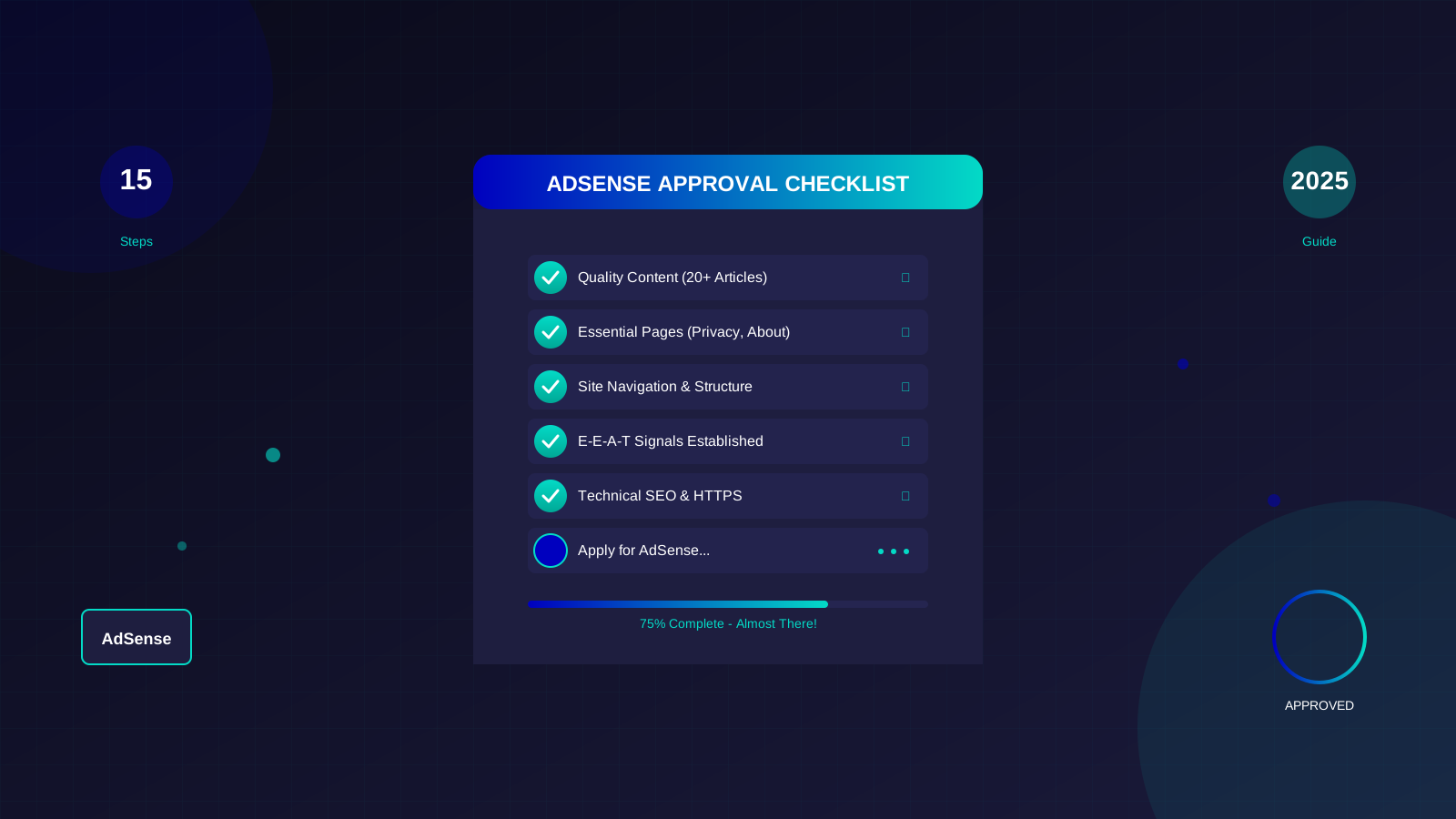
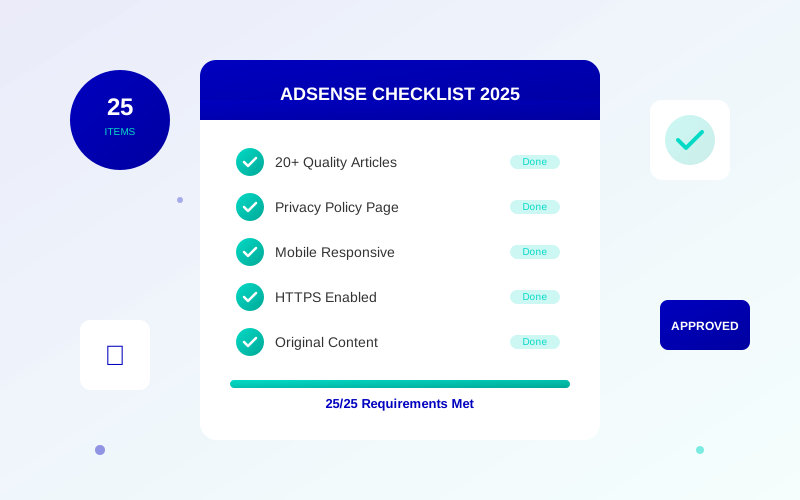
Use this checklist to see if you have enough content:
- ☐ At least 20 published articles (25-30 is better)
- ☐ Each article has 800+ words on average
- ☐ All articles are 100% original
- ☐ You've published articles over 8-12 weeks
- ☐ No empty categories or sections
- ☐ All legal pages are done
- ☐ Your site has been active for 2-3 months
Can you check all these boxes? Great! Your content is probably ready. Use Google Search Console to make sure your pages show up in Google. Then check the complete AdSense requirements checklist before you apply.
Mistakes to Avoid
These content mistakes often lead to rejection:
Learn more in AdSense vs Alternatives: Which Ad Network Pays You More? →
Publishing Too Fast
Don't publish 30 articles in one week. That looks suspicious. Spread your content over several weeks or months. This looks more natural.
Filler Content
Don't write articles just to hit a number. Every piece should help your readers in some way.
Thin Content
Lots of 300-word articles won't help. Google warns about "thin content" when they reject sites.
Same Topics Over and Over
Don't write five articles about the same thing. Each article should cover a different question or angle.
Choosing Quantity Over Quality
Never lower your quality just to hit an article number. 20 excellent articles beat 40 okay ones every time.
Frequently Asked Questions
Can I get approved with just 10 articles?
It's possible, but not likely. Fewer than 15 articles means less than 20% get approved. We suggest waiting until you have at least 20 good articles.
Should I remove old bad articles before applying?
Yes! If some articles aren't good enough, fix them or remove them. Quality beats quantity, even for old content.
Do About and Contact pages count as articles?
No. Those pages are important, but they're not articles. Only count your actual blog posts or helpful content.
How long should I wait between publishing articles?
Publish 2-4 articles per week. This looks natural. Don't publish lots of articles in one day. That looks fake.
I have 50 articles but still got rejected. Why?
Having lots of articles doesn't guarantee approval. Check your content for quality issues. Look for policy problems. Make sure your legal pages are done. Often, it's not about quantity. It's about specific quality problems.