Every time you get paid to write about a product, you must tell your readers. That's the law. Sponsored content disclosure isn't optional. It protects you from fines and keeps your audience's trust. This guide gives you everything you need to stay legal.
Key Takeaways:
- The FTC requires clear disclosure for all sponsored content
- Disclosures must appear before the main content, not buried at the bottom
- Social media posts need disclosures too — even short ones
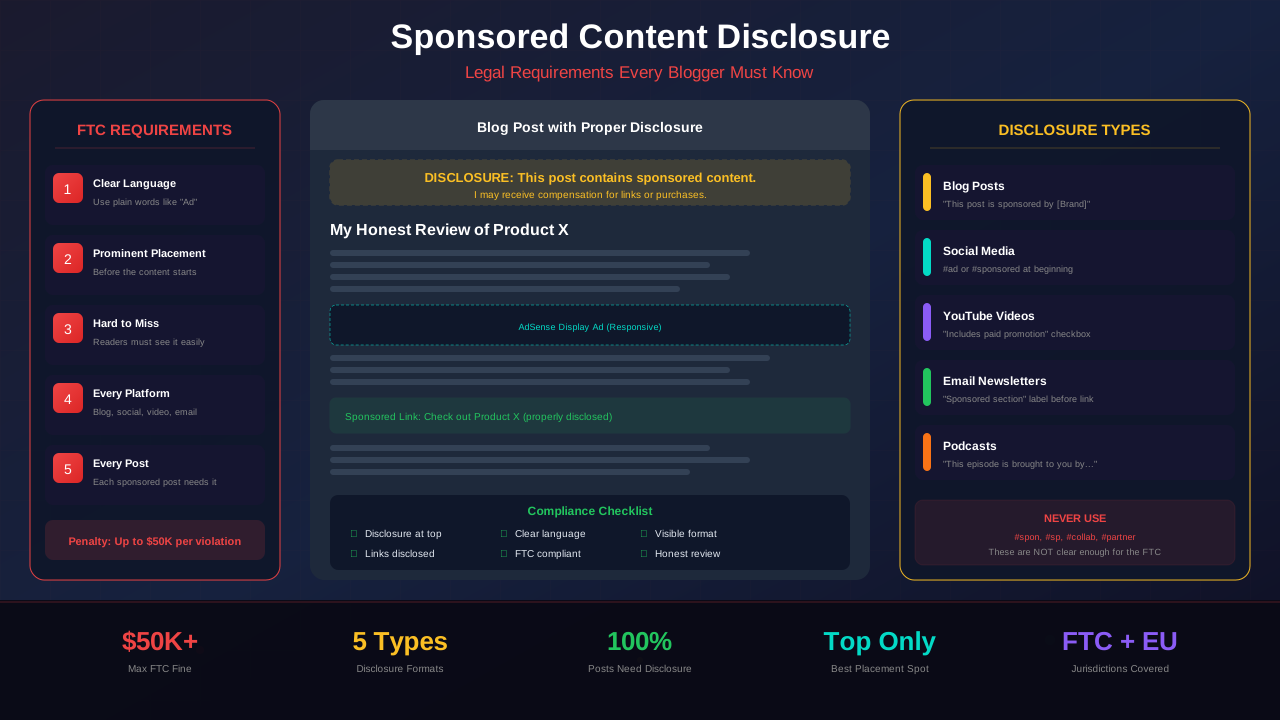
- Penalties can reach over $50,000 per violation
- EU and UK laws have their own disclosure rules on top of FTC guidelines
What Is Sponsored Content?
Sponsored content is any content you create in exchange for payment. That payment can be money, free products, or services. Even a gift card counts. If a brand gives you something of value to talk about them, it's sponsored.
This includes blog posts, videos, social media posts, and podcasts. It also covers affiliate links where you earn a commission. The format doesn't matter. What matters is the relationship between you and the brand.
Many bloggers think small deals don't count. They do. A free sample worth $20 still requires disclosure. The FTC doesn't set a minimum dollar amount. Any material connection must be disclosed. For a deeper look at affiliate-specific rules, see our guide on FTC requirements for affiliate disclosures.
"If there's a connection between an endorser and the marketer that consumers would not expect and it would affect how consumers evaluate the endorsement, that connection should be disclosed."
— Federal Trade Commission, Endorsement Guides
Why Disclosure Matters for Bloggers
Disclosure builds trust with your readers. When people know you were paid, they can weigh your opinion properly. Hiding a paid relationship feels dishonest, because it is.
Beyond trust, disclosure is a legal requirement. The FTC actively monitors online content. They've sent warning letters to hundreds of influencers. Some cases resulted in hefty fines. You don't want to be next.
There's also a practical benefit. Transparent bloggers often earn more long-term. Brands prefer working with creators who follow the rules. It shows professionalism and reduces legal risk for everyone.
FTC Disclosure Requirements and Rules
The FTC's Endorsement Guides are the main rules for US bloggers. They were updated in 2023 to cover modern content formats. Here are the core requirements you must follow.
Clear and Conspicuous
Your disclosure must be easy to notice and understand. Don't use tiny text or light colors. Don't hide it behind a "read more" link. The average reader should spot your disclosure without looking for it.
Use Plain Language
Say "sponsored" or "paid partnership." Don't use vague terms like "collab" or "ambassador." The FTC wants your audience to instantly understand the relationship. Simple words work best.
Proximity to the Content
Place your disclosure near the endorsement itself. A disclosure buried in your site's footer doesn't count. If you mention a product in paragraph two, readers need to know it's sponsored before they get there. For more on legal pages and placement, see our guide on essential legal pages for publishers.
For more on this topic, see our guide on Terms & Conditions Generator Guide: Protect Your Blog Legally in 2026 →
Every Post, Every Time
Each sponsored post needs its own disclosure. You can't rely on a single disclosure page for your entire site. A general "some posts are sponsored" page is not enough. Each piece of content needs a clear statement.
Where to Place Your Disclosures
Placement is everything. A disclosure that nobody sees is the same as no disclosure at all. The FTC has been very specific about where disclosures should go.
The best spot is at the very top of your content. Place it before your first paragraph. Use bold text or a colored box to make it stand out. This way, every reader sees it before consuming your content.
For blog posts, place a clear statement like "This post is sponsored by [Brand]" at the top. For videos, say it in the first 30 seconds and show it on screen. For social media, put it before the fold.
"A disclosure that is not clear and prominent is the same as no disclosure at all."
— FTC Commissioner, 2024 Enforcement Update
Disclosure Language Examples and Templates
You don't need fancy legal language. In fact, simple is better. Here are templates you can copy and use right now.
Blog Post Disclosure
Template: "This post is sponsored by [Brand Name]. I received compensation for this review. All opinions are my own."
This works for most blog posts. It tells readers three things: who's paying, that money changed hands, and that your views are genuine. Keep it honest — only say opinions are your own if they truly are.
Affiliate Link Disclosure
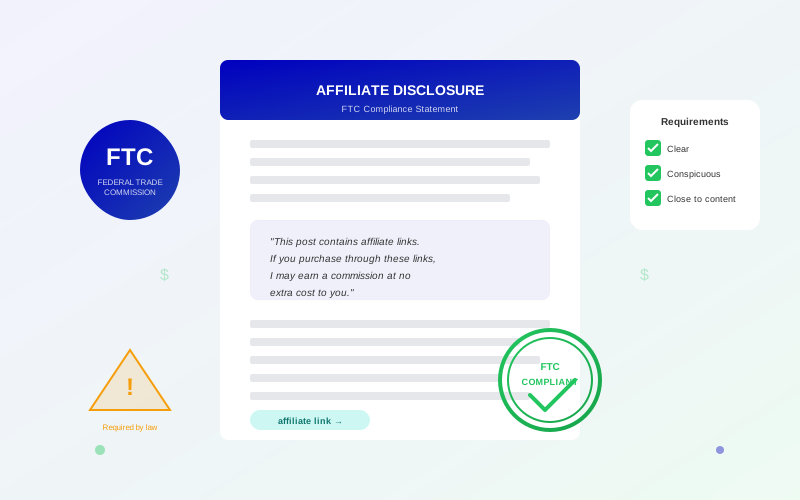
Template: "This post contains affiliate links. If you buy through these links, I may earn a commission at no extra cost to you."
For more on this topic, see our guide on COPPA Compliance for Bloggers: How to Protect Kids and Your AdSense Account →
Use this when your post includes affiliate links. Place it at the top of the post, not at the bottom. Readers need to know before they click. Check our detailed post on affiliate disclosure requirements for more templates.
Product Review Disclosure
Template: "I received this product for free from [Brand Name] in exchange for my honest review. This post is not sponsored, but I did receive the product at no cost."
Free products still require disclosure. Even if you weren't paid cash, the free item is compensation. Be specific about what you received and from whom.
| Content Type | Disclosure Placement | Example Language | Required? |
|---|---|---|---|
| Blog Post (Sponsored) | Top of post, before content | "This post is sponsored by [Brand]." | Yes — always |
| Affiliate Links | Top of post or before first link | "Contains affiliate links. I may earn a commission." | Yes — always |
| Free Product Review | Top of review | "I received this product for free from [Brand]." | Yes — always |
| Social Media Post | Beginning of caption | #ad or #sponsored (visible, not buried) | Yes — always |
| Video Content | First 30 seconds + on-screen text | "This video is sponsored by [Brand]." | Yes — always |
| Podcast | Start of episode + show notes | "Today's episode is brought to you by [Brand]." | Yes — always |
Social Media Disclosure Rules
Social media has its own set of disclosure challenges. Character limits, disappearing stories, and fast-scrolling feeds make it harder. But the rules still apply.
Instagram and TikTok
Use #ad or #sponsored at the beginning of your caption. Don't bury it under 20 other hashtags. The FTC has said hashtags like #sp or #spon are not clear enough. Stick with #ad — it's short and unmistakable.
For Instagram Stories, add a text overlay that says "Paid partnership" or "Ad." Don't rely on Instagram's built-in "Paid partnership" label alone. The FTC recommends adding your own disclosure too.
YouTube
Say it out loud in the first 30 seconds of your video. Also turn on YouTube's "includes paid promotion" checkbox. Show a text overlay at the start. Three layers of disclosure may feel like overkill, but it protects you fully.
Twitter/X and Facebook
Start your post with "Ad:" or "#ad." Don't put the disclosure at the end of a long thread. Every individual post in a thread that promotes the brand should include disclosure. Retweets and shares of sponsored content need disclosure too.
"Consumers should be able to notice the disclosure easily. They shouldn't have to look for it."
For more on this topic, see our guide on Image Attribution & Copyright: The Complete Blogger Guide →
— FTC Social Media Guidance, 2023
Common Disclosure Mistakes to Avoid
Even well-meaning bloggers mess up disclosures. Here are the most common mistakes and how to avoid them.
Using vague language. Words like "thanks to" or "in partnership with" are too unclear. Say "sponsored" or "paid" instead. Your readers shouldn't have to guess.
Hiding disclosures. Placing your disclosure at the bottom of a 2,000-word post defeats the purpose. Put it at the top. If readers miss it, it doesn't count.
Relying on a single page. A "Disclosure" page in your menu isn't enough. Each sponsored post needs its own disclosure statement. The FTC has been very clear about this.
Forgetting social media. Your blog post might have a perfect disclosure. But if you share that post on social media without disclosing, you've broken the rules. Every platform needs its own disclosure.
Using tiny or low-contrast text. A disclosure in 8px light gray text on a white background is effectively invisible. Make it readable. Use a normal font size and strong contrast. For help building compliant pages, see our disclaimer page templates.
Penalties for Not Disclosing Sponsored Content
The FTC has real enforcement power. Ignoring disclosure rules can cost you serious money and damage your reputation. Here's what you risk.
Warning letters. The FTC usually starts with a warning. They've sent hundreds of letters to influencers and bloggers. A warning gives you a chance to fix things. But it also puts you on their radar.
Fines up to $50,120 per violation. If you ignore warnings, the FTC can pursue civil penalties. Each non-disclosed post counts as a separate violation. Ten posts could mean over $500,000 in fines.
Related reading: Copyright Laws for Bloggers: How to Use Images Legally →
Consent orders. The FTC may require you to follow specific rules going forward. Breaking a consent order brings even harsher penalties. Some influencers have been banned from making claims about certain products.
Brand consequences. Brands are also liable. If the FTC investigates, they may pull contracts with non-compliant creators. You could lose partnerships and future income. Companies actively check for compliance now.
The FTC's enforcement actions are public record. A quick search at ftc.gov/enforcement shows recent cases. Some involved well-known names. Nobody is too small or too big to escape notice.
International Disclosure Laws (EU and UK)
If your audience includes readers outside the US, you need to know international rules too. The EU and UK have their own disclosure laws. They're just as strict as the FTC's.
European Union
The EU's Unfair Commercial Practices Directive requires clear identification of commercial content. Hidden advertising is prohibited across all EU member states. Influencers must label sponsored posts clearly.
Germany has been especially aggressive. Their courts have fined influencers for unmarked sponsored Instagram posts. France requires the word "publicité" (advertising) to be visible. Each country may add its own requirements on top of the EU rules. For more about EU compliance, see our guide on GDPR compliance for publishers.
United Kingdom
The UK's Advertising Standards Authority (ASA) and Competition and Markets Authority (CMA) enforce disclosure rules. The ASA requires that ads are "obviously identifiable" as such. Using #ad is recommended as a minimum.
The CMA has published specific guidance for influencers. They've also taken enforcement action against creators who didn't disclose. The ASA's online guidance is a good resource for UK-specific rules.
Key Differences
US rules focus on "material connections." EU rules focus on "commercial intent." UK rules require ads to be "obviously identifiable." The language differs, but the core idea is the same: tell your audience when content is paid for.
Learn more in Earnings Disclaimer Template for Blogs: Free Copy-Paste Guide →
Frequently Asked Questions
Do I need a disclosure for every affiliate link?
Yes. Every post that contains affiliate links needs a disclosure statement. Place it at the top of your post before the first affiliate link. A single disclosure per post is fine — you don't need one per link.
Can I use just a disclosure page instead of per-post disclosures?
No. The FTC requires disclosures on each piece of sponsored content. A site-wide disclosure page is helpful but not sufficient. Each post needs its own clear statement near the top.
What happens if I forget to disclose once?
One missed disclosure probably won't trigger a fine. But it's still a violation. The FTC typically looks for patterns. However, it only takes one complaint to get noticed. Fix it as soon as you realize the mistake.
Do gifted products count as sponsored content?
Yes. Any free product, service, or payment creates a material connection. Even if you weren't asked to post about it, you should disclose that you received it for free. The FTC makes no distinction between paid reviews and gifted reviews.
Are there disclosure rules for email newsletters?
Yes. If your newsletter contains sponsored content or affiliate links, disclose it. Place the disclosure near the top of the email. The same FTC rules that apply to blog posts apply to emails.
Conclusion
Sponsored content disclosure is simple once you know the rules. Put a clear statement at the top of every sponsored post. Use plain language like "sponsored" or "ad." Disclose on every platform, not just your blog.
The FTC is watching, and penalties are real. But disclosure isn't just about avoiding fines. It's about respecting your audience. Readers who trust you come back again and again. That trust is worth far more than any single sponsorship deal.
Start today. Review your existing content. Add disclosures where they're missing. Use the templates in this guide. Your future self — and your readers — will thank you.