If your website receives visitors from the European Union, you must comply with GDPR—the General Data Protection Regulation. For AdSense publishers, this means implementing proper consent mechanisms and privacy disclosures. Non-compliance can result in significant fines and AdSense account issues.
GDPR affects how you collect data, display ads, and communicate with users. This guide explains exactly what AdSense publishers need to do to comply with these requirements.
What You Will Learn:
- Core GDPR requirements for publishers
- How GDPR affects AdSense ad serving
- Implementing compliant consent management
- Cookie notice best practices
- Privacy policy requirements
GDPR Basics for Publishers
GDPR applies to any website that processes personal data of EU residents—regardless of where your business is located. According to the official GDPR website, personal data includes IP addresses, cookies, and behavioural data that AdSense collects.
Who Must Comply:
- Websites with EU visitors (even if based elsewhere)
- Websites targeting EU audiences
- Websites processing EU resident data
- All AdSense publishers receiving EU traffic
Key Terms to Understand:
| Term | Definition | Publisher Context |
|---|---|---|
| Personal Data | Any data identifying a person | IP addresses, cookies, user behaviour |
| Data Controller | Entity determining data use | You, the website owner |
| Data Processor | Entity processing on behalf of controller | Google (for AdSense) |
| Consent | Freely given, informed agreement | Cookie consent for ads |
| Legitimate Interest | Alternative legal basis | Limited use for publishers |
How GDPR Affects AdSense
AdSense uses cookies and tracks user behaviour to serve personalised ads. Under GDPR, this requires explicit consent from EU users.
What AdSense Collects:
- User IP addresses
- Cookies for ad personalisation
- Browsing behaviour data
- Ad interaction data
- Device information
Consent Requirements for Ads:
Google requires publishers to obtain consent before serving personalised ads to EU users. Without consent:
- Only non-personalised ads can be served
- RPM typically decreases significantly
- Some ad inventory may not fill
"Publishers using Google advertising products must comply with applicable data protection laws and obtain legally valid consent from end users in the EEA for the use of cookies where required."
For more on this topic, see our guide on Terms & Conditions Generator Guide: Protect Your Blog Legally in 2026 →
— Google EU User Consent Policy
Implementing Consent Management
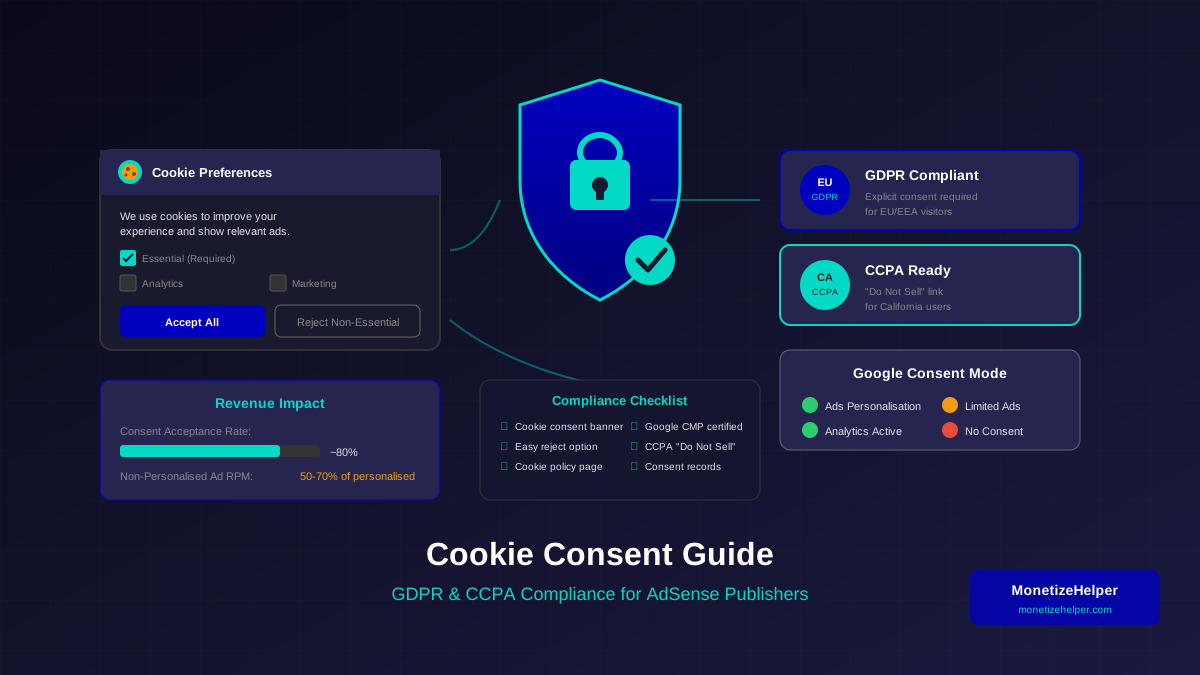
A Consent Management Platform (CMP) handles collecting and recording user consent. Google requires publishers to use a certified CMP or implement a compliant solution.
CMP Requirements:
- Clear explanation of data usage
- Separate consent for different purposes
- Equal prominence for accept/reject options
- No pre-checked consent boxes
- Ability to withdraw consent easily
- Record of consent given
Google-Certified CMPs:
Google maintains a list of certified CMPs that integrate properly with AdSense. Popular options include:
- Quantcast Choice: Free, widely used
- Cookiebot: Feature-rich, paid for larger sites
- OneTrust: Enterprise-grade solution
- Termly: User-friendly, reasonable pricing
- CookieYes: Good free tier available
CMP Implementation Steps:
- Choose a certified CMP
- Configure consent categories
- Add CMP code to your site (before AdSense code)
- Configure AdSense to respect consent signals
- Test the consent flow
- Monitor consent rates
Cookie Notice Best Practices
Your cookie consent banner is users' first interaction with your compliance system. Getting it right affects both compliance and consent rates.
For more on this topic, see our guide on COPPA Compliance for Bloggers: How to Protect Kids and Your AdSense Account →
Must-Have Elements:
- Clear, non-technical language
- Explanation of what cookies are used
- Accept and reject buttons with equal prominence
- Link to full cookie/privacy policy
- Option to manage specific preferences
- No dark patterns or manipulative design
Common Mistakes to Avoid:
- Hiding the reject button
- Making accept more prominent
- Pre-checking consent options
- Consent walls blocking content
- Not storing consent records
- Ignoring withdrawal requests
Privacy Policy Requirements
Your privacy policy must explain in clear language what data you collect, why, and how users can exercise their rights.
Required Information:
- Identity: Who you are and how to contact you
- Data Collected: What personal data you collect
- Purpose: Why you collect each type of data
- Legal Basis: The lawful basis for processing
- Third Parties: Who receives the data (Google, etc.)
- Retention: How long data is kept
- User Rights: How to access, correct, or delete data
- Transfers: If data is sent outside the EU
AdSense-Specific Disclosures:
For AdSense, your privacy policy must mention:
- Google uses cookies for ad personalisation
- How users can opt out of personalised ads
- Link to Google's privacy policy
- Third-party vendors may use cookies
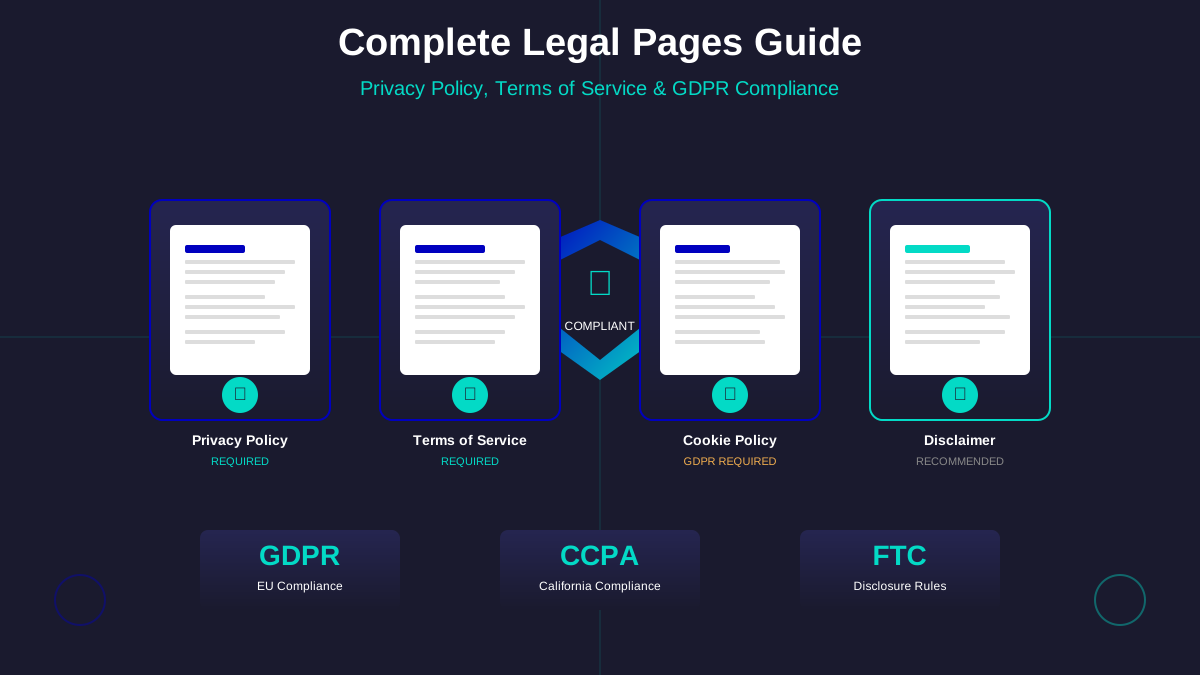
For detailed guidance on privacy policy requirements, see our comprehensive guide on Legal Pages for AdSense Approval.
For more on this topic, see our guide on Image Attribution & Copyright: The Complete Blogger Guide →
Supporting User Rights
GDPR gives users specific rights regarding their data. Publishers must have processes to handle these requests.
User Rights Under GDPR:
| Right | Description | Response Time |
|---|---|---|
| Access | See what data you hold about them | 30 days |
| Rectification | Correct inaccurate data | 30 days |
| Erasure | Delete their data ("right to be forgotten") | 30 days |
| Restriction | Limit how data is used | 30 days |
| Portability | Receive data in portable format | 30 days |
| Object | Object to certain processing | Immediately |
Handling Data Requests:
- Verify the requester's identity
- Understand what data you actually hold
- Respond within 30 days
- Document the request and response
- No fee for most requests
Technical Implementation
Proper technical setup ensures your consent system works correctly with AdSense.
Code Implementation Order:
- CMP code (loads first)
- Consent check before loading AdSense
- AdSense code (loads after consent)
AdSense Configuration:
Configure AdSense to handle consent signals:
Related reading: Copyright Laws for Bloggers: How to Use Images Legally →
- Enable non-personalised ads as fallback
- Use TCF 2.0 integration if your CMP supports it
- Test with EU VPN to verify behaviour
Penalties for Non-Compliance
GDPR violations can result in significant penalties. Understanding the risks emphasises the importance of compliance.
Potential Penalties:
- Lower Tier: Up to €10 million or 2% of global turnover
- Upper Tier: Up to €20 million or 4% of global turnover
- AdSense Impact: Google may limit ad serving or suspend accounts
Common Violations:
- No valid consent mechanism
- Dark patterns in consent collection
- Inadequate privacy policy
- Failure to respond to data requests
- Processing without legal basis
GDPR Compliance Checklist
Use this checklist to verify your compliance status:
Consent Management:
- ☐ CMP installed and configured
- ☐ Cookie banner displays before tracking
- ☐ Accept and reject options equally visible
- ☐ No pre-checked consent boxes
- ☐ Easy withdrawal mechanism
- ☐ Consent records stored
Privacy Documentation:
- ☐ Privacy policy published and accessible
- ☐ Cookie policy included
- ☐ All data collection explained
- ☐ User rights documented
- ☐ Third parties disclosed (including Google)
- ☐ Contact information provided
Technical Setup:
- ☐ AdSense loads after consent
- ☐ Non-personalised ads fallback configured
- ☐ TCF signals properly transmitted
- ☐ Consent tested with EU location
Frequently Asked Questions
Do I need GDPR compliance if I am not in the EU?
Yes, if you receive traffic from EU residents. GDPR applies based on user location, not business location. Any website with EU visitors should implement compliance measures.
See also: Sponsored Content Disclosure: Legal Requirements Every Blogger Must Know →
Can I just block EU traffic instead?
Technically yes, but you would lose significant traffic and potential revenue. Implementing compliance is usually more practical than geographic blocking.
What happens if users reject cookies?
You can serve non-personalised ads, which typically earn less but still generate revenue. Some publishers see 30-50% of users reject personalised advertising.
Do I need a paid CMP?
Not necessarily. Free CMPs like Quantcast Choice meet Google's requirements. Paid options offer more features but free solutions provide adequate compliance for most publishers.
Conclusion
GDPR compliance is not optional for AdSense publishers receiving EU traffic. While implementation requires effort, it protects both your users and your business from significant legal and financial risks.
Start with a certified CMP, update your privacy policy, and test your implementation thoroughly. The initial setup takes time, but ongoing compliance is straightforward once systems are in place.
For more on legal requirements, see our complete guide to Legal Pages for AdSense Approval and Privacy Policy Requirements.