An earnings disclaimer protects you from legal trouble. If your blog discusses money, income, or financial results, you need one. Without it, you risk FTC enforcement actions and lawsuits.
What You'll Learn:
- What an earnings disclaimer is and why it's required
- Free copy-paste earnings disclaimer template
- FTC guidelines for income claims on blogs
- Where to place your earnings disclaimer
- Common mistakes to avoid
What Is an Earnings Disclaimer?
An earnings disclaimer is a legal statement that clarifies your income results aren't typical. It tells readers that any earnings figures you share are your own experience, not a guarantee of what they'll achieve.
The Federal Trade Commission (FTC) requires this transparency. When you share income reports, case studies, or testimonials showing financial results, you must disclose that results vary.
Think of it as honest advertising. You're saying: "I earned this much, but your results will depend on many factors including your effort, experience, and market conditions."
Why Every Blog Needs an Earnings Disclaimer
Even if you think your blog doesn't need one, it probably does. Here's why:
Legal protection: Without a disclaimer, readers could argue you promised specific financial outcomes. An earnings disclaimer limits your liability.
FTC compliance: The FTC actively monitors online income claims. Violations can result in fines, cease-and-desist orders, or lawsuits.
AdSense policy: Google has policies against misleading income claims. A proper disclaimer shows you're transparent about earnings potential.
Trust building: Honest disclaimers actually build trust. Readers appreciate transparency. It shows you're legitimate, not a scammer.
Free Earnings Disclaimer Template
Copy and paste this template. Customize the bracketed sections with your specific information:
For more on this topic, see our guide on Terms & Conditions Generator Guide: Protect Your Blog Legally in 2026 →
Earnings Disclaimer
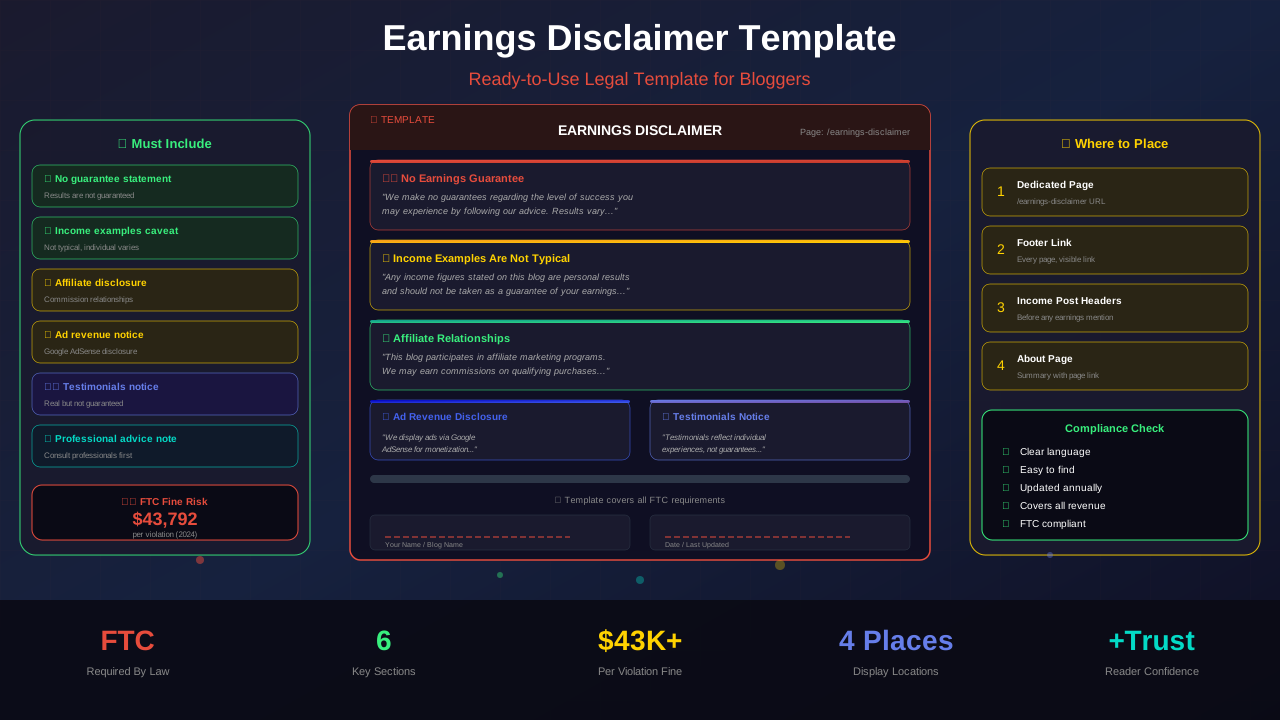
The earnings and income representations made by [Your Blog Name], [Your Name], and their advertisers and sponsors are aspirational statements only. These results are not typical. Your results will vary and depend on many factors, including but not limited to your background, experience, and work ethic.
There is no assurance that any prior successes or past results regarding earnings or income will apply to, or be an indication of, your future results. Monetary and income results are based on many factors. We have no way of knowing how well you will do, as we do not know you, your background, your work ethic, or your business skills or practices.
All products and services by our company are for educational and informational purposes only. Use caution and seek the advice of qualified professionals. You should check with your accountant, lawyer, or professional advisor before acting on any information related to a change in your lifestyle, business, or finances.
We make no guarantees regarding the level of success you may experience. There is no guarantee that you will make any money using any of the ideas, strategies, or techniques presented on this website.
[Your Blog Name] is not responsible for your actions. You are solely responsible for your own moves and decisions. By using this website, you agree to not hold [Your Blog Name] or its owner liable for any decisions and actions you take based on the information provided.
Key Elements Every Earnings Disclaimer Must Include
Your disclaimer must cover these essential points to be legally effective:
For more on this topic, see our guide on COPPA Compliance for Bloggers: How to Protect Kids and Your AdSense Account →
| Element | Purpose | Example |
|---|---|---|
| No guarantee statement | Clarifies results aren't promised | "Results vary and are not guaranteed" |
| Individual results vary | Explains results depend on effort | "Your results depend on many factors" |
| Not typical results | Income shown isn't average | "These results are not typical" |
| Educational purpose | Content is for information only | "For educational purposes only" |
| No liability | You're not responsible for outcomes | "Not responsible for your actions" |
| Professional advice notice | Encourages consulting experts | "Seek qualified professional advice" |
Where to Place Your Earnings Disclaimer
Location matters. A disclaimer hidden in your footer isn't enough. Place it where readers actually see it:
Dedicated disclaimer page: Create a standalone page (yourblog.com/earnings-disclaimer) and link to it from your footer menu. This is the baseline requirement.
Income report posts: Add a short version at the top of any post sharing income figures. This ensures readers see it before the income data.
Sidebar or footer widget: Include a brief disclaimer statement with a link to the full version. Make it visible site-wide.
Email newsletters: If you share earnings data in emails, include a link to your disclaimer. FTC rules apply to email marketing too.
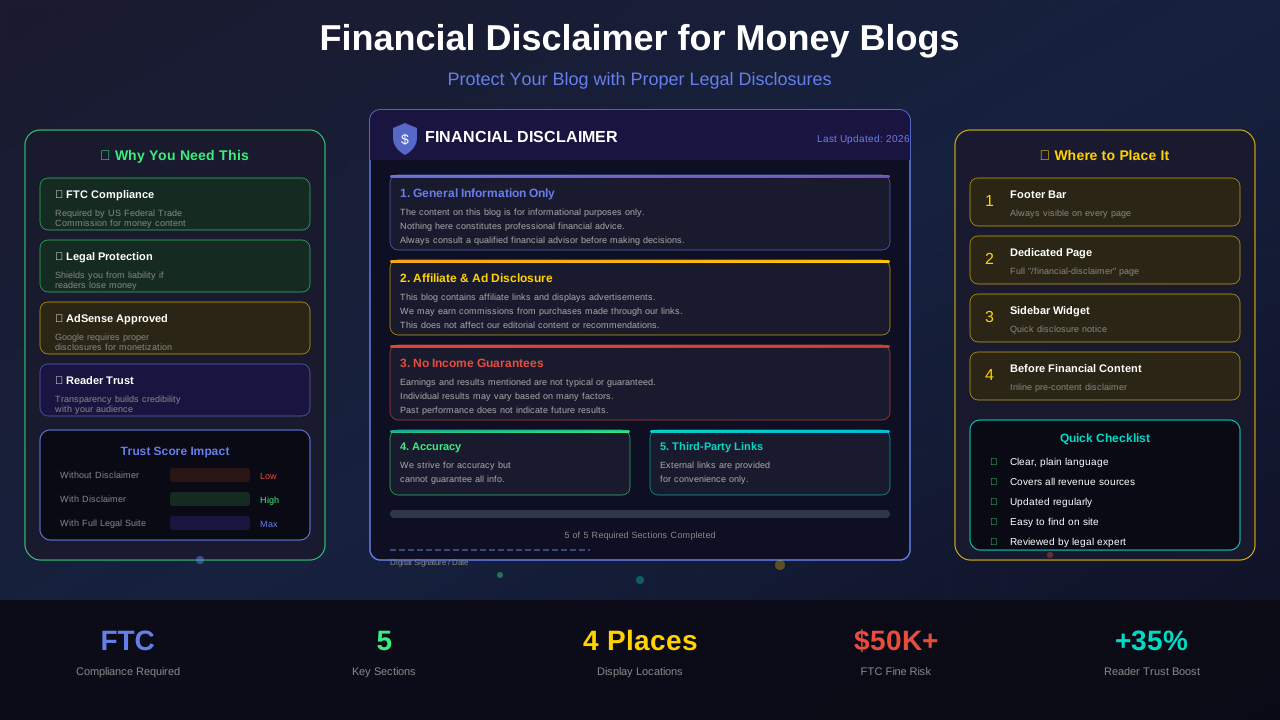
This is similar to how you should handle your financial disclaimer for money blogs. Both serve to protect you legally.
FTC Guidelines for Income Claims
The FTC has specific rules about income claims online. Here's what you must follow:
For more on this topic, see our guide on Image Attribution & Copyright: The Complete Blogger Guide →
No misleading claims: Don't imply that everyone can achieve the same results. Statements like "anyone can make $10,000/month" violate FTC guidelines.
Substantiation required: If you claim you earned a specific amount, you must be able to prove it. Keep records of all income you publish.
Typical results disclosure: When sharing income testimonials, you must disclose what typical users actually earn. If most people earn $0, say so.
Clear and conspicuous: Disclaimers must be easy to find and read. Small print hidden at the bottom of a page doesn't count. The FTC expects prominent placement.
"The FTC doesn't require you to stop sharing income results. It requires you to be honest about them. Transparency protects both you and your readers."
— Blessing Ugochi Ezema, Legal & Compliance Specialist
Common Mistakes to Avoid
Many bloggers make these errors with their earnings disclaimers:
Using generic templates without customization. Your disclaimer needs your blog name and should reflect your specific content type. A generic template may not cover all your needs.
Related reading: Copyright Laws for Bloggers: How to Use Images Legally →
Hiding the disclaimer. Burying it in tiny text at the bottom of your site doesn't meet FTC standards. Make it visible and accessible.
Making contradictory claims. Don't write "guaranteed results" in your content and then add a disclaimer saying results aren't guaranteed. Be consistent throughout your site.
Forgetting to update it. When you add new types of income claims or change your business model, update your disclaimer accordingly.
Not including it on all relevant pages. If you share income data in blog posts, emails, and social media, each platform needs appropriate disclaimers.
Rules for Publishing Income Reports
Income reports are popular content, but they come with legal obligations:
| Do | Don't |
|---|---|
| Share exact, verifiable numbers | Exaggerate or round up to impress |
| Include expenses alongside income | Show only gross revenue |
| Add disclaimer at beginning | Bury disclaimer at the end |
| State results aren't typical | Imply anyone can achieve same |
| Keep proof of all figures | Delete evidence after publishing |
| Link to full disclaimer page | Assume readers know it's not guaranteed |
International Requirements
If your blog has international readers, be aware of additional requirements:
UK ASA Guidelines: The Advertising Standards Authority requires clear disclosure of income claims. Rules are similar to FTC but slightly stricter on testimonials.
See also: Sponsored Content Disclosure: Legal Requirements Every Blogger Must Know →
EU Consumer Protection: European regulations require transparency in commercial communications. Misleading income claims can result in enforcement actions.
Australian ACCC: The Australian Competition and Consumer Commission has strong consumer protection laws. Income claims must be substantiated with evidence.
When in doubt, apply the strictest standard. Transparent disclaimers protect you everywhere.
Frequently Asked Questions
Do I need an earnings disclaimer if I only use AdSense?
Yes, if you discuss how much you earn from AdSense or imply readers can earn money too. Even showing AdSense income screenshots requires a disclaimer.
Can I just copy someone else's earnings disclaimer?
You can use a template as a starting point, but customize it for your specific blog. Different blogs have different income claims and need personalized disclaimers.
Is an earnings disclaimer the same as an affiliate disclaimer?
No. An earnings disclaimer covers income claims, while an affiliate disclaimer discloses that you earn commissions from product links. You may need both.
Can I be sued even with a disclaimer?
A disclaimer reduces your risk but doesn't eliminate it completely. If you make deliberately misleading claims, a disclaimer won't protect you. Always be truthful.
Should I have a lawyer review my disclaimer?
For best protection, yes. A lawyer can ensure your disclaimer covers your specific situation and complies with applicable laws. At minimum, use a well-crafted template.
Conclusion
An earnings disclaimer isn't optional — it's essential. Whether you publish income reports, share case studies, or mention how much your blog earns, you need clear disclosure.
Use the template provided above as your starting point. Customize it for your blog. Place it prominently where readers will see it. Update it as your content evolves.
Legal compliance isn't exciting, but it protects your blog and your reputation. Take 30 minutes to set up your earnings disclaimer today.