Legal pages are not just bureaucratic formalities—they are essential requirements for AdSense approval and protecting both you and your visitors. Missing or poorly written legal pages are among the top reasons Google rejects AdSense applications. This guide shows you exactly what pages you need and how to create them.
The good news? Creating compliant legal pages is straightforward once you understand what is required. We will walk through each essential page, explain what must be included, and provide frameworks you can customise for your website.
What You Will Learn:
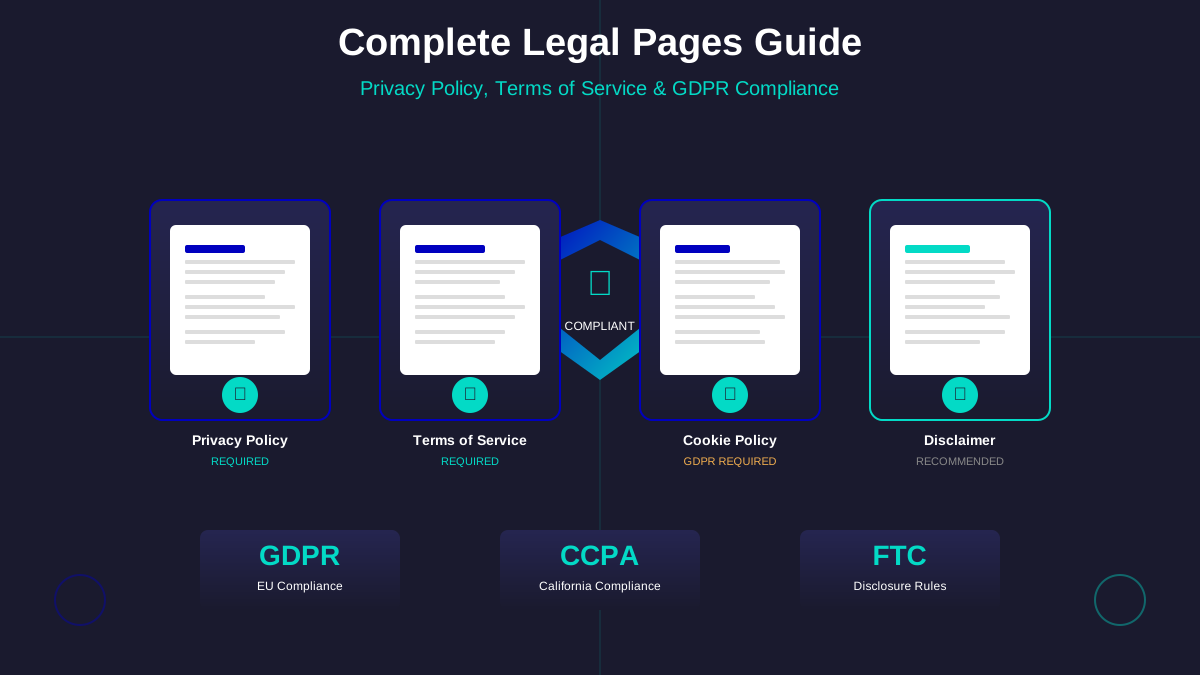
- The 4 essential legal pages every AdSense site needs
- What to include in your privacy policy for compliance
- How to write terms of service that protect you
- GDPR and CCPA compliance requirements explained
- Cookie consent implementation best practices
Why Legal Pages Matter for AdSense
Legal pages serve multiple critical purposes for your website and AdSense application:
- AdSense Requirement: Google explicitly requires a privacy policy that discloses the use of cookies and advertising
- Legal Protection: These pages protect you from liability and establish rules for your site
- Trust Building: Visitors trust sites that transparently explain their practices
- Regulatory Compliance: GDPR, CCPA, and other laws require specific disclosures
"Publishers must have and abide by an appropriate privacy policy that clearly discloses any data collection, sharing and usage that takes place on any site, app, email publication or other property as a consequence of your use of Google products."
— Google AdSense Program Policies
Complete Privacy Policy Guide
Your privacy policy is the most important legal page for AdSense. It must explain how you collect, use, and protect visitor data.
Essential Privacy Policy Sections:
1. Information Collection
Explain what personal information you collect:
- Information visitors provide (names, emails, comments)
- Automatically collected data (IP addresses, browser type)
- Cookies and tracking technologies
- Third-party data collection (Google Analytics, AdSense)
2. How Information Is Used
Describe your purposes for collecting data:
- Improving website content and functionality
- Responding to inquiries and providing support
- Sending newsletters (if applicable)
- Displaying relevant advertisements
- Analysing website traffic and user behaviour
3. Third-Party Disclosure
This section is crucial for AdSense. You must disclose:
- Google AdSense uses cookies to serve relevant ads
- Google Analytics collects anonymous usage data
- Third-party vendors may use cookies for advertising
- Users can opt out of personalised advertising
4. Cookie Policy (can be separate or included)
- Types of cookies used on your site
- Purpose of each cookie category
- How users can control cookie settings
- Link to Google's advertising policy
5. User Rights
Explain what control users have over their data:
For more on this topic, see our guide on Terms & Conditions Generator Guide: Protect Your Blog Legally in 2026 →
- Right to access personal information
- Right to request deletion
- Right to opt out of data collection
- How to exercise these rights
6. Contact Information
- How users can contact you about privacy concerns
- Response timeframe for privacy requests
AdSense-Specific Privacy Policy Requirements
Google has specific requirements for privacy policies on AdSense sites. Your policy must include:
Required AdSense Disclosure Language:
"Third-party vendors, including Google, use cookies to serve ads based on your prior visits to this website or other websites. Google's use of advertising cookies enables it and its partners to serve ads based on your visit to this site and/or other sites on the Internet. You may opt out of personalised advertising by visiting Ads Settings."
For more details on privacy policy requirements specific to AdSense, see our comprehensive guide on privacy policy requirements for AdSense.
Terms of Service (Terms and Conditions)
Your terms of service establish the rules for using your website. While not always required by AdSense specifically, they protect you legally and add professionalism.
Essential Terms of Service Sections:
1. Acceptance of Terms
State that by using the site, visitors agree to abide by your terms. Include when terms were last updated.
2. Intellectual Property
Clarify that your content is protected by copyright. Explain what visitors can and cannot do with your content.
For more on this topic, see our guide on COPPA Compliance for Bloggers: How to Protect Kids and Your AdSense Account →
3. User Conduct
Define acceptable behaviour on your site:
- No spamming or fraudulent activity
- No impersonation or false information
- No harassment or abusive behaviour
- No attempts to circumvent security
4. Disclaimer of Warranties
Explain that content is provided "as is" without guarantees. Protect yourself from liability for errors or omissions.
5. Limitation of Liability
Limit your liability for damages arising from use of your site.
6. External Links
Clarify that you are not responsible for content on linked external sites.
7. Modifications
Reserve the right to update terms and explain how users will be notified.
8. Governing Law
Specify which jurisdiction's laws govern the terms.
For more on this topic, see our guide on Image Attribution & Copyright: The Complete Blogger Guide →
GDPR Compliance for European Visitors
If your website receives visitors from the European Union, you must comply with the General Data Protection Regulation (GDPR).
Key GDPR Requirements:
- Lawful Basis: Have a legal reason for processing personal data
- Consent: Get explicit consent before collecting data
- Data Subject Rights: Allow users to access, correct, and delete their data
- Data Protection: Implement appropriate security measures
- Breach Notification: Report data breaches within 72 hours
GDPR-Compliant Cookie Consent
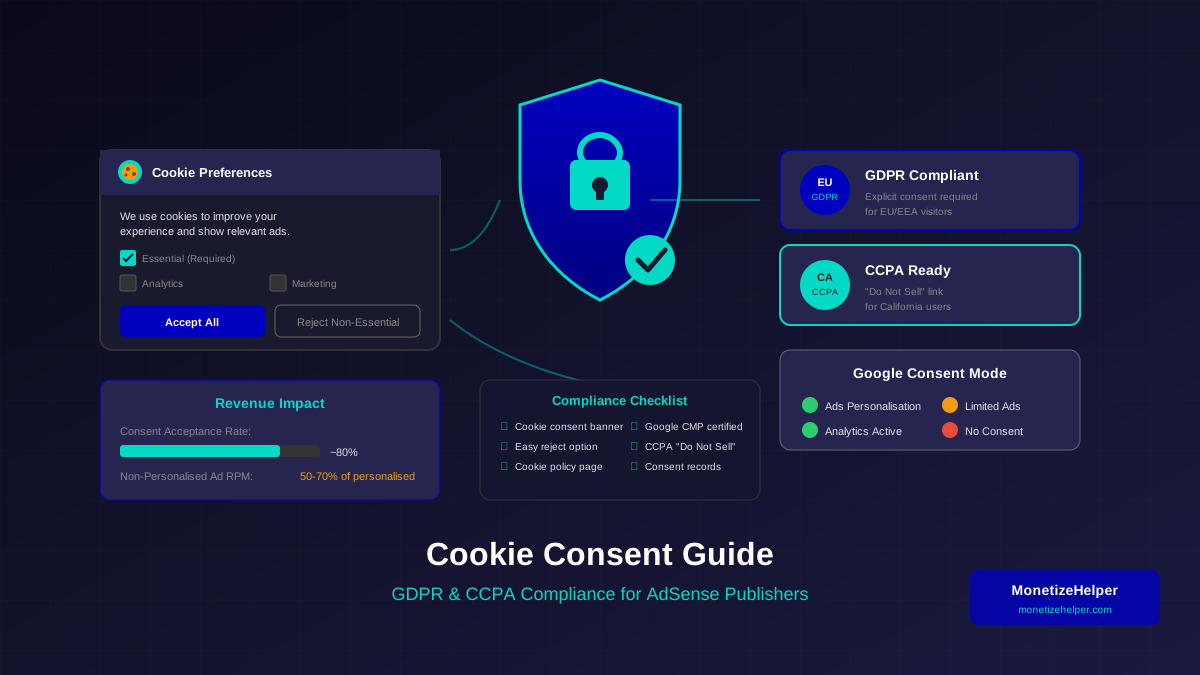
Under GDPR, you must:
- Inform visitors about cookies before they are set
- Get explicit consent for non-essential cookies
- Allow users to reject all non-essential cookies
- Make it easy to withdraw consent
- Keep records of consent
"Consent must be freely given, specific, informed and unambiguous. It requires a clear affirmative act—silence, pre-ticked boxes, or inactivity does not constitute consent."
— Article 7, General Data Protection Regulation
CCPA Compliance for California Visitors
The California Consumer Privacy Act (CCPA) gives California residents specific rights over their personal data.
CCPA Requirements:
- Right to Know: Users can request what data you collect about them
- Right to Delete: Users can request deletion of their data
- Right to Opt-Out: Users can opt out of data sales
- Non-Discrimination: Cannot penalise users who exercise their rights
Required CCPA Disclosures:
Your privacy policy must include:
- Categories of personal information collected
- Purpose for collecting each category
- Categories of third parties with whom you share data
- Whether you sell personal information
- How consumers can exercise their rights
Cookie Consent Implementation
Implementing proper cookie consent is essential for compliance. Here are your options:
Related reading: Copyright Laws for Bloggers: How to Use Images Legally →
Cookie Consent Solutions:
| Solution | Cost | Compliance Level | Best For |
|---|---|---|---|
| Google Consent Mode | Free | Good | AdSense publishers |
| Cookiebot | Free/Paid | Excellent | EU-focused sites |
| OneTrust | Paid | Enterprise | Large websites |
| Termly | Free/Paid | Good | Small sites |
| Custom Solution | Development | Variable | Tech-savvy owners |
Google Consent Mode Setup
Google Consent Mode allows your AdSense and Analytics to work with your cookie consent solution. It:
- Adjusts Google tags based on user consent
- Provides modelled conversions when consent is denied
- Maintains some measurement without personal data
- Integrates with most consent management platforms
Affiliate Disclosure Requirements
If your website includes affiliate links (even alongside AdSense), you need proper disclosures per the FTC Endorsement Guides.
FTC Affiliate Disclosure Guidelines:
- Disclose affiliate relationships clearly and prominently
- Place disclosure before affiliate links
- Use plain language ("I earn commissions from qualifying purchases")
- Ensure disclosure is visible on all devices
Sample Disclosure Statement:
"This website contains affiliate links. If you make a purchase through these links, we may earn a commission at no additional cost to you. We only recommend products we genuinely believe in."
Common Legal Page Mistakes to Avoid
These mistakes frequently cause AdSense rejections:
- Copy-Pasting Generic Templates: Google can detect boilerplate content. Customise for your site.
- Hiding Legal Pages: Make them accessible from every page (usually in footer)
- Outdated Information: Update when you add new features or third-party services
- Missing AdSense Disclosure: The specific Google advertising language is required
- No Cookie Consent: Required for EU visitors (and increasingly elsewhere)
- Broken Links: Ensure legal page links work on all pages
- Difficult Language: Use plain English that visitors can understand
Where to Place Legal Pages
Legal page placement matters for both user experience and compliance:
Best Practices for Legal Page Placement:
- Footer Links: Include links to all legal pages in your site footer
- Sign-up Forms: Link to terms and privacy policy near submission buttons
- Cookie Banner: Link to cookie policy from consent banner
- Checkout/Contact: Display links before form submission
- About Page: Consider linking to legal pages for transparency
Keeping Legal Pages Updated
Legal pages are not set-and-forget. Update them when:
See also: Sponsored Content Disclosure: Legal Requirements Every Blogger Must Know →
- You add new features that collect data
- You start using new third-party services
- Privacy laws change in your target regions
- You expand to new geographic markets
- Your contact information changes
- You add or remove advertising networks
Frequently Asked Questions (FAQs)
Can I use a free privacy policy generator?
Free generators provide a starting point, but you should customise the output for your specific website. Ensure you add the required AdSense disclosures and review all sections for accuracy.
Do I need legal pages before applying for AdSense?
Yes, absolutely. A privacy policy is explicitly required, and having all legal pages demonstrates professionalism and trustworthiness to Google reviewers.
Is a cookie consent banner required for all websites?
It depends on your audience. If you have visitors from the EU (and most sites do), GDPR requires cookie consent. It is becoming a best practice globally.
How long should my privacy policy be?
Focus on completeness rather than length. A typical comprehensive privacy policy is 1500-3000 words. It should be thorough but readable.
Should I have a lawyer review my legal pages?
While not required for most small websites, having a lawyer review your legal pages provides extra protection. If your site processes sensitive data or operates in highly regulated industries, legal review is recommended.
Conclusion
Creating proper legal pages is one of the most important steps in preparing for AdSense approval. They protect you legally, build trust with visitors, and satisfy Google's requirements.
Start with a comprehensive privacy policy that includes all required AdSense disclosures. Add terms of service for legal protection. Implement cookie consent for GDPR compliance. These foundations will serve your website for years to come.
For complete guidance on preparing your website for AdSense approval, including legal requirements, visit our Ultimate AdSense Approval Guide.