
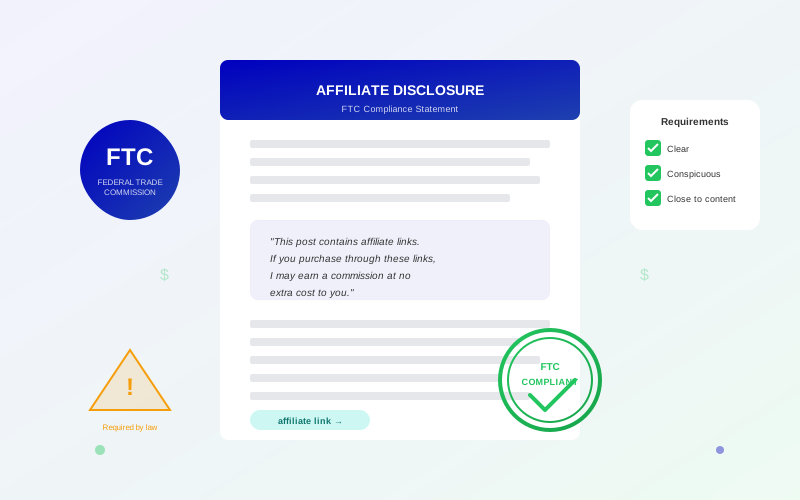
If you earn money from affiliate links, you are legally required to disclose that relationship to your readers. The Federal Trade Commission (FTC) enforces these rules, and violations can result in significant penalties. This guide explains exactly what you need to do to stay compliant.
Many bloggers and content creators unknowingly violate FTC guidelines with inadequate or missing disclosures. Understanding the rules protects you legally and builds trust with your audience.
Disclaimer: This article provides general information about FTC disclosure requirements. It is not legal advice. Consult with a qualified attorney for advice specific to your situation.
What You Will Learn:
- Why disclosures are legally required
- Where to place your disclosures
- What language to use
- Common disclosure mistakes
- Platform-specific requirements
Why Disclosures Are Required
The FTC requires disclosures to protect consumers from being deceived about the nature of endorsements.
The Core Principle
When you have a financial relationship with a company and recommend their products, readers deserve to know about that relationship so they can evaluate your recommendation accordingly.
What Counts as a "Material Connection"
- Affiliate commissions
- Free products received for review
- Sponsored content payments
- Employment or consulting relationships
- Family or personal connections
"The guiding principle is that if there's a connection between an endorser and the marketer of a product that might affect the weight or credibility of the endorsement, it should be disclosed."
— FTC Endorsement Guides
FTC Disclosure Requirements
The FTC has established clear guidelines:
Clear and Conspicuous
Disclosures must be:
For more on this topic, see our guide on Terms & Conditions Generator Guide: Protect Your Blog Legally in 2026 →
- Easy to notice (not hidden)
- Easy to understand (plain language)
- Placed near the claim they relate to
Close to the Content
The disclosure should appear close to the affiliate link or product recommendation—not buried at the bottom of the page or in a separate disclosure page.
In Same Medium
If your review is in text, the disclosure should be in text. If it is a video, the disclosure should be in the video (not just the description).
Where to Place Disclosures
Blog Posts
Best practices for written content:
- Beginning of post: A brief statement near the top
- Near affiliate links: Additional disclosure close to each recommendation
- Within product reviews: Clear statement before review content
Example Placement
At the beginning of your post:
"This post contains affiliate links. If you purchase through these links, I may earn a commission at no extra cost to you."Near Links
Next to affiliate links:
For more on this topic, see our guide on COPPA Compliance for Bloggers: How to Protect Kids and Your AdSense Account →
- "(affiliate link)"
- "(paid link)"
- "(I earn commission from this link)"
What Does NOT Work
- Footer-only disclosures
- Disclosures on a separate page only
- Disclosures that require scrolling to find
- Disclosures in light gray text on white
- Abbreviations like "aff" without explanation
Effective Disclosure Language
Use clear, simple language:
Good Examples
- "This post contains affiliate links. I earn a commission if you buy through my links."
- "I received this product for free to review."
- "This is a sponsored post. [Company] paid me to write this."
- "Some links in this post are affiliate links."
Poor Examples (Avoid)
- "This post may contain affiliate links" (too vague)
- "aff" (abbreviation not understood by all)
- "Partner links" (unclear meaning)
- Lengthy legal language (hard to understand)
Keep It Simple
The average reader should immediately understand:
- That you have a financial relationship
- How that relationship affects you
- What it means for them
Social Media Disclosures
Platform-specific requirements:
- Use #ad or #sponsored clearly
- Place at beginning of caption, not buried in hashtags
- For stories, use the paid partnership label
- Verbal disclosure needed in video content
YouTube
- Verbal disclosure at the beginning of videos
- Use YouTube's "includes paid promotion" checkbox
- Text overlay disclosure for visual clarity
- Description disclosure is not sufficient alone
Twitter/X
- Include #ad in the tweet itself
- Cannot use threading to hide disclosure
- Character limits do not exempt disclosure
- Disclosure in pin description
- Clear language like "affiliate" or "ad"
Specific Situations
Amazon Associates
Amazon requires specific disclosure language:
"As an Amazon Associate, I earn from qualifying purchases."This is in addition to general FTC disclosure requirements. If you also use Google AdSense, review the Google AdSense Program Policies for additional compliance guidelines.
For more on this topic, see our guide on Image Attribution & Copyright: The Complete Blogger Guide →
Sponsored Reviews
For products you received free or were paid to review:
- Disclose at the beginning of the review
- Mention whether you were paid or received the product free
- Your opinion can still be honest—just disclose the relationship
Email Marketing
Affiliate links in emails need disclosure too:
- Include near the affiliate link
- Cannot rely on website disclosure page
Common Disclosure Mistakes
Mistake 1: Disclosure Page Only
A disclosure page on your site is good to have, but it is not sufficient. Disclosures must appear in or near the content containing affiliate links.
Mistake 2: Burying Disclosures
Placing disclosures after 10 paragraphs of content, in tiny font, or in a collapsible section fails the "clear and conspicuous" requirement.
Mistake 3: Vague Language
"This post may contain affiliate links" is too weak. Confirm whether or not affiliate links are present.
Related reading: Copyright Laws for Bloggers: How to Use Images Legally →
Mistake 4: Missing Video Disclosures
A text disclosure in a video description is not enough if the video itself contains endorsements. Speak the disclosure in the video.
Mistake 5: Assuming Small Audience Exemption
The FTC rules apply regardless of your audience size. Having few followers does not exempt you.
Implementing Disclosures
For Blog Posts
- Add a disclosure block at the top of posts with affiliate links
- Consider a reusable shortcode or component
- Add "(affiliate link)" notation near links
- Have a comprehensive disclosure page linked in footer
For a ready-to-use template that includes affiliate disclosure language, see our complete disclaimer page template for AdSense websites.
Disclosure Page Content
Your disclosure page should explain:
- What affiliate marketing is
- Which programs you participate in
- That this does not affect your recommendations
- Required program-specific language (Amazon, etc.)
Your disclosure page should work alongside your other legal pages. Make sure you also have a comprehensive privacy policy that meets AdSense requirements to build complete legal protection for your website.
See also: Sponsored Content Disclosure: Legal Requirements Every Blogger Must Know →
Create a Template
Create consistent disclosure language you can reuse:
"Disclosure: This post contains affiliate links. If you click through and make a purchase, I may receive a commission at no additional cost to you. I only recommend products I personally use and believe in."Consequences of Non-Compliance
FTC Enforcement
- Warning letters (common first step)
- Fines of up to $50,120 per violation
- Required compliance programs
- Public disclosure of violations
Platform Consequences
- Account suspension
- Removal from affiliate programs
- Demonetization
Reputation Damage
- Loss of audience trust
- Negative publicity
- Damage to brand partnerships
To strengthen your legal foundation beyond affiliate disclosures, consider creating comprehensive terms of service for your website that outline acceptable use and protect your content.
Frequently Asked Questions
Do I need a disclosure for every affiliate link?
You need disclosure near the content containing affiliate links. A clear disclosure at the beginning of a post that contains multiple affiliate links can cover all of them, but placing additional notices near links is best practice.
What if I honestly love a product I am an affiliate for?
That is great! But you still need to disclose. The FTC requires disclosure of the financial relationship, not your sincerity. Your honest enthusiasm does not eliminate the need for disclosure.
Do disclosures apply internationally?
If you have US readers, FTC rules apply. Many other countries have similar requirements. It is best practice to disclose regardless of your location.
Can I just put "contains affiliate links" in my bio?
No. A disclosure in your bio or profile does not satisfy FTC requirements. Disclosure must be in or near the content containing the endorsement.
What about products I bought myself?
If you purchased a product with your own money and have no affiliate relationship, no disclosure is needed. You are just a regular consumer sharing your experience.
![Terms of Service Template: Legal Protection for Your Website [2025]](/images/articles/terms-of-service-template-website.svg)
