Whilst Google AdSense remains the most popular advertising programme for publishers, it is not always the best fit for every website. Whether you have been rejected by AdSense, seek to diversify your revenue streams, or simply want higher earning potential, understanding the alternatives available can significantly impact your monetization success.
This comprehensive comparison evaluates the top AdSense alternatives based on earning potential, approval requirements, payment terms, and publisher experience. By the end of this guide, you will know exactly which ad network suits your specific situation.
Why Consider AdSense Alternatives?
Before diving into specific alternatives, let us examine the legitimate reasons publishers explore other options:
AdSense Rejection or Account Issues
Google's strict approval process and policy enforcement mean many publishers either cannot get approved or face account limitations. Alternative networks often have more lenient requirements whilst still offering competitive payouts.
Revenue Diversification
Relying solely on AdSense creates single-point-of-failure risk. If your account gets suspended or ad rates drop, diversified income streams protect your business.
Niche-Specific Performance
Some ad networks specialise in specific verticals—technology, finance, lifestyle—and may deliver higher RPMs for your particular niche than AdSense's generalist approach. Discover which high-CPC niches pay the most to maximise your earnings potential.
Better Payment Terms
AdSense's $100 payment threshold can be challenging for smaller publishers. Several alternatives offer lower thresholds and more payment options.
Strategic Approach
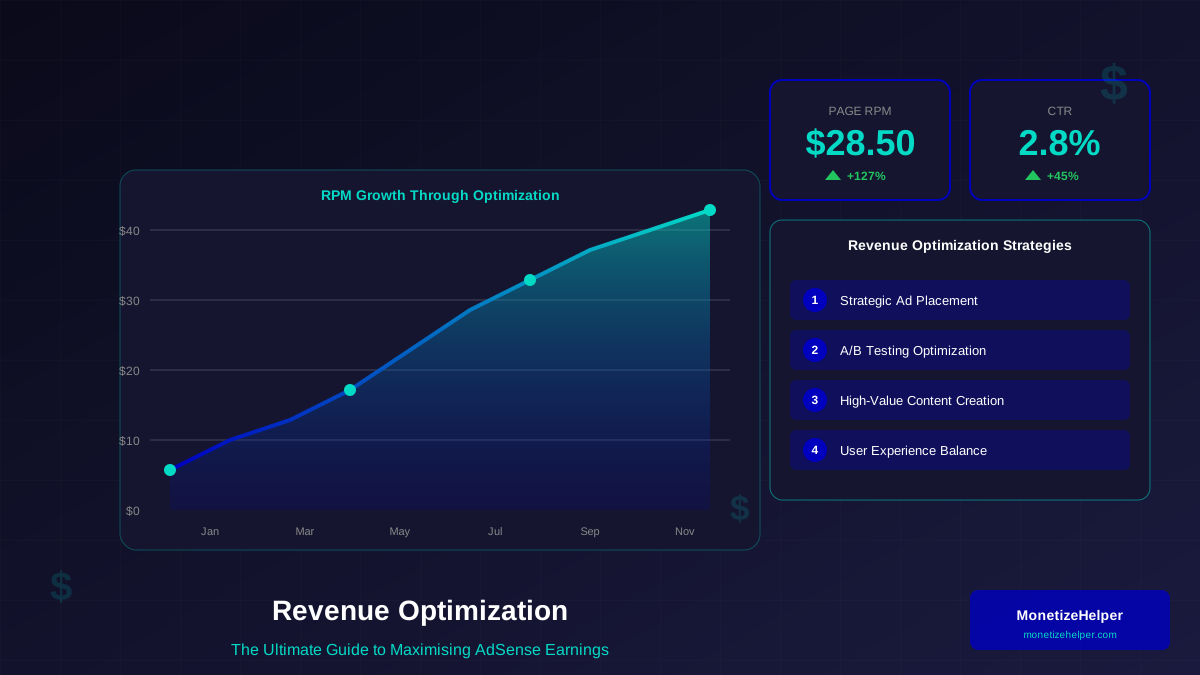
The best monetization strategy often combines multiple ad networks. Use AdSense for display ads whilst implementing an alternative for native ads or specific placements. Before switching networks, make sure you have implemented all strategies to increase your AdSense revenue. This maximises revenue whilst reducing platform dependency.
Top 10 AdSense Alternatives Overview
1. Mediavine: The Premium Choice
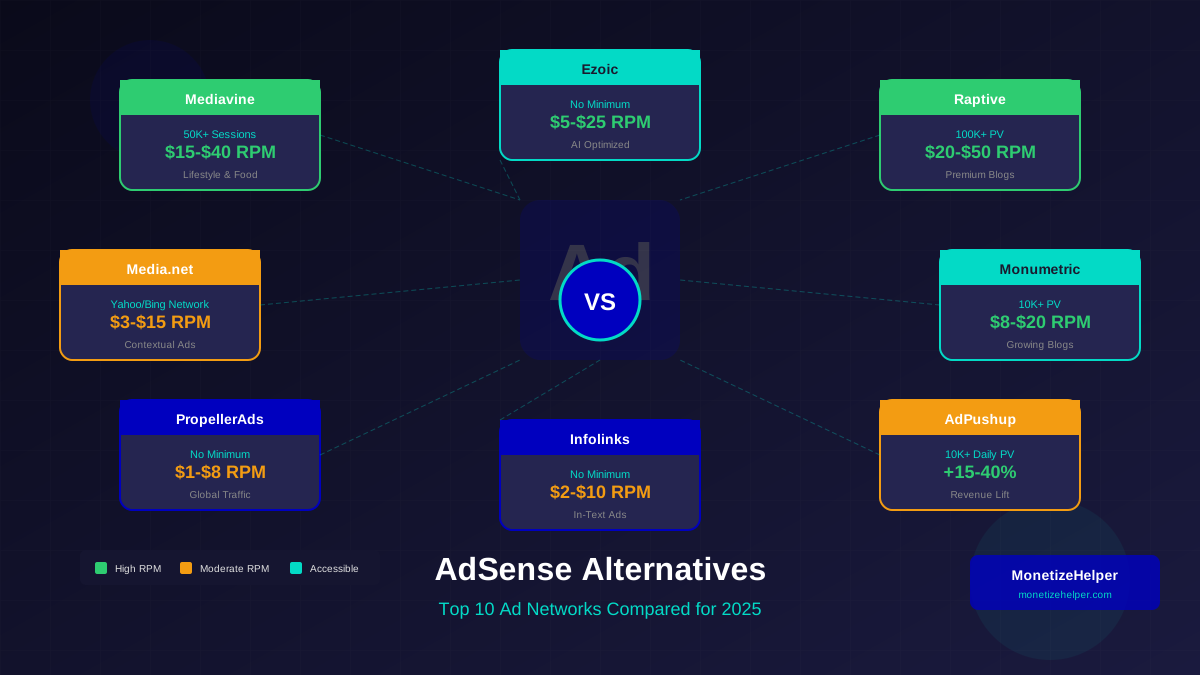
Mediavine consistently ranks as the highest-paying ad management company for content creators, particularly in lifestyle niches like food, travel, parenting, and home improvement.
Requirements
- Minimum 50,000 sessions per month (previously pageviews)
- Good standing with Google AdSense
- Original, long-form content
- No recent policy violations
Earning Potential
Mediavine publishers typically earn $15-$40+ RPM, with some niches exceeding $50 during Q4. If you are unfamiliar with this metric, learn how RPM is calculated and how to improve it. Their ad optimisation technology and premium advertiser relationships justify their 25% revenue share.
Pros and Cons
Pros: Highest payouts, excellent support, video monetization, ad optimisation tools, community resources.
For more on this topic, see our guide on Ezoic vs Mediavine: Which Ad Network Pays More in 2026? →
Cons: High traffic requirement, 75% revenue share (25% to Mediavine), competitive approval process.
2. Ezoic: AI-Powered Accessibility
Ezoic uses artificial intelligence to test ad placements and optimise revenue. Their tiered programme structure makes them accessible to publishers of all sizes.
Requirements
- No minimum traffic requirement for Access Now programme
- Content quality standards
- Site must load properly and have clear navigation
Earning Potential
Ezoic earnings typically range from $5-$25 RPM depending on your tier level and traffic sources. Their AI continually tests placements to improve revenue over time.
Pros and Cons
Pros: No traffic minimum, free CDN and hosting, AI optimisation, split testing tools, site speed features.
Cons: Learning curve, can slow site if not properly configured, tiered earnings structure.
3. Raptive (formerly AdThrive): Creator-First Approach
Raptive (formerly AdThrive) serves large publishers with a creator-focused approach, offering premium rates and extensive support services.
Requirements
- Minimum 100,000 pageviews per month
- Majority US traffic preferred
- High-quality, original content
- Good standing with ad networks
Earning Potential
Raptive publishers often see RPMs of $20-$50+, making them one of the highest-paying options. Their focus on US traffic and premium advertisers drives exceptional rates.
Pros and Cons
Pros: Highest potential earnings, guaranteed payments, creator support, video monetization.
Related reading: AdThrive Requirements Guide: What You Need to Join Raptive in 2026 →
Cons: Strict requirements, US traffic focus, lengthy approval process.
4. Media.net: Yahoo-Bing Network Access
Media.net provides access to the Yahoo-Bing contextual ad network, making them the primary AdSense alternative for contextual advertising.
Requirements
- English-language content
- Quality website with original content
- Traffic primarily from US, UK, or Canada preferred
Earning Potential
Media.net RPMs typically range from $3-$15, with premium sites in finance or technology potentially earning more. Performance depends heavily on traffic geography.
Pros and Cons
Pros: Easy approval, contextual ads, runs alongside AdSense, good US/UK rates.
Cons: Lower rates for non-English traffic, $100 payment threshold, requires optimisation.
Combination Strategy
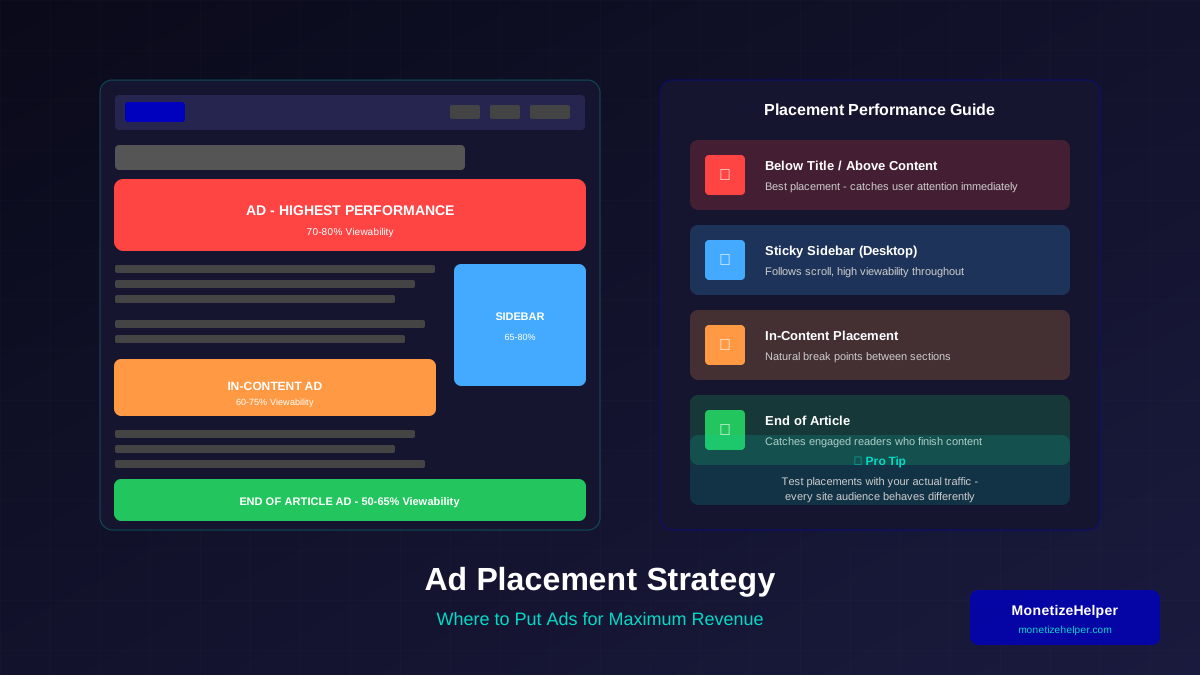
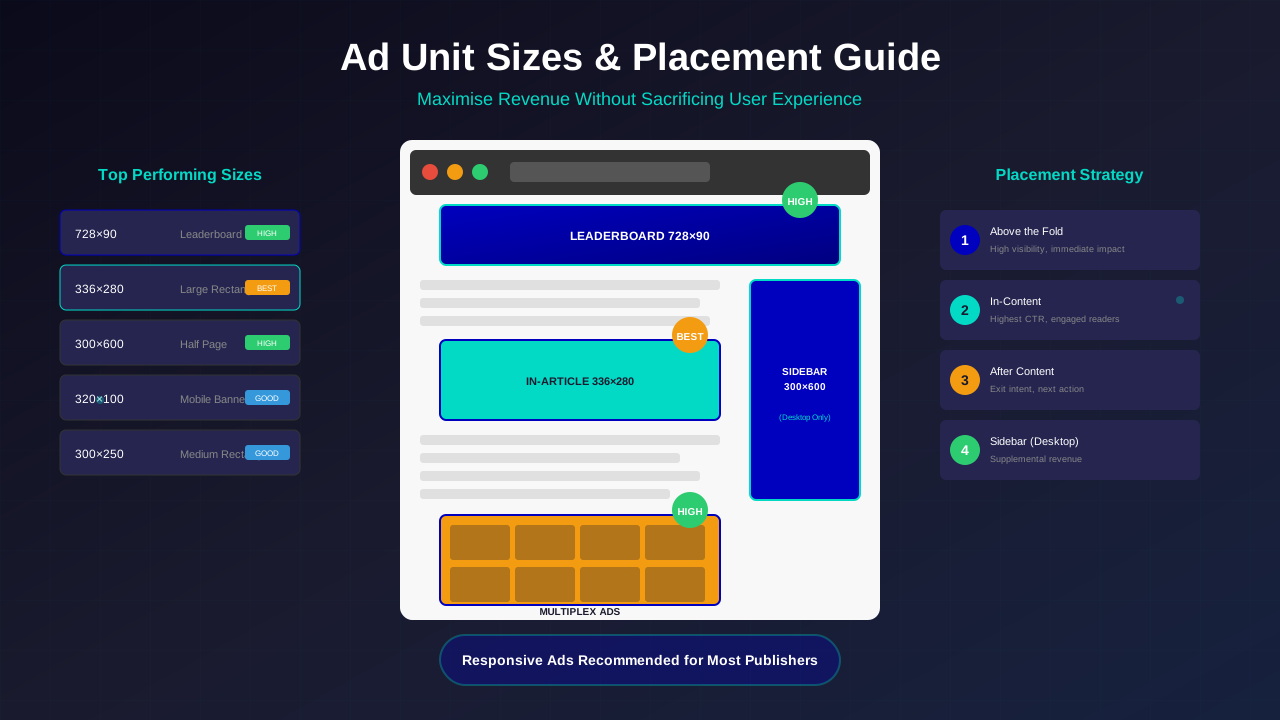
Media.net works excellently alongside AdSense. Use AdSense for display units and Media.net for contextual/native placements. This combination often outperforms either network alone.
5. PropellerAds: Global Traffic Monetization
PropellerAds excels at monetizing traffic that other networks undervalue, particularly non-US visitors and mobile traffic.
Requirements
- No minimum traffic requirement
- Fast approval process
- Content policy compliance
Earning Potential
PropellerAds RPMs range from $1-$8, lower than premium networks but competitive for global traffic. Their push notification and interstitial formats can boost earnings.
For more on this topic, see our guide on Raptive Requirements Guide: Traffic, Content & Application Tips →
Pros and Cons
Pros: Instant approval, low payment threshold ($5), weekly payments, diverse ad formats.
Cons: Lower RPMs, some intrusive ad formats, requires careful implementation.
6. Monumetric: Growing Blog Solution
Monumetric bridges the gap between AdSense and premium networks, offering reasonable requirements with competitive payouts.
Requirements
- Minimum 10,000 pageviews per month
- Quality content standards
- $99 setup fee for smaller sites (waived at 80K+ pageviews)
Earning Potential
Monumetric publishers typically earn $8-$20 RPM, positioning them above AdSense but below Mediavine/Raptive. Their tiered programme scales with traffic.
Pros and Cons
Pros: Lower requirements than Mediavine, good earnings, responsive support.
Cons: Setup fee for smaller sites, 60-day payment terms, less premium than top networks.
Additional Alternatives Worth Considering
7. Infolinks
Specialises in in-text and contextual ads. Good supplementary income source with easy approval and no minimum traffic. Best suited for content-heavy sites.
8. Sovrn (formerly VigLink)
Converts existing product links into affiliate links automatically. Excellent passive income addition for product-focused content without replacing display ads.
Learn more in Mediavine Requirements Guide: How to Qualify and Get Accepted →
9. Amazon Associates Native Ads
Amazon's native shopping ads display relevant products based on page content. Strong performance for product review and recommendation sites.
10. AdPushup
AI-powered ad optimisation platform that works with your existing ad partners. Requires 10,000+ daily pageviews but can significantly boost existing ad revenue.
How to Choose the Right Network
Selecting the best alternative depends on your specific situation:
For New Blogs (Under 10K Pageviews)
Start with Ezoic or PropellerAds for immediate monetization. Build traffic whilst refining content quality, then transition to premium networks.
For Growing Blogs (10K-50K Pageviews)
Monumetric offers the best balance of accessible requirements and competitive earnings. Alternatively, optimise AdSense whilst building toward Mediavine.
For Established Blogs (50K+ Sessions)
Apply to Mediavine immediately. If in a lifestyle niche, their rates are unmatched. For non-lifestyle content, compare offers from multiple premium networks.
For Non-US Traffic Heavy Sites
PropellerAds or Ezoic monetize international traffic effectively. Premium networks typically undervalue non-US visitors.
Implementation Best Practices
When switching or adding ad networks, follow these guidelines:
Learn more in RPM by Blog Niche: Which Topics Pay the Most in 2026 →
- Test Before Committing: Most networks offer trial periods. Monitor performance for at least 2-4 weeks before making permanent decisions.
- Monitor Site Speed: Additional ad scripts can impact loading times. Use performance monitoring to ensure user experience is not compromised.
- Diversify Gradually: Add one network at a time to understand its impact on your overall revenue and user experience.
- Track RPM, Not Just Revenue: Total revenue can increase whilst efficiency decreases. Monitor RPM to understand true performance.
- Review Contracts Carefully: Some networks have exclusivity clauses or minimum commitment periods. Understand terms before signing.
Frequently Asked Questions
Can I use multiple ad networks simultaneously?
Yes, with careful implementation. Many publishers run AdSense alongside native ad networks like Media.net. However, some premium networks like Mediavine have exclusivity requirements for certain placements. Always check network policies before combining.
Which alternative pays the most?
Raptive and Mediavine typically offer the highest RPMs ($20-$50+), but they have strict traffic requirements. For accessible options, Ezoic and Monumetric provide competitive earnings with lower barriers to entry.
How long does network approval take?
Approval times vary: PropellerAds is often instant, Ezoic takes 24-48 hours, Media.net takes 1-2 weeks, and premium networks like Mediavine can take 2-4 weeks due to manual review processes.
Should I leave AdSense completely?
Not necessarily. AdSense often works well alongside other networks. Many publishers use AdSense for certain placements whilst leveraging alternatives for native or video ads. Complete replacement is only necessary if a premium network requires exclusivity.
What if I get rejected by a network?
Network rejections are common and not permanent. Address the stated reasons (traffic quality, content issues, policy violations), improve your site, and reapply after 30-90 days. Many successful publishers were rejected initially.
Conclusion: Building a Diversified Ad Strategy
The ideal monetization strategy combines multiple revenue streams tailored to your traffic profile, content niche, and business goals. AdSense alternatives are not merely backups—they can be primary revenue drivers that outperform Google's offering for your specific situation.
Start by honestly assessing your current traffic levels, geographic distribution, and content type. Match these characteristics to the networks best suited to monetize them effectively. As your blog grows, continuously re-evaluate your options—the network that serves you at 10,000 pageviews may not be optimal at 100,000.
Remember: the most successful publishers treat ad monetization as an ongoing optimisation process, not a set-it-and-forget-it decision.