What Is RPM and Why Does It Matter?
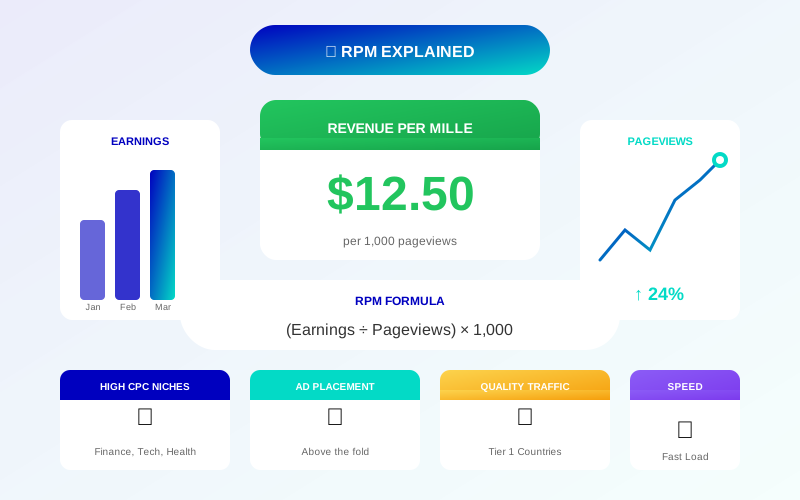
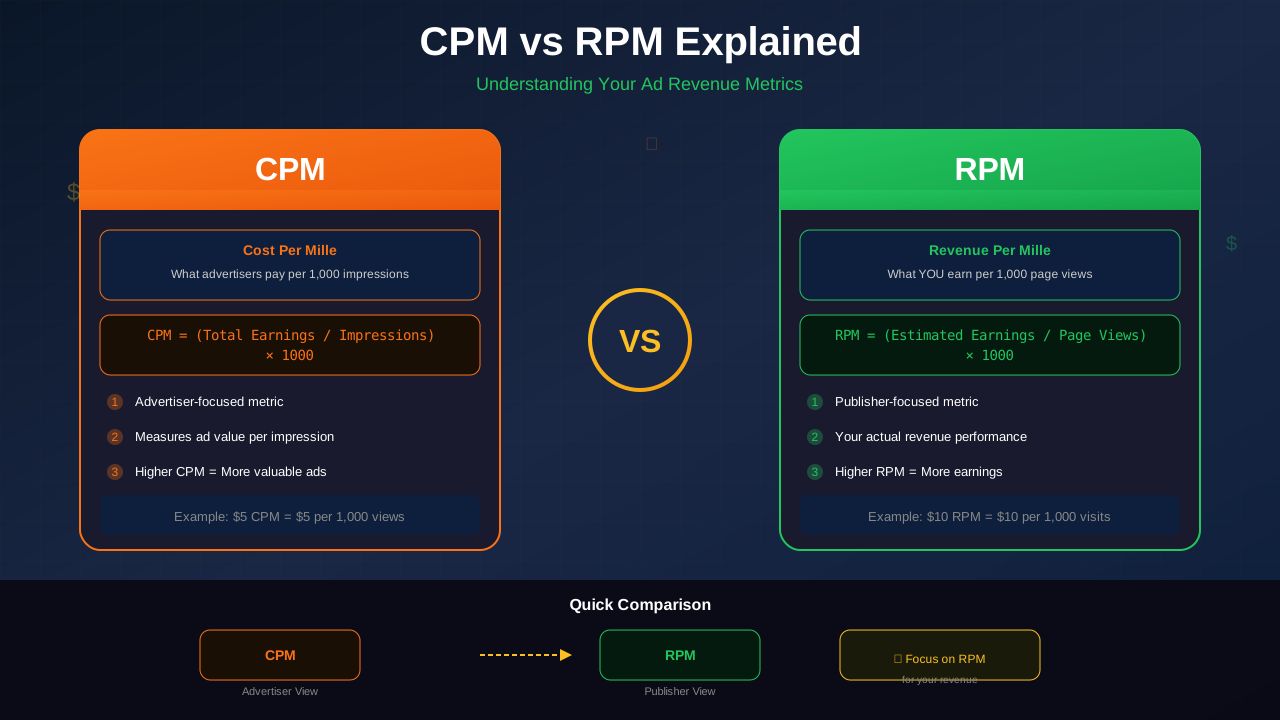
RPM stands for Revenue Per Mille. It tells you how much money you earn for every 1,000 pageviews. This single number reveals how well your blog turns traffic into income.
Here is the simple formula. Take your total earnings. Divide by total pageviews. Then multiply by 1,000. If you earned $50 from 10,000 pageviews, your RPM is $5.00.
RPM matters because it helps you compare performance over time. It also helps you compare your blog against others. Two blogs with the same traffic can earn very different amounts based on their niche.
RPM Comparison by Blog Niche
Not all niches earn the same RPM. Advertisers pay more to reach certain audiences. People searching for insurance, mortgages, or investment products have high commercial intent. That drives up ad rates.
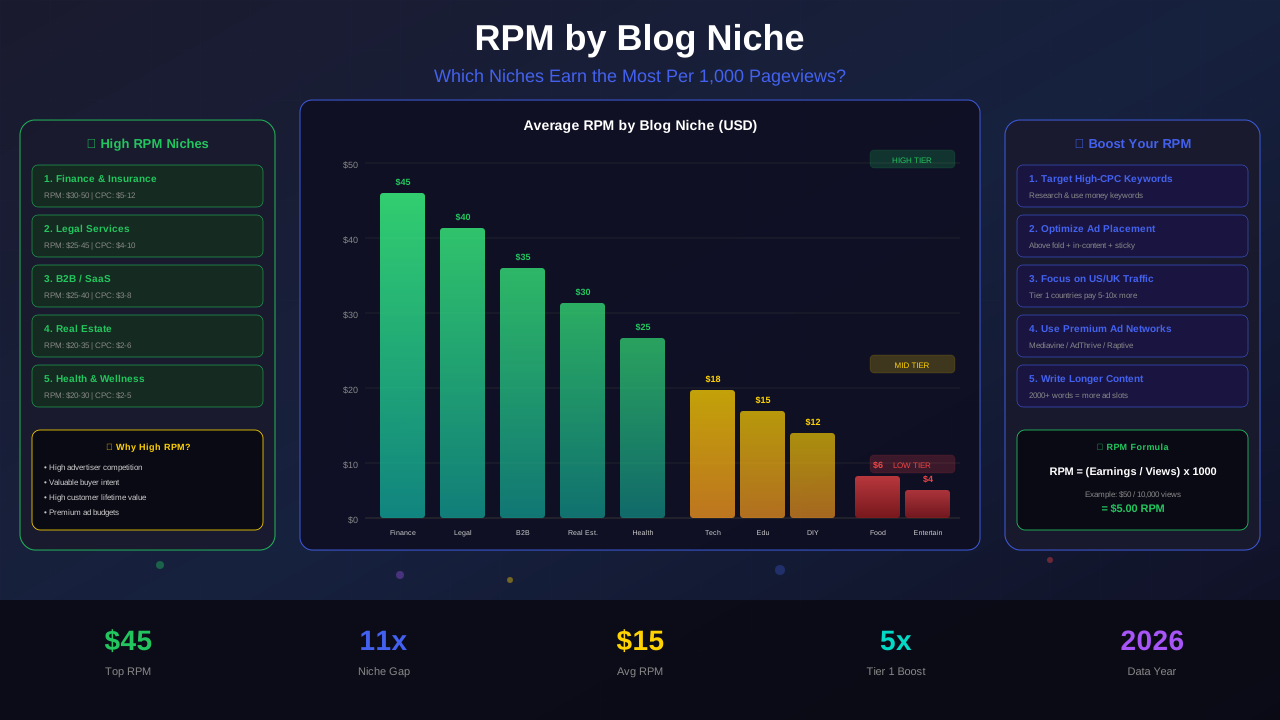
Here are average RPM ranges across popular blog niches. These numbers come from AdSense and premium ad network data in 2025-2026. Your actual RPM depends on your traffic quality, ad placement, and content depth.
High RPM Niches ($20-$50+)
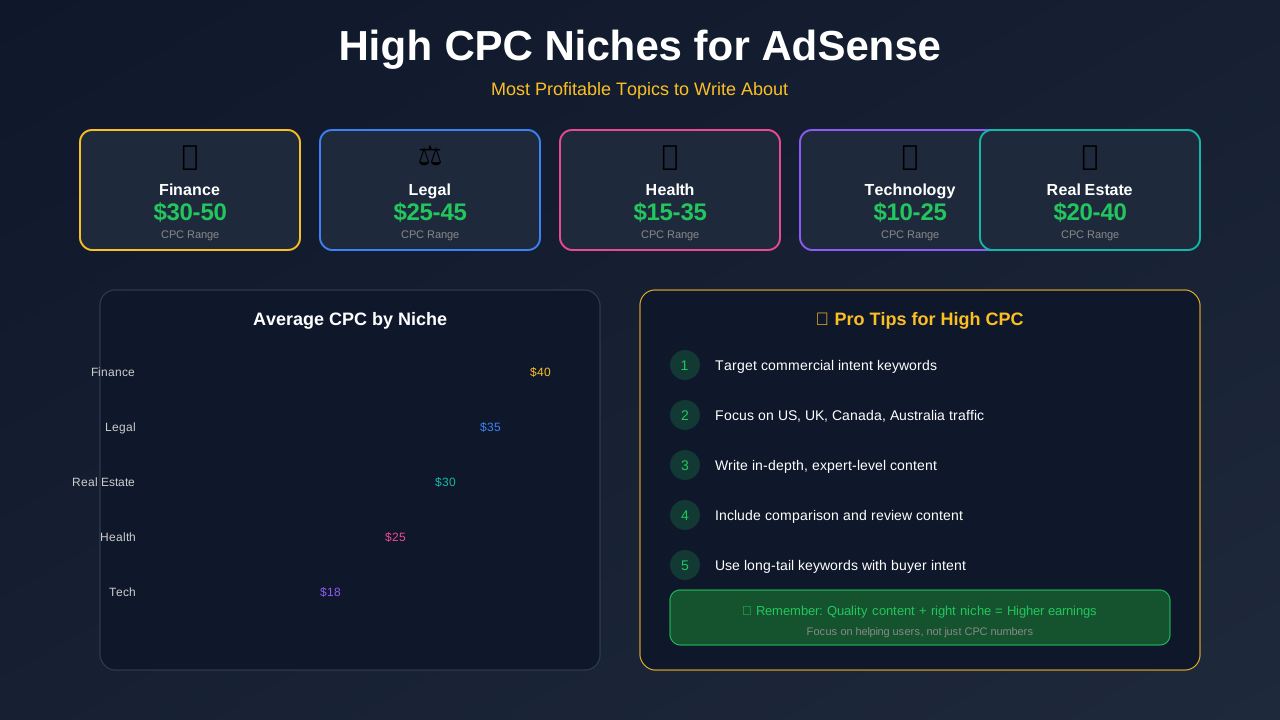
Finance and investing top the list with RPMs of $25 to $50 or more. Credit cards, loans, and insurance are the most valuable topics. One well-placed ad on a mortgage comparison page can earn more than 100 ads on an entertainment blog.
Legal advice blogs earn $20 to $45 RPM. Personal injury lawyers and business attorneys pay top dollar for leads. Even general legal information pages attract high bids.
Real estate blogs see $20 to $40 RPM. Home buying guides, mortgage calculators, and local market reports attract motivated readers who represent high-value leads for agents and lenders.
Health and wellness ranges from $15 to $35 RPM. Medical information, supplements, and fitness equipment drive strong advertiser interest. But health content needs extra care for accuracy and compliance.
B2B and SaaS content earns $20 to $45 RPM. Software reviews, business tools, and productivity content attract advertisers with high customer lifetime values.
Medium RPM Niches ($8-$20)
Technology blogs average $10 to $20 RPM. Product reviews, tutorials, and comparison guides perform best. Generic tech news earns less because readers browse without buying intent.
Education and online learning brings $10 to $25 RPM. Course reviews, study tips, and certification guides attract education advertisers with decent budgets.
For more on this topic, see our guide on Ezoic vs Mediavine: Which Ad Network Pays More in 2026? →
Home improvement and DIY ranges from $10 to $18 RPM. Tool reviews, project tutorials, and design inspiration attract both brand and product advertisers.
Travel blogs earn $8 to $20 RPM. Hotel reviews and destination guides pay more. General travel diaries pay less. Seasonal traffic swings make travel RPM inconsistent.
Parenting and family averages $8 to $15 RPM. Product recommendations for baby gear and kids' items perform well. General parenting advice earns less.
Low RPM Niches ($1-$8)
Food and recipe blogs earn $5 to $12 RPM with AdSense. However, many food bloggers earn much more through Mediavine or AdThrive because of their high pageviews per session. Recipe pages keep readers clicking.
Lifestyle and general interest blogs sit at $3 to $8 RPM. The broad audience makes it hard for advertisers to target specific buyers. Narrowing your lifestyle niche helps.
Entertainment and celebrity news earns the least at $1 to $5 RPM. Readers browse for fun, not to buy anything. High traffic volumes partly offset the low RPM.
Gaming blogs earn $2 to $7 RPM with display ads. Gaming audiences tend to use ad blockers more often. Affiliate links for gaming gear can supplement the low ad RPM.
Why Some Niches Pay More Than Others
Four factors determine how much advertisers pay to show ads on your blog. Understanding these helps you pick better topics, even within a low-RPM niche.
Advertiser competition is the biggest factor. When many companies bid for the same audience, prices go up. Finance has dozens of credit card companies competing for eyeballs. Entertainment has fewer big advertisers.
Related reading: AdThrive Requirements Guide: What You Need to Join Raptive in 2026 →
Customer lifetime value matters a lot. A mortgage company earns thousands from each customer. They can afford $30 per click. A mobile game earns $2 per download. They can only afford a few cents per click.
Commercial intent of your readers drives ad rates. Someone searching "best savings account" is ready to open one. Someone searching "funny cat videos" is not buying anything. Advertisers pay more when readers are close to a purchase decision.
Geographic location of your traffic affects RPM dramatically. US and UK traffic earns 5 to 10 times more than traffic from India or Southeast Asia. A finance blog with 80% US traffic will crush one with 80% global traffic.
How to Boost Your RPM in Any Niche
You cannot change your niche overnight. But you can optimize your RPM within your current niche. These strategies work across all blog topics.
Target High-Value Keywords
Every niche has high-paying and low-paying topics. In travel, "best travel insurance" pays far more than "beautiful sunset photos." In food, "best kitchen appliances" beats "easy dinner ideas" for ad revenue.
Look at your existing content. Find the posts that earn the highest RPM. Write more content like those posts. Use Google Keyword Planner to check CPC values before choosing topics.
Optimize Ad Placement
Where you place ads matters as much as your niche. Ads above the fold earn 2 to 3 times more than ads at the bottom. In-content ads between paragraphs get the most clicks.
Test these three high-performing positions. Put one ad after the first two paragraphs. Add another ad in the middle of your article. Place one more ad near the end before the conclusion.
Increase Pages Per Session
More pageviews per visit means more ad impressions per reader. Use strong internal links. Add "related posts" sections. Create content series that lead readers to the next article.
For more on this topic, see our guide on Raptive Requirements Guide: Traffic, Content & Application Tips →
A food blog with 3.5 pages per session earns more than a tech blog with 1.2 pages per session, even if the tech blog has a higher page RPM.
Focus on US and UK Traffic
If your blog gets mostly low-RPM country traffic, consider creating content that targets higher-paying regions. Use US-specific keywords. Write about US brands, stores, and services. This naturally attracts more US traffic over time.
Premium Ad Networks and RPM Impact
AdSense is just the starting point. Premium ad networks consistently pay 2 to 4 times more than AdSense for the same traffic. The catch? They require minimum traffic levels.
Mediavine requires 50,000 sessions per month. Most bloggers see their RPM double immediately after switching. Mediavine works especially well for lifestyle, food, and travel niches where they have strong advertiser relationships.
Raptive (formerly AdThrive) needs 100,000 pageviews per month. They typically pay the highest RPMs in the industry. Their header bidding technology ensures you get the best price for every ad impression.
Ezoic has no minimum traffic requirement. They use AI to optimize ad placement and can improve RPM by 50 to 100 percent compared to AdSense. This makes them a great stepping stone before qualifying for Mediavine.
The RPM boost from premium networks varies by niche. Food blogs often see the biggest jump because premium networks have many food brand advertisers. Finance blogs see a smaller percentage increase because AdSense already pays well in that niche.
Niche Selection Strategy for Maximum Revenue
If you have not started your blog yet, choose your niche wisely. The best strategy balances RPM potential with your ability to create excellent content consistently.
A high-RPM niche you know nothing about will fail. You will quit after 20 mediocre articles. A low-RPM niche you love can succeed if you write 200 amazing posts that rank on page one.
Learn more in Mediavine Requirements Guide: How to Qualify and Get Accepted →
The sweet spot is a niche with at least moderate RPM ($8 or more) where you have genuine expertise or deep interest. Sub-niches often work best. "Personal finance for teachers" combines passion with profit potential.
Sub-Niche RPM Boosting
Within every broad niche, sub-topics have different RPMs. Smart bloggers focus on the higher-paying sub-topics while keeping their content natural.
In fitness, "home gym equipment reviews" pays way more than "bodyweight workout routines." In travel, "travel credit cards" and "travel insurance" crush "packing tips" and "airport hacks." Find the money topics within your niche and create content hubs around them.
Seasonal RPM Patterns
RPM is not constant throughout the year. Understanding seasonal patterns helps you plan content and set realistic income expectations.
Q1 (January-March) sees the lowest RPMs. Advertisers burned through holiday budgets and reset in January. RPMs can drop 30 to 50 percent compared to Q4. This is normal and not a sign something is wrong with your blog.
Q2 (April-June) brings gradual recovery. New quarterly budgets kick in. RPMs climb steadily. Summer-related niches like travel start picking up.
Q3 (July-September) is moderate. Back-to-school content drives education and parenting RPMs. Overall, most niches see average RPMs during this period.
Q4 (October-December) is the gold rush. Holiday shopping pushes ad spending through the roof. Black Friday and Christmas can triple your normal RPM. Every niche benefits from Q4 spending. Plan your best content for this period.
Setting Realistic RPM Expectations
New bloggers often compare their $2 RPM to case studies showing $50 RPM. This leads to frustration and wrong decisions. Here is what you should actually expect.
For more on this topic, see our guide on Best Niches for AdSense Beginners: Top 15 Profitable Topics in 2026 →
In your first year, focus on traffic growth, not RPM. With AdSense and under 10,000 monthly pageviews, expect $2 to $8 RPM regardless of niche. Small traffic means less ad competition for your inventory.
At 10,000 to 50,000 monthly pageviews, your RPM should stabilize at niche averages. This is when your niche choice starts mattering more. It is also when you should optimize ad placements aggressively.
Above 50,000 pageviews, switch to a premium ad network. Your RPM should jump significantly. At this scale, focus on maximizing pages per session and keeping your content quality high.
Tracking and Improving Your RPM Over Time
Check your RPM weekly but evaluate trends monthly. Daily fluctuations are meaningless. Monthly trends show real patterns.
Create a simple spreadsheet. Track monthly pageviews, total earnings, RPM, and top-earning pages. After three months, you will see which content types earn the most. Double down on those.
Compare your RPM to niche averages from this guide. If you are significantly below average, focus on ad placement and content quality. If you are at average, focus on traffic growth. If you are above average, congratulations. Keep doing what you are doing and consider premium ad networks.
Set a quarterly RPM goal. Aim for a 10 to 15 percent improvement each quarter through content and placement optimization. Small, consistent gains compound into significant revenue increases over a year.
Key Takeaways
Your blog niche sets the ceiling for your RPM. Finance, legal, and B2B blogs earn the most per pageview. Entertainment and lifestyle blogs earn the least. But niche is just one factor.
Smart ad placement, high-value keywords, premium ad networks, and US-focused traffic can all boost your RPM dramatically. A well-optimized food blog can out-earn a poorly optimized finance blog.
Start with what you know and love. Optimize for the highest-paying topics within your niche. Grow your traffic to 50,000 sessions. Switch to Mediavine or Raptive. Then watch your RPM climb to levels you never expected.