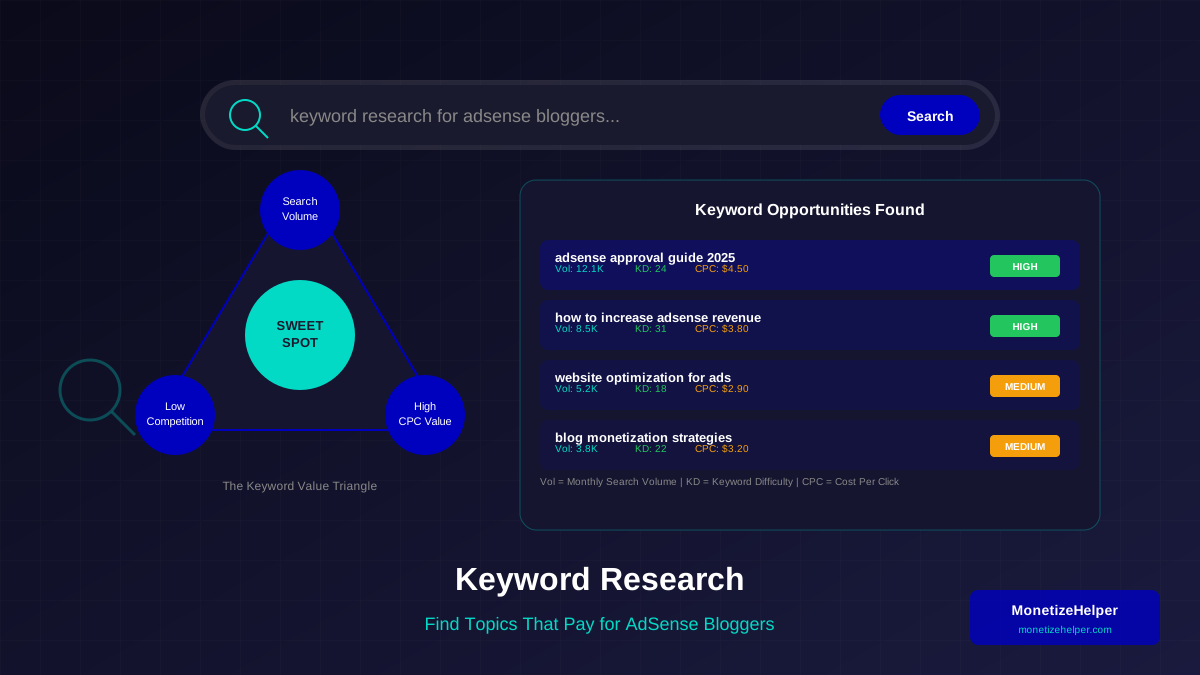
While everyone fights over broad, competitive keywords, smart bloggers quietly build empires on long-tail keywords. As part of your overall keyword research strategy, these longer, more specific search phrases may have lower individual search volumes, but they are dramatically easier to rank for and often convert better.
In this guide, you will learn exactly what long-tail keywords are, how to find them, and strategies for using them to build sustainable blog traffic that grows month after month.
What You Will Learn:
- What long-tail keywords are and why they matter
- How to find profitable long-tail keywords
- Free and paid research tools
- How to use long-tail keywords effectively
- Building a long-tail keyword strategy
What Are Long-Tail Keywords?
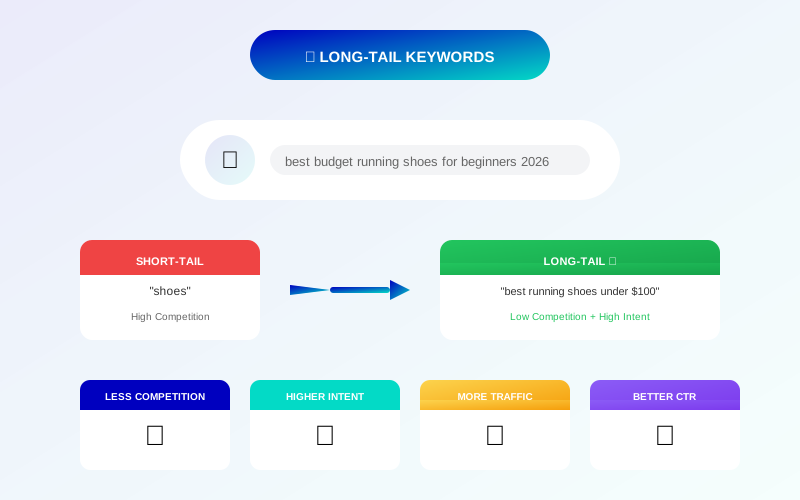
Long-tail keywords are longer, more specific search phrases that typically consist of 3-7 words. They are called "long-tail" because they sit on the long tail of the search demand curve.
Examples
- Head keyword: "running shoes"
- Long-tail: "best running shoes for flat feet women"
- Head keyword: "weight loss"
- Long-tail: "how to lose belly fat after pregnancy at home"
- Head keyword: "AdSense"
- Long-tail: "how long does AdSense approval take for new blogs"
Key Characteristics
- Lower search volume: 10-1,000 searches per month typically
- Lower competition: Fewer sites targeting them
- Higher specificity: Clear user intent
- Better conversion: Users know what they want
"70% of all search queries are long-tail keywords. By ignoring them, you're missing the majority of search opportunities."
— Search Engine Research
Why Target Long-Tail Keywords?
Smart bloggers prioritize long-tail keywords for several reasons:
Easier to Rank
With fewer competitors targeting specific phrases, new and smaller blogs can rank on page one much faster than for competitive head terms.
Higher Conversion Intent
Someone searching "best budget DSLR camera for beginners under $500" is much closer to purchasing than someone searching "camera."
Better User Experience
When your content perfectly matches a specific query, users find exactly what they need, improving engagement metrics.
For more on this topic, see our guide on Blog Traffic Growth Strategies: 12 Proven Ways to Get More Readers in 2026 →
Cumulative Traffic
While each long-tail keyword brings modest traffic, hundreds of them add up to substantial, diversified traffic that is not dependent on any single keyword.
AdSense Benefits
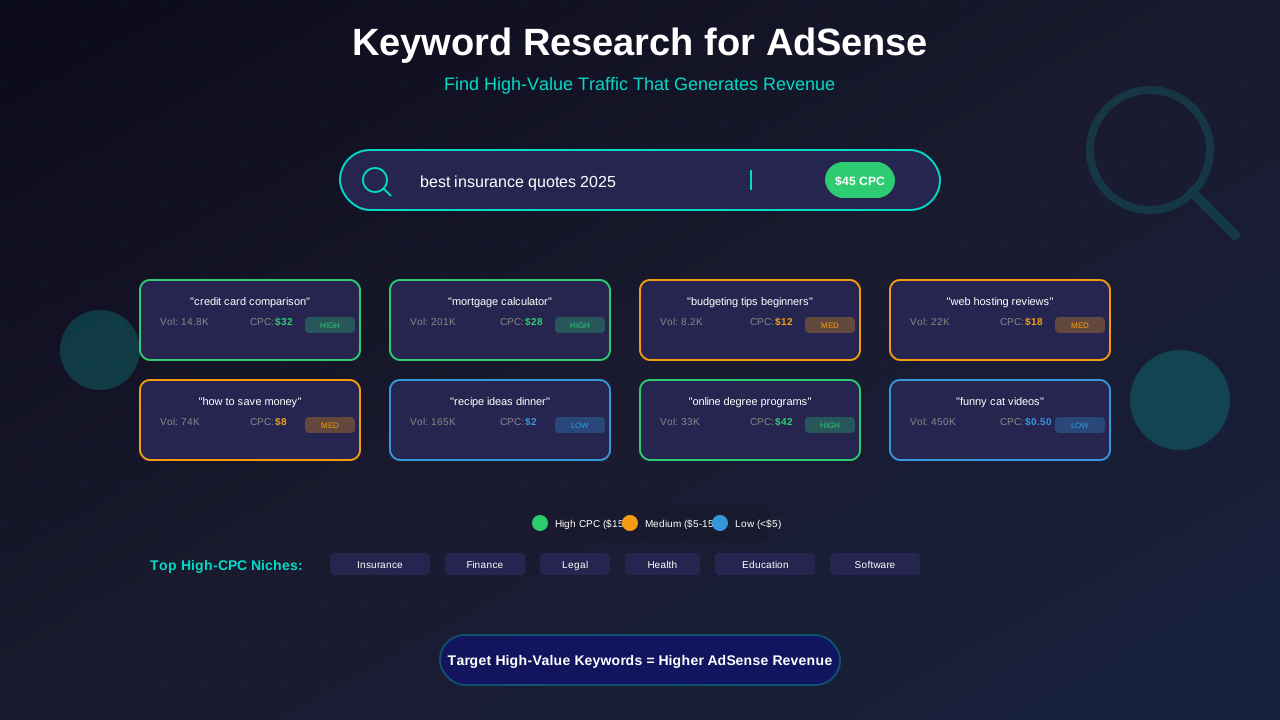
Specific keywords often have higher CPC because advertisers can target buyers more precisely. This can improve your RPM.
How to Find Long-Tail Keywords
These techniques reveal valuable long-tail opportunities:
Google Autocomplete
Start typing your topic in Google and note the suggestions. These are actual searches people make.
- Type your main keyword + a letter (a, b, c...)
- Use question words (how, what, why, when)
- Add modifiers (best, top, cheap, free)
- Note all relevant suggestions
People Also Ask
Google's "People Also Ask" boxes contain real questions searchers ask. Each question is a potential long-tail keyword.
Learn more in SEO Content Writing Guide: How to Write Articles That Rank and Convert →
Related Searches
At the bottom of Google results, related searches reveal additional long-tail variations people search for.
Answer the Public
AnswerThePublic is a free tool that visualizes questions and prepositions associated with any topic, revealing dozens of long-tail opportunities.
Competitor Analysis
Use tools to see what long-tail keywords competitors rank for. Look for keywords they rank on page 2-3 that you could target better.
Forum and Community Mining
Reddit, Quora, and niche forums reveal the exact language your audience uses. Note recurring questions and problems.
"The best long-tail keywords come from listening to your audience. What questions do they ask? What problems do they describe?"
For more on this topic, see our guide on Content Localization Strategy: Reach Global Audiences & Boost Revenue →
— Content Strategy Expert
Long-Tail Keyword Research Tools
These tools streamline your research:
Free Tools
- Google Keyword Planner: Basic search volume and competition data
- Ubersuggest: Keyword suggestions and difficulty scores
- AnswerThePublic: Question-based keyword visualization
- KeywordTool.io: Autocomplete-based suggestions
- Google Search Console: Keywords you already rank for
Paid Tools
- Ahrefs: Comprehensive keyword data and difficulty scores
- SEMrush: Competitor analysis and keyword magic tool
- KWFinder: Long-tail focus with difficulty analysis
- LowFruits: Specifically designed for finding easy-to-rank keywords
Using Google Search Console
Your existing Search Console data is gold:
- Find queries where you rank positions 5-20
- Look for long-tail queries with impressions but low clicks
- Identify questions you partially answer
- Create content specifically for these opportunities
Evaluating Long-Tail Keywords
Not all long-tail keywords are worth targeting. Evaluate each one:
Search Volume Sweet Spot
- Too low (under 10/month): May not be worth the effort
- Sweet spot (50-500/month): Good balance of volume and competition
- Higher (500-2000/month): Worth targeting if competition is manageable
Competition Analysis
Check the current search results:
- Are top results from authoritative domains only?
- Do you see forums, Q&A sites, or weak content ranking?
- Can you create better content than what ranks?
- Are there other blogs similar to yours ranking?
Search Intent Match
- Informational: User wants to learn (how, what, why)
- Commercial: User is researching before buying (best, review)
- Transactional: User ready to act (buy, download, sign up)
- Navigational: User looking for specific site (skip these)
Relevance to Your Site
- Does the keyword fit your niche?
- Can you provide genuine expertise?
- Will this content attract your target audience?
- Does it support your site's overall goals?
How to Use Long-Tail Keywords Effectively
Proper implementation maximizes your ranking potential:
Related reading: AI Content and AdSense: How to Use AI Safely Without Getting Banned →
On-Page Optimization
- Include the exact phrase in your title (H1)
- Use it in the first 100 words
- Add to at least one H2 heading
- Include in meta description
- Use naturally throughout content
Content Structure
- Directly answer the implied question
- Provide comprehensive coverage of the topic
- Address related questions within the same article
- Use variations and synonyms naturally
Supporting Content
Focus on creating high-value content that comprehensively answers user queries:
- Create cluster content around related long-tail keywords
- Link related articles together
- Build topical authority over time
Building a Long-Tail Keyword Strategy
Systematic approach yields best results:
Step 1: Topic Clusters
Organize keywords around main topics:
- One pillar topic (head keyword)
- 10-20 long-tail variations
- Create content for each
- Interlink strategically
Step 2: Content Calendar
Use our free content calendar template to organize your keyword targets:
- Prioritize by potential impact
- Mix difficulty levels
- Plan consistent publishing
- Track progress and adjust
Step 3: Monitor and Optimize
- Track rankings weekly
- Update underperforming content
- Double down on what works
- Find new opportunities from existing rankings
Frequently Asked Questions
How many long-tail keywords should I target per article?
Focus on one primary long-tail keyword per article, but include 2-3 related variations naturally. Google understands synonyms and related terms, so you often rank for variations automatically.
Learn more in Featured Snippets Optimization: Boost Traffic and Revenue Fast →
Can I rank for long-tail keywords with a new blog?
Yes! This is exactly why long-tail keywords are perfect for new blogs. While head keywords may take years to rank for, quality content targeting specific long-tail phrases can rank within weeks.
How do I know if a long-tail keyword is too competitive?
Search for it and analyze the results. If page one is dominated by major publications, Wikipedia, or highly authoritative sites, it may be too competitive. Look for results that include forums, smaller blogs, or outdated content.
Should I create separate pages for similar long-tail keywords?
If the intent is the same, cover them in one comprehensive article. If the intent differs (informational vs. commercial), separate pages may work better. Avoid creating multiple thin pages for slight variations.
How long until I see traffic from long-tail keywords?
Quality content targeting low-competition long-tail keywords can start ranking within 2-8 weeks. More competitive terms take longer. Consistent publishing accelerates overall results.