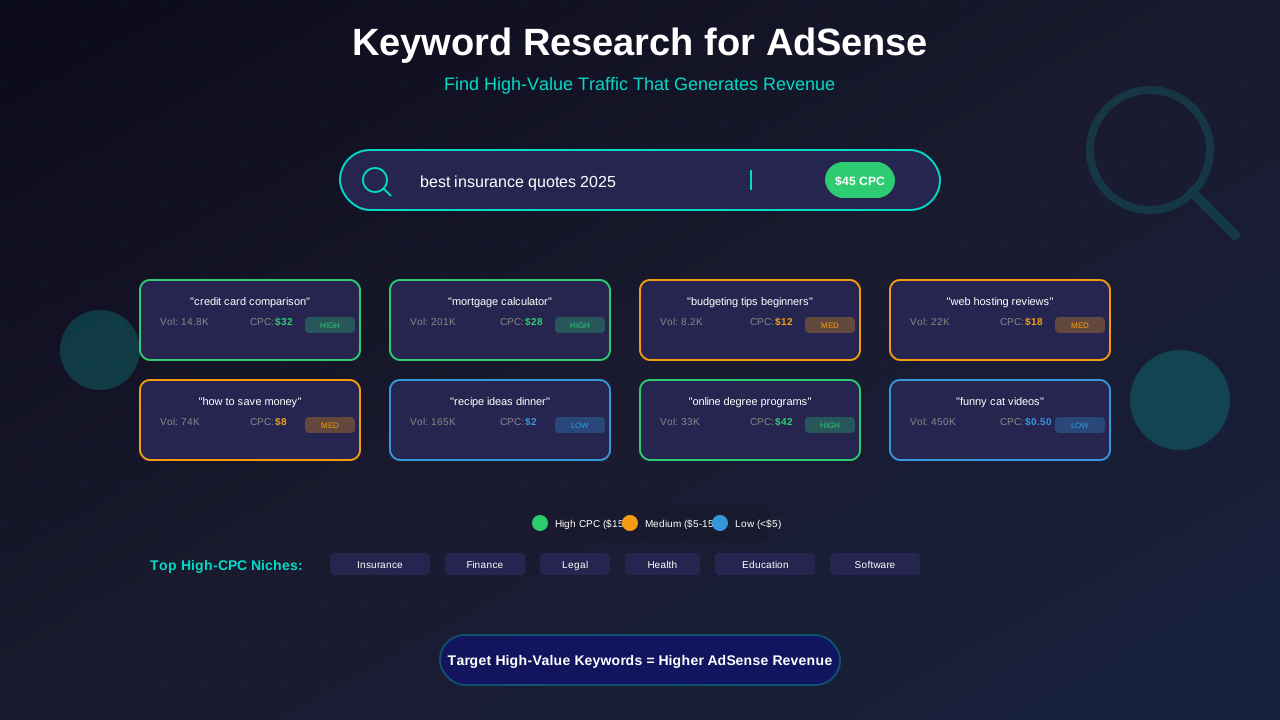
Not all traffic is created equal for AdSense publishers. A visitor searching for "best insurance quotes" is worth exponentially more than someone searching for "funny cat videos." Strategic keyword research helps you attract visitors who generate higher ad revenue whilst building sustainable organic traffic.
This guide teaches you how to research keywords specifically for AdSense success—balancing search volume, competition, and advertiser value to find topics that drive both traffic and revenue.
Understanding Keyword Value for AdSense
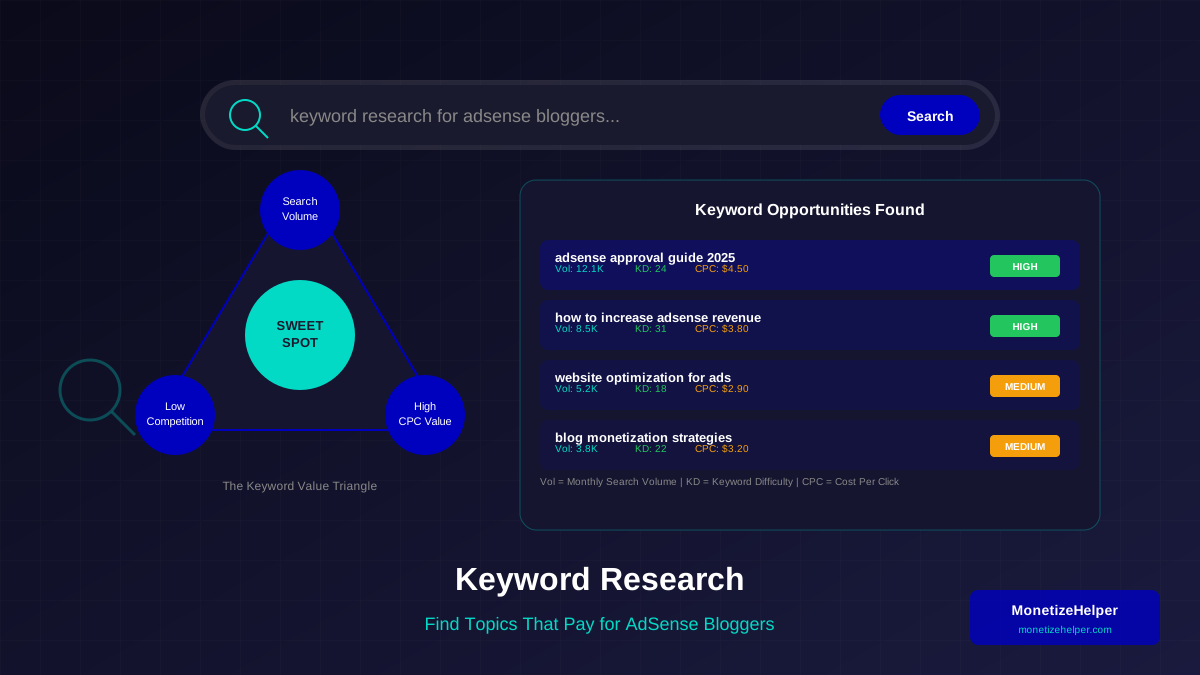
Keyword value for AdSense differs from traditional SEO metrics. You need to consider multiple factors:
Cost Per Click (CPC) Potential
Advertisers bid different amounts for different keywords. Financial, insurance, legal, and health keywords typically command the highest CPCs because acquiring customers in these industries is valuable. Educational or entertainment keywords often have lower CPCs.
Search Volume
High-CPC keywords mean nothing without traffic. Balance advertiser value with realistic traffic potential. Sometimes moderate-CPC keywords with higher volume generate more total revenue.
Competition Level
Consider your ability to rank. New sites can't compete for "best credit cards" but might rank for "credit card approval tips for students." Long-tail keywords often provide easier ranking opportunities.
User Intent Alignment
Keywords should match content you can genuinely provide value on. Ranking for keywords you can't serve well leads to high bounce rates and poor engagement—ultimately hurting ad performance.
High-CPC Niche Categories
Certain industries consistently offer higher AdSense CPCs. Consider how your content can authentically cover these areas:
Finance and Insurance
Credit cards, loans, mortgages, insurance quotes, investment advice—these keywords command premium CPCs because customer lifetime value is high. Even peripheral finance topics like budgeting tips or financial planning can capture valuable traffic.
Legal Services
Personal injury, divorce, business law, estate planning—legal keywords have high CPCs due to high client values. Content about legal rights, processes, or finding attorneys performs well.
For more on this topic, see our guide on Blog Traffic Growth Strategies: 12 Proven Ways to Get More Readers in 2026 →
Health and Medical
Medical treatments, health insurance, specific conditions, wellness programmes—healthcare advertisers pay premium rates. Note: health content requires strong E-E-A-T signals.
Technology and Software
SaaS products, web hosting, cybersecurity, software reviews—B2B technology keywords often have strong CPCs due to high customer values.
Education and Certification
Online degrees, professional certifications, skill training—education advertisers pay well for qualified leads.
Authenticity Matters
Don't chase high-CPC niches you can't serve authentically. Writing about insurance when you know nothing about it produces low-quality content that won't rank, won't engage readers, and could violate AdSense policies. Choose niches where you can provide genuine value.
Keyword Research Tools
Several tools help identify keyword opportunities:
Google Keyword Planner
Free tool providing search volume and CPC estimates. While designed for advertisers, it's valuable for understanding keyword value. Access through Google Ads (free account works).
Google Search Console
Shows keywords you already rank for. Use Search Console to identify opportunities to optimise existing rankings and discover related keywords your audience searches for.
Learn more in SEO Content Writing Guide: How to Write Articles That Rank and Convert →
Ahrefs/SEMrush
Premium tools offering comprehensive keyword data including difficulty scores, traffic estimates, and competitor analysis. Ahrefs and SEMrush are worth the investment for serious publishers.
AnswerThePublic
Visualises questions people ask about topics. AnswerThePublic is excellent for finding long-tail keywords and understanding user intent.
Google Trends
Google Trends shows search trend data over time. Helps identify seasonal patterns and emerging topics.
Finding Keyword Opportunities
Systematic research reveals valuable keywords you might miss:
Start with Seed Keywords
Begin with broad topics related to your niche. If you write about personal finance, seeds might include "budgeting," "saving money," "investing basics," etc.
Expand with Modifiers
Add modifiers to discover long-tail variations:
- How to: "how to budget money," "how to start investing"
- Best: "best budgeting apps," "best savings accounts"
- For [audience]: "investing for beginners," "budgeting for students"
- Vs/Compare: "Roth IRA vs traditional IRA"
- [Year]: "best credit cards 2025"
Analyse Competitors
Study what keywords competitors rank for. Look for gaps—topics they haven't covered well or at all. Tools like Ahrefs show competitors' top-performing keywords.
For more on this topic, see our guide on Content Localization Strategy: Reach Global Audiences & Boost Revenue →
Explore Related Searches
Google's "related searches" and "people also ask" sections reveal additional keyword ideas. These suggestions come directly from user search behaviour.
Evaluating Keyword Potential
Not every keyword is worth pursuing. Evaluate opportunities systematically:
Search Volume Thresholds
Minimum useful volume depends on your niche. In competitive niches, keywords with 1,000+ monthly searches make sense. In narrow niches, even 100 monthly searches might be valuable if CPC is high.
CPC Reality Check
Remember that displayed CPC is what advertisers pay, not what you earn. Your actual earnings depend on click-through rates, ad viewability, and revenue share. Still, higher CPC generally correlates with higher publisher earnings.
Competition Assessment
Look at current search results. Can you create something better than existing content? If the top 10 results are from major authority sites, consider easier opportunities unless you have significant resources.
Intent Matching
Ensure you can satisfy the search intent. If people searching "best credit cards" expect comparison reviews with affiliate links, an educational article about credit card basics won't satisfy them—even if you rank.
Content Planning Around Keywords
Transform keyword research into content strategy:
Related reading: AI Content and AdSense: How to Use AI Safely Without Getting Banned →
Group by Topic Clusters
Organise related keywords into topic clusters. A pillar page covers the broad topic whilst cluster articles address specific sub-topics. This approach builds topical authority and creates natural internal linking.
Prioritise by Opportunity
Not all keywords deserve equal effort. Prioritise based on:
- Revenue potential (volume × CPC potential)
- Ranking difficulty relative to your site's authority
- Content creation cost (some topics require more research)
- Strategic value for building topical authority
Calendar Planning
Create a content calendar addressing keywords systematically. Balance "quick win" lower-competition keywords with ambitious higher-value targets that build long-term.
Seasonal and Trending Keywords
Time-sensitive keywords require special consideration:
Seasonal Opportunities
Many keywords spike seasonally—tax preparation in April, gift guides in December, back-to-school in August. Plan content months ahead to rank before the surge.
News and Trends
Breaking news and trends create temporary keyword opportunities. Fast publishers can capture significant traffic, but this content has short shelf life.
Evergreen Balance
Balance seasonal content with evergreen topics that generate consistent traffic year-round. Read our evergreen content guide to learn how this content type compounds in value whilst seasonal content spikes and fades.
Learn more in Featured Snippets Optimization: Boost Traffic and Revenue Fast →
Frequently Asked Questions
Should I only target high-CPC keywords?
No. High-CPC keywords are typically highly competitive. A balanced approach targeting various CPC levels builds sustainable traffic. Moderate-CPC keywords with good volume often provide better total revenue than fighting for extremely competitive high-CPC terms.
How many keywords should I target per article?
Focus on one primary keyword per article, but naturally include related keywords and variations. Modern SEO is about topic coverage, not keyword stuffing. Write comprehensively about the topic and related keywords will be included naturally.
How long before keyword research shows results?
SEO is a long game. New content typically takes 3-6 months to reach stable rankings. Factor this delay into your planning—content published today generates traffic months later.
Can I target competitor brand keywords?
You can target comparison or alternative keywords (e.g., "QuickBooks alternatives") but directly targeting brand names is risky and often ineffective. Focus on providing value rather than riding competitors' brand recognition.
How often should I redo keyword research?
Conduct comprehensive research quarterly, but continuously monitor for new opportunities. Search trends evolve, new topics emerge, and competitor landscapes change. Stay current without constantly chasing the latest trend.
Conclusion: Keywords as Revenue Strategy
Strategic keyword research is fundamental to AdSense success. By targeting keywords that attract valuable traffic—visitors actively interested in topics advertisers pay to reach—you maximise revenue potential whilst building organic traffic.
Remember that keyword research is the beginning, not the end. The best keyword targeting fails without excellent content that satisfies user intent. Combine thorough research with genuine expertise and quality content creation for sustainable AdSense success.
Start with your areas of genuine knowledge, identify keyword opportunities within those areas, and systematically create content that serves both users and your monetisation goals.