A content audit is the process of systematically reviewing all content on your website to identify what is working, what needs improvement, and what should be removed. Regular audits can dramatically improve your traffic, rankings, and ad revenue.
Many publishers create new content constantly while ignoring existing posts that could perform better with updates. This guide provides a complete framework for auditing and optimizing your content library.
What You Will Learn:
- Why content audits matter for growth
- How to inventory all your content
- Metrics to evaluate each piece
- Action plans for different content types
- Complete audit checklist
Why Content Audits Matter
Regular content audits provide multiple benefits:
Improve Existing Content ROI
You have already invested in creating content. Updating underperforming pieces often generates better returns than creating new content from scratch.
Identify Content Decay
Content that once performed well may have declined. Topics become outdated, competitors publish better content, and user intent evolves.
Remove Harmful Content
Thin, duplicate, or low-quality content can hurt your site's overall quality signals. Pruning weak content can improve rankings for remaining pages.
Discover Optimization Opportunities
Content ranking on page 2 or 3 may need small improvements to reach page 1. Audits help prioritize these opportunities.
"Some of the biggest traffic gains I've seen came not from new content, but from updating and consolidating existing content."
— Content Marketing Expert
Preparing for Your Audit
Set up properly before diving in:
For more on this topic, see our guide on Blog Traffic Growth Strategies: 12 Proven Ways to Get More Readers in 2026 →
Gather Your Tools
- Google Analytics: Traffic and engagement data
- Google Search Console: Search performance data
- Spreadsheet: To organize your audit
- SEO tool: Ahrefs, SEMrush, or similar for rankings
Define Your Goals
What do you want to achieve? Your goals should align with your overall content calendar and publishing strategy.
- Increase organic traffic
- Improve content quality for AdSense
- Update outdated information
- Consolidate similar content
- Remove thin content
Set Your Timeframe
Decide which content period to audit:
- All content (comprehensive audit)
- Content older than 12 months
- Specific categories or topics
- Content published in a specific year
Creating Your Content Inventory
List all content that needs reviewing:
Export Your URLs
Get a complete list of pages:
- Use Screaming Frog or similar crawler
- Export from your CMS
- Pull from XML sitemap
Spreadsheet Columns to Create
- URL
- Page title
- Publish date
- Last updated
- Word count
- Target keyword
- Category
- Author
Metrics to Collect
Pull data for each piece of content:
Traffic Metrics (Google Analytics)
- Organic sessions (last 12 months)
- Trend (increasing, stable, declining)
- Bounce rate
- Average time on page
- Pages per session
Search Metrics (Search Console)
- Impressions
- Clicks
- Average position
- Click-through rate (CTR)
- Queries driving traffic
Engagement Metrics
- Comments
- Social shares
- Backlinks
- Conversion actions
Revenue Metrics
- Page RPM
- Ad impressions
- Earnings contribution
Content Evaluation Framework
Score each piece of content:
Learn more in SEO Content Writing Guide: How to Write Articles That Rank and Convert →
Quality Score (1-5)
- 1: Thin, outdated, or low-value content
- 2: Basic content needing significant work
- 3: Decent content with room for improvement
- 4: Good content, minor updates needed
- 5: Excellent content, no changes needed
Performance Score (1-5)
- 1: No organic traffic
- 2: Minimal traffic, poor rankings
- 3: Moderate traffic, page 2-3 rankings
- 4: Good traffic, page 1 rankings
- 5: Excellent traffic, top 3 rankings
Action Categories
Based on scores, categorize content:
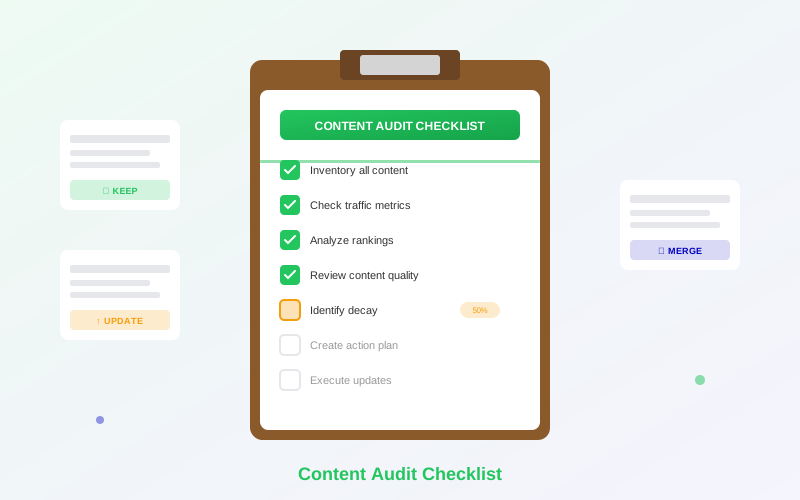
- Keep: High quality + high performance
- Update: Good quality but declining performance
- Improve: Low quality but ranking potential
- Consolidate: Similar topics that should merge
- Remove: Low quality + no performance
Action Plans by Category
Content to Keep
For high performers:
- Add internal links to other relevant content
- Optimize ad placement if not already done
- Consider adding related content offers
- Schedule annual review to keep current
Content to Update
For declining or outdated content:
- Update statistics and examples
- Refresh screenshots and images
- Add new sections for recent developments
- Improve headlines and meta descriptions
- Update publish date after significant changes
Content to Improve
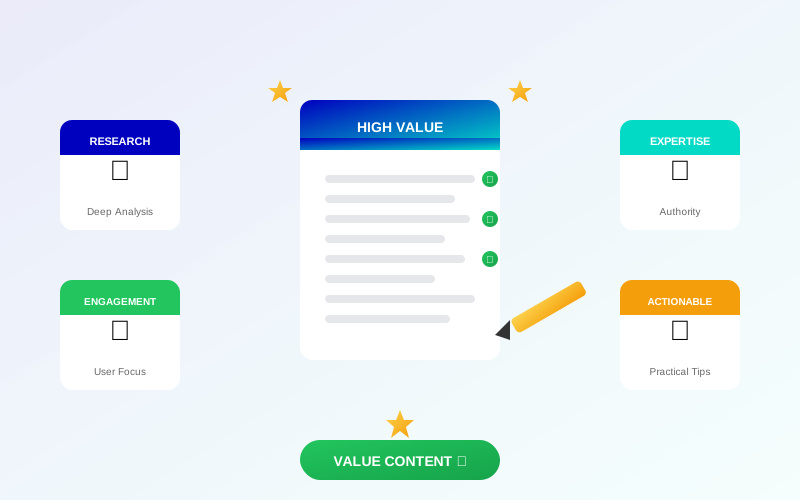
For content with potential but low quality, refer to our guide on writing high-value content:
- Expand thin content substantially
- Add examples, case studies, data
- Improve structure with better headings
- Add multimedia (images, videos)
- Strengthen calls to action
Content to Consolidate
For multiple articles on similar topics:
- Identify the strongest performer
- Merge valuable sections from weaker pieces
- Create one comprehensive resource
- Redirect old URLs to the consolidated piece
Content to Remove
For content that hurts more than helps:
For more on this topic, see our guide on Content Localization Strategy: Reach Global Audiences & Boost Revenue →
- Confirm no valuable backlinks exist
- Set up 410 (gone) or redirect to relevant page
- Update internal links that pointed to removed content
- Document what was removed and why
Content Update Checklist
When updating content, check these elements:
Content Elements
- ☐ Update outdated statistics and data
- ☐ Refresh examples and screenshots
- ☐ Add new relevant information
- ☐ Remove obsolete sections
- ☐ Improve clarity and readability
- ☐ Add or improve visual elements
SEO Elements
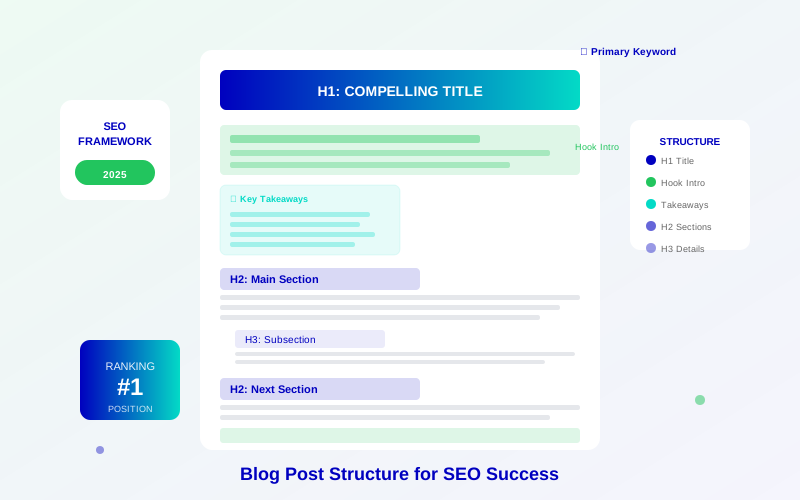
Follow our blog post structure framework when reviewing these elements:
- ☐ Optimize title tag for current search intent
- ☐ Update meta description
- ☐ Review and improve heading structure
- ☐ Add internal links to newer content
- ☐ Update images with optimized alt text
- ☐ Check for broken links
Monetization Elements
- ☐ Review ad placement
- ☐ Add relevant affiliate links if applicable
- ☐ Ensure content meets E-E-A-T guidelines
- ☐ Check call-to-action effectiveness
Prioritizing Your Work
You cannot update everything at once. Prioritize by:
Quick Wins First
Content ranking positions 5-15 that needs minor updates. Small improvements can move these to top positions quickly.
High-Value Content Second
Content that generates significant revenue or conversions. Even moderate improvements can have outsized impact.
Strategic Content Third
Pillar content and cornerstone pages that define your site's authority on key topics.
Related reading: AI Content and AdSense: How to Use AI Safely Without Getting Banned →
Low Priority
Content with no rankings, no backlinks, and no strategic value. Consider removal or minimal updates only.
Audit Schedule
Make auditing a regular process:
Comprehensive Audit: Annually
Once per year, review all content systematically.
Quick Audit: Quarterly
Every quarter, review top 20% of content and any declining pages.
Ongoing Monitoring: Weekly
Check Search Console for significant ranking changes weekly.
Content Updates: Monthly
Dedicate time each month to update 2-5 pieces based on your audit findings.
Learn more in Featured Snippets Optimization: Boost Traffic and Revenue Fast →
Tracking Results
Measure the impact of your audit work:
Before/After Metrics
- Organic traffic (overall and per page)
- Average ranking position
- Click-through rate
- Time on page
- Revenue metrics
Document Everything
Keep records of:
- What changes you made
- When changes were made
- Results after 30, 60, 90 days
- Lessons learned for future audits
Frequently Asked Questions
How long does a content audit take?
It depends on your content library size. For 50-100 articles, expect 2-3 days for the initial audit. Larger sites may take 1-2 weeks.
Should I delete old content?
Only delete content that is truly low-value with no backlinks. Often, updating or consolidating is better than deleting.
How often should I update content?
High-performing and time-sensitive content should be reviewed every 6-12 months. Evergreen content may only need updates every 1-2 years.
Will updating content improve rankings?
Often yes, especially if you improve quality, add value, and better match current search intent. Results typically appear within 2-8 weeks.
What if I have hundreds of articles?
Focus on high-value content first. Use the 80/20 rule: 20% of your content likely drives 80% of results. Start there.