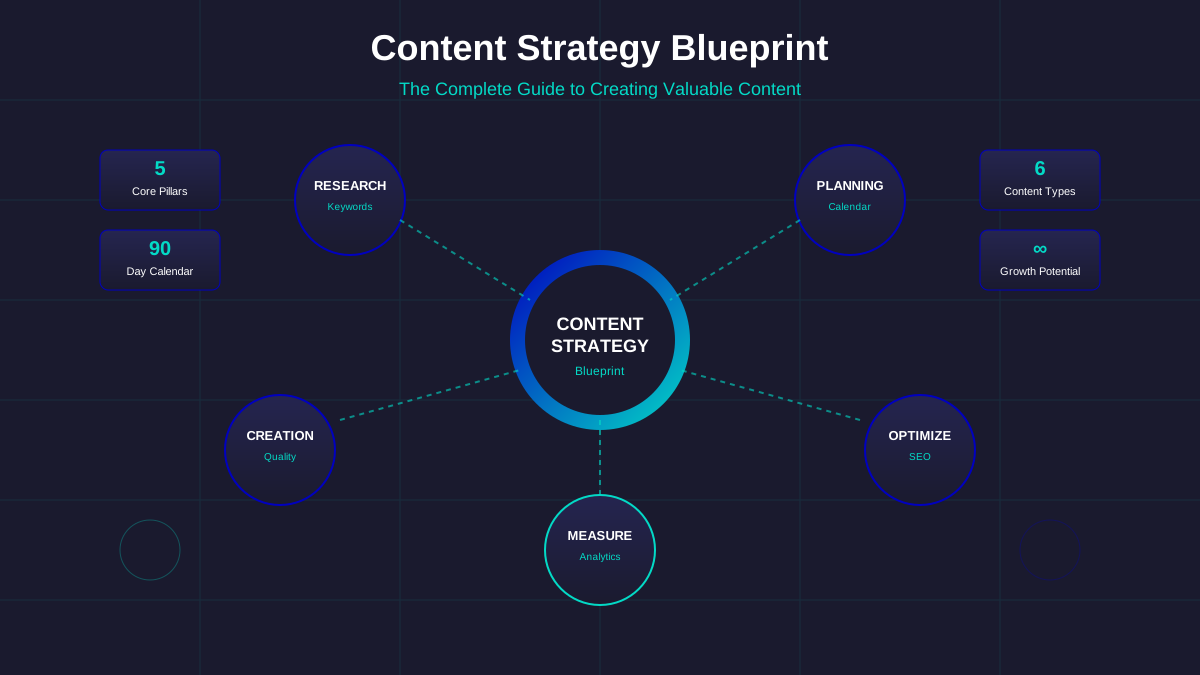
Want to get your website approved for AdSense? It's not about writing more. It's about writing smarter! A good content plan helps you succeed. This guide shows you exactly how to build content that Google loves and readers enjoy.
Think of your content plan like the base of a house. Without a strong base, everything falls apart. With the right plan, every article makes your website stronger. It brings you closer to making money from your site.
What You Will Learn:
- The 5-step plan that gets AdSense approval
- How to find topics that bring in good-paying ads
- What Google really looks for in quality content
- A 90-day content calendar you can use right away
- How to track and improve how your content does
What is a Content Strategy and Why Does It Matter?
A content strategy is your master plan for writing and sharing content. It answers three big questions: What will you write about? Who will read it? How will it help you reach your goals?
For AdSense approval, your content plan really matters. Google looks at your whole website, not just one article. They want to see a helpful site with a clear purpose. They don't want random posts thrown together.
"We want sites to have a good amount of content that helps users. A site with only a few pages may not meet our quality standards."
— Google AdSense Program Policies
Pillar 1: Research - Finding Topics That Matter
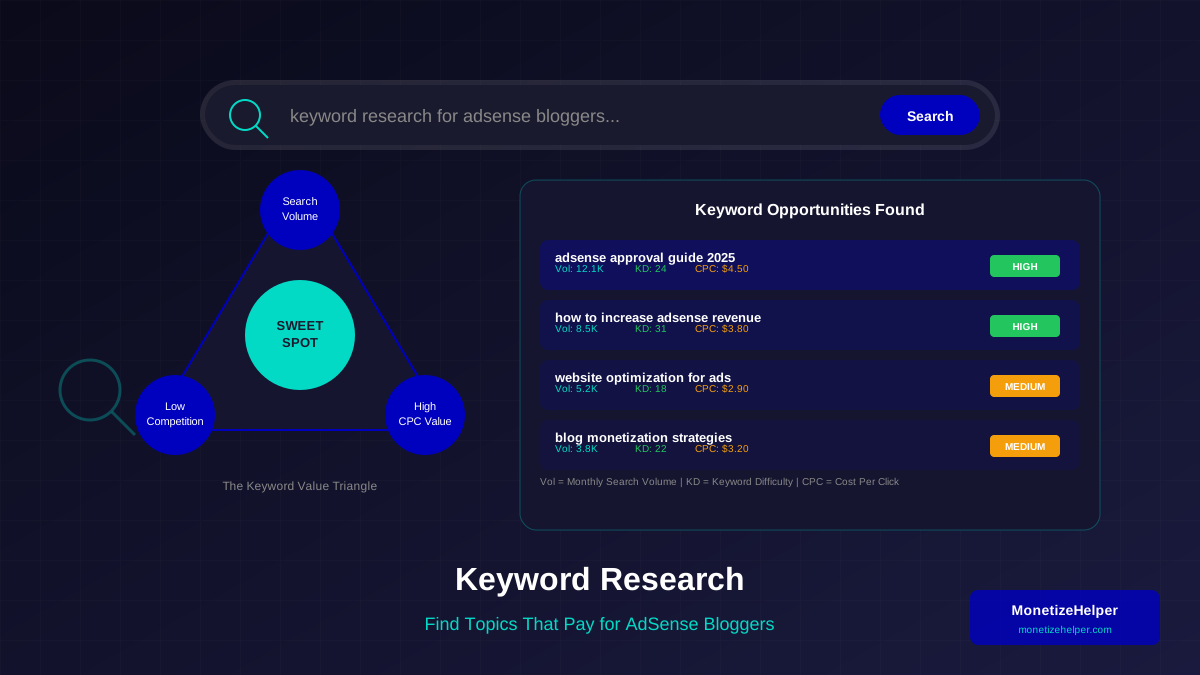
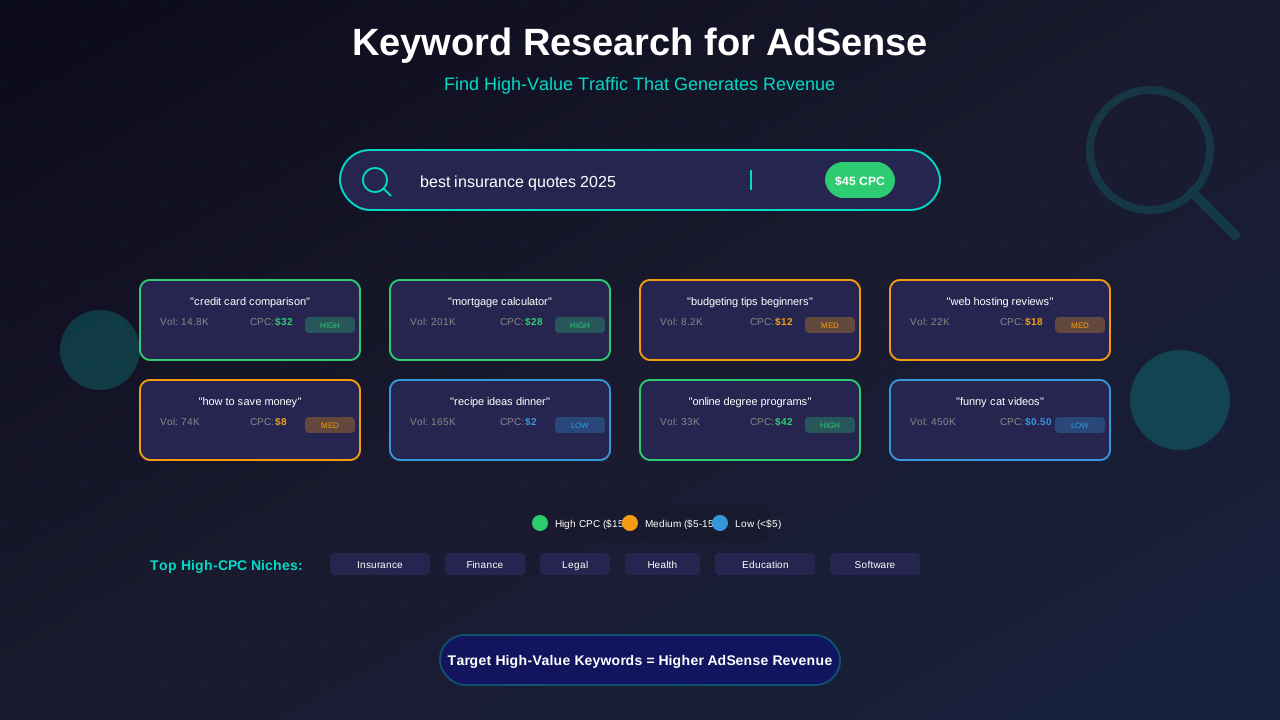
Great content starts with great research. Before you write anything, find out what your readers want. Learn which topics bring in advertisers who pay well.
Keyword Research Basics
Keywords connect what people search for to what you write. Finding the right keywords helps you create content people actually need.
For more on this topic, see our guide on Blog Traffic Growth Strategies: 12 Proven Ways to Get More Readers in 2026 →
Types of Keywords to Target:
| Keyword Type | Example | Search Volume | Competition | Best For |
|---|---|---|---|---|
| Head Terms | "AdSense" | Very High | Very High | Established sites |
| Body Keywords | "AdSense approval" | High | High | Growing sites |
| Long-tail | "how to get adsense approved for new blog" | Low-Medium | Low | New sites |
| Question-based | "why was my adsense rejected" | Medium | Medium | All sites |
Free Keyword Research Tools
- Google Search Console: See what keywords already bring traffic
- Google Trends: Identify rising topics in your niche
- Answer The Public: Find question-based keywords
- Ubersuggest: Get keyword ideas with difficulty scores
- Google Autocomplete: See what people actually search
Understanding Search Intent
Search intent is the reason behind a search. Matching your content to search intent is crucial for both rankings and AdSense approval.
Pillar 2: Planning - Building Your Content Calendar
A content calendar transforms random publishing into strategic execution. It helps you maintain consistency, cover topics comprehensively, and avoid last-minute scrambling for ideas.
The 90-Day Content Calendar Framework
For AdSense approval, plan at least 90 days of content before applying. This ensures you have enough quality articles and demonstrates commitment to your audience.
Monthly Content Distribution:
- Pillar Content (1-2 per month): Comprehensive guides of 2500-4000 words
- Cluster Content (6-8 per month): Supporting articles of 1200-2000 words
- Quick Posts (2-4 per month): Updates, news, or quick tips of 600-1000 words
Content Calendar Template
| Week | Monday | Wednesday | Friday | Content Type |
|---|---|---|---|---|
| Week 1 | Pillar Article | Cluster Article | Cluster Article | Foundation |
| Week 2 | Cluster Article | Cluster Article | Quick Post | Expansion |
| Week 3 | Cluster Article | Pillar Article | Cluster Article | Authority |
| Week 4 | Cluster Article | Quick Post | Update Old Post | Maintenance |
"The best time to start building your content library was a year ago. The second best time is today. Consistency beats perfection every time."
Learn more in SEO Content Writing Guide: How to Write Articles That Rank and Convert →
— Content Marketing Institute
Pillar 3: Creation - Writing Content That Converts
Content creation is where strategy meets execution. Every article should serve a purpose, solve a problem, and provide genuine value to your readers.
The Anatomy of a High-Value Article
- Compelling Headline: Include focus keyword, create curiosity, promise value
- Strong Introduction: Hook readers within the first 100 words
- Clear Structure: Use H2 and H3 headings to organise content
- Actionable Content: Provide steps readers can follow
- Visual Elements: Include images, charts, or diagrams
- Powerful Conclusion: Summarise key points and include a call-to-action
Content Quality Checklist
Before publishing any article, run through this checklist:
- ☐ Does it answer the search query completely?
- ☐ Is the information accurate and up-to-date?
- ☐ Are sources cited where appropriate?
- ☐ Is the writing clear and free of errors?
- ☐ Does it provide unique insights or perspectives?
- ☐ Would you be proud to show this to an expert in the field?
Writing for Your Audience
Remember who you are writing for. Your content should be accessible to beginners while still providing value to more experienced readers. Use simple language, explain technical terms, and include practical examples.
For more detailed guidance on creating quality content, see our guide on how to write high-value content that gets AdSense approved.
For more on this topic, see our guide on Content Localization Strategy: Reach Global Audiences & Boost Revenue →
Pillar 4: Optimisation - Making Content Discoverable
Great content that nobody finds is wasted effort. Optimisation ensures your articles reach the people searching for them.
On-Page SEO Essentials
- Title Tag: Include focus keyword near the beginning, keep under 60 characters
- Meta Description: Compelling summary with keyword, 150-160 characters
- URL Structure: Short, descriptive, includes keyword
- Header Tags: Use H2 for main sections, H3 for subsections
- Internal Links: Link to related articles on your site
- Image Alt Text: Describe images and include keywords naturally
Content Readability
Google values content that users can actually read and understand. Aim for:
- Short paragraphs (2-4 sentences)
- Simple vocabulary (8th-grade reading level)
- Active voice over passive voice
- Bullet points and numbered lists
- Subheadings every 300-400 words
Pillar 5: Measurement - Tracking What Works
What gets measured gets improved. Track your content performance to understand what resonates with your audience and what needs work.
Key Metrics to Track
| Metric | What It Tells You | Target | Tool |
|---|---|---|---|
| Page Views | Content popularity | Growing monthly | Google Analytics |
| Time on Page | Content engagement | 3+ minutes | Google Analytics |
| Bounce Rate | Content relevance | Under 70% | Google Analytics |
| Organic Traffic | SEO effectiveness | 50%+ of total | Search Console |
| Keyword Rankings | Search visibility | Top 10 positions | Search Console |
Content Types That Work Best for AdSense
Not all content types are equal when it comes to AdSense. Some formats naturally attract more engaged readers and higher-paying advertisers.
Related reading: AI Content and AdSense: How to Use AI Safely Without Getting Banned →
Top-Performing Content Formats:
- How-To Guides: Step-by-step instructions that solve specific problems
- Ultimate Guides: Comprehensive resources on broad topics
- Comparison Posts: Product or service comparisons that help decisions
- List Posts: Curated collections of tools, tips, or resources
- Case Studies: Real-world examples with results and lessons
- Tutorials: Detailed instructions for completing tasks
"The best content doesn't just answer questions—it anticipates the next question the reader will have and answers that too."
— Neil Patel, Digital Marketing Expert
Avoiding Common Content Mistakes
Many publishers sabotage their AdSense applications with easily avoidable content mistakes. Here are the most common ones:
Mistakes That Kill AdSense Applications:
- Thin Content: Articles under 500 words with little substance
- Duplicate Content: Copying from other sources or your own site
- Keyword Stuffing: Unnatural repetition of keywords
- Poor Structure: Wall-of-text articles with no formatting
- Outdated Information: Old facts or broken links
- No Original Value: Rehashing what everyone else says
Building Topical Authority
Google favours websites that demonstrate expertise in specific topics. Building topical authority means creating comprehensive coverage of your niche.
The Topic Cluster Model
Organise your content into topic clusters with a pillar page at the centre and related articles linking back to it. This shows Google you have depth of knowledge in your subject area.
Learn more in Featured Snippets Optimization: Boost Traffic and Revenue Fast →
Learn more about this approach in our Ultimate AdSense Approval Guide which covers building a comprehensive website structure.
Your Content Strategy Action Plan
Now that you understand the framework, here is your action plan for the next 30 days:
Week 1: Research Phase
- Identify your primary topic cluster
- Research 20-30 potential keywords
- Analyse top-ranking content for each keyword
- Create your content calendar for 90 days
Week 2-3: Foundation Content
- Write your first pillar article (3000+ words)
- Create 4-6 supporting cluster articles
- Implement internal linking between articles
- Add essential pages (About, Contact, Privacy)
Week 4: Optimisation
- Optimise all articles for SEO
- Improve readability and formatting
- Add images and visual elements
- Set up Google Analytics and Search Console
Frequently Asked Questions (FAQs)
How many articles do I need before applying for AdSense?
Aim for at least 20-30 high-quality articles before applying. Quality matters more than quantity—20 excellent articles will outperform 100 mediocre ones. Make sure each article provides genuine value and is at least 1000 words.
Should I focus on one topic or cover multiple niches?
Start with one primary topic and build topical authority before expanding. Google rewards depth of expertise. Once you have 30-40 articles in one niche, you can consider adding related topics.
How often should I publish new content?
Consistency matters more than frequency. Publishing 2-3 quality articles per week is better than publishing daily low-quality posts. Find a sustainable schedule you can maintain long-term.
Can I use AI tools to help write content?
AI can assist with research and drafts, but your final content must be original, accurate, and provide unique value. Google can detect purely AI-generated content. Always add your expertise, examples, and personal insights.
How long does it take to see results from content strategy?
Expect to see initial traffic within 2-4 weeks, but significant results typically take 3-6 months. SEO is a long-term game. Stay consistent, keep improving, and the results will compound over time.