Keyword research is the foundation of successful AdSense blogging. Without it, you are creating content blindly—hoping people search for what you write. With proper keyword research, you target topics people actually search for, with commercial potential that attracts well-paying advertisers.
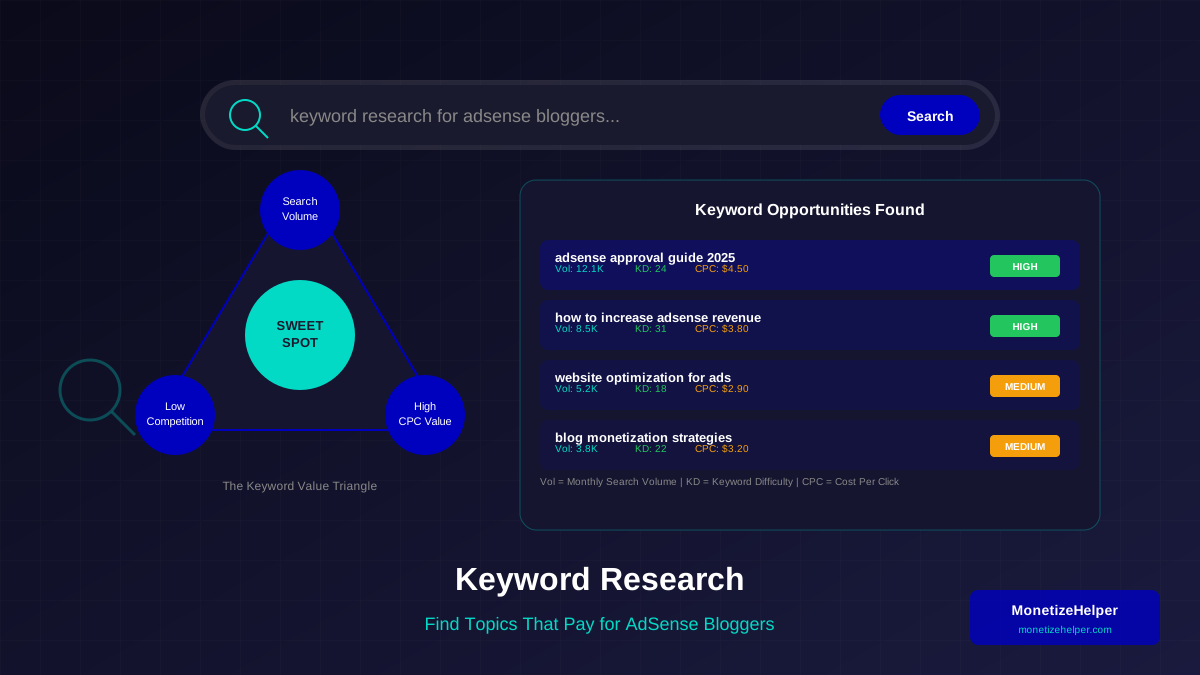
The best keyword research balances three factors: search volume (traffic potential), competition (ranking difficulty), and commercial value (advertiser spending). This guide shows you how to find keywords that hit all three.
What You Will Learn:
- Understanding keyword value for AdSense publishers
- Free tools for effective keyword research
- How to assess competition realistically
- Matching keywords to search intent
- Building a content calendar from keyword research
Understanding Keyword Value for AdSense
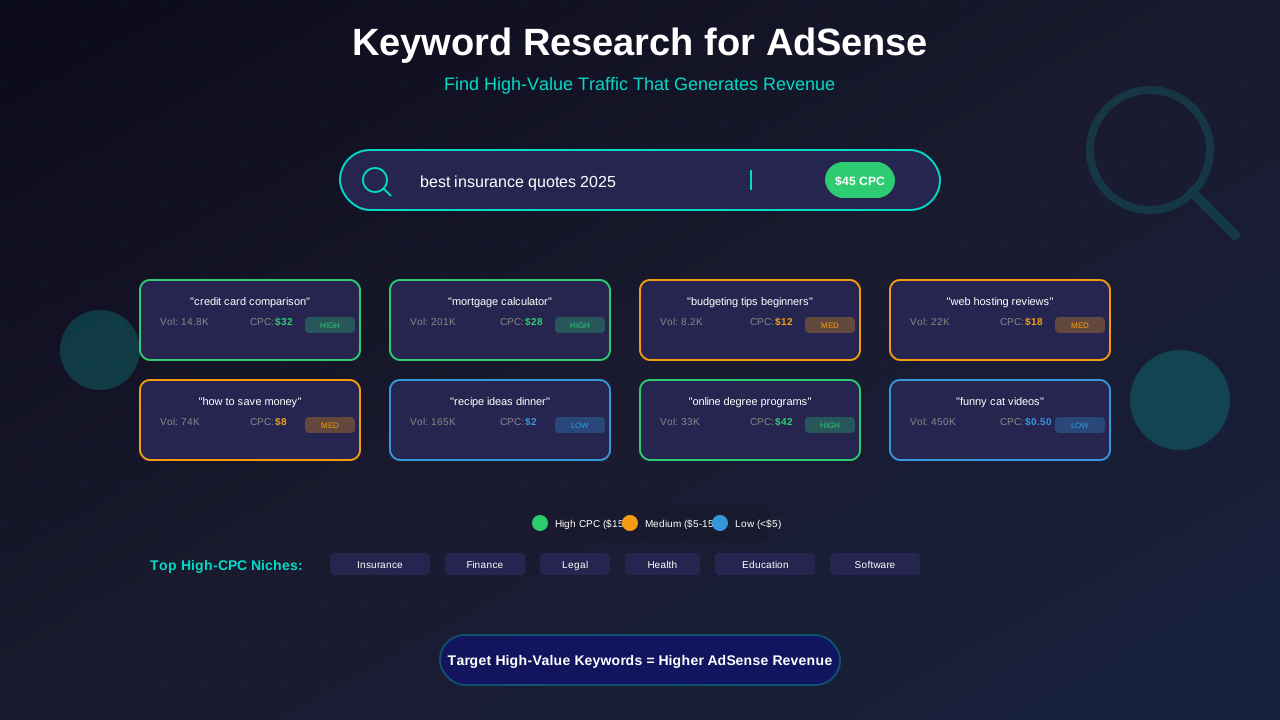
Not all keywords are equal for AdSense publishers. A keyword with 100,000 monthly searches might earn less than one with 5,000 searches if the commercial value differs significantly.
Factors That Affect Keyword Value:
| Factor | Impact on RPM | How to Assess |
|---|---|---|
| Commercial Intent | High | Keywords indicating purchase interest |
| Advertiser Competition | High | Industries with high ad spend |
| Geographic Appeal | Medium | Searches from high-CPC countries |
| Topic Category | Medium-High | Finance, tech, health, business |
| Searcher Demographics | Medium | Professional vs casual audience |
High-Value Topic Categories:
- Finance: Insurance, loans, investing, banking
- Technology: Software, SaaS, web hosting, apps
- Business: Marketing, entrepreneurship, B2B services
- Health: Treatments, medical devices, supplements
- Education: Online courses, certifications, degrees
- Legal: Attorney services, legal advice
Free Keyword Research Tools
You do not need expensive tools to do effective keyword research. These free options provide enough data to build a solid content strategy.
Google Keyword Planner
Google Keyword Planner provides search volume ranges and competition data. While designed for ads, it works well for content planning.
- Pros: Free, data from Google itself, shows commercial intent
- Cons: Requires Google Ads account, volume shown as ranges
Google Search Console
If your site has existing content, Google Search Console shows what you already rank for. Use this to find opportunities.
- Pros: Real data from your site, shows actual clicks
- Cons: Only shows data for existing content
Google Autocomplete
Simply typing in Google search reveals what people actually search. These are real query suggestions.
For more on this topic, see our guide on Blog Traffic Growth Strategies: 12 Proven Ways to Get More Readers in 2026 →
- Pros: Free, real-time, shows actual queries
- Cons: No volume data, manual process
AnswerThePublic
AnswerThePublic visualises questions people ask about topics. Excellent for finding informational content ideas.
- Pros: Question-based keywords, visual presentation
- Cons: Limited free searches per day
Ubersuggest (Free Version)
Neil Patel's tool offers keyword suggestions and basic metrics in its free tier.
- Pros: Volume estimates, keyword suggestions, SEO difficulty
- Cons: Limited daily searches, some features paid
Understanding Search Intent
Search intent determines what type of content ranks for a keyword. Matching intent correctly is essential for ranking and user satisfaction.
Four Types of Search Intent:
| Intent Type | Searcher Goal | Content Format | AdSense Value |
|---|---|---|---|
| Informational | Learn something | How-to guides, explanations | Medium |
| Commercial | Research before buying | Reviews, comparisons | High |
| Transactional | Make a purchase | Product pages | Very High |
| Navigational | Find specific site | Brand pages | Low |
How to Determine Intent:
The easiest way to determine intent is to search the keyword yourself and see what ranks. Google has already determined what content satisfies searchers.
Learn more in SEO Content Writing Guide: How to Write Articles That Rank and Convert →
- Search the keyword in an incognito window
- Note the content types that rank (lists, guides, products)
- Look at the format (long-form, short answers, videos)
- Check for SERP features (featured snippets, shopping results)
"Match the intent perfectly. If informational content ranks, write informational content. Fighting the intent is fighting Google's understanding of what users want."
— SEO Best Practices
Assessing Competition Realistically
Tool metrics showing "difficulty scores" are estimates. Real competition assessment requires looking at actual search results.
Manual Competition Assessment:
- Search the keyword: See who ranks on page one
- Check domain authority: Are they big brands or niche sites?
- Analyse content quality: Can you create something better?
- Look at backlinks: How many links do ranking pages have?
- Check content freshness: When was ranking content published?
Competition Red Flags:
- First page dominated by major brands
- Wikipedia or government sites ranking
- Thousands of backlinks to ranking pages
- Very high domain authority sites
Opportunity Signals:
- Niche sites ranking on page one
- Thin or outdated content ranking
- Forum posts or Q&A sites ranking
- Low domain authority sites ranking well
The Power of Long-Tail Keywords
Long-tail keywords—longer, more specific phrases—are often easier to rank for and convert better. For a deep dive into this strategy, read our complete long-tail keywords guide.
Short-Tail vs Long-Tail:
| Aspect | Short-Tail | Long-Tail |
|---|---|---|
| Example | "blogging" | "how to start a food blog for beginners" |
| Search Volume | Very High | Lower |
| Competition | Very High | Lower |
| Intent Clarity | Vague | Clear |
| Conversion Rate | Lower | Higher |
Finding Long-Tail Variations:
- Add modifiers: "best," "how to," "guide," "for beginners"
- Add specifics: year, location, use case
- Answer questions: "why," "what," "when," "how"
- Add comparison: "vs," "alternative to," "compared to"
Building a Content Calendar
Keyword research should feed into a structured content calendar. Download our free content calendar template to plan your publishing schedule. This ensures consistent publishing and covers topics strategically.
For more on this topic, see our guide on Content Localization Strategy: Reach Global Audiences & Boost Revenue →
Content Calendar Process:
- Collect keywords: Gather 50-100 potential keywords
- Group by topic: Cluster related keywords together
- Prioritise: Rank by opportunity (volume vs competition)
- Plan pillar content: Identify main topics for comprehensive guides
- Plan cluster content: Map supporting articles to pillars
- Schedule: Assign publication dates
Sample Keyword Clustering:
For a topic like "email marketing," you might cluster:
Pillar Article: "Complete Email Marketing Guide"
Cluster Articles:
- How to build an email list from scratch
- Best email marketing platforms compared
- Email subject line tips that increase opens
- How often should you send marketing emails
- Email automation workflows for beginners
Each cluster article links to the pillar and related clusters, building topical authority.
Related reading: AI Content and AdSense: How to Use AI Safely Without Getting Banned →
Tracking Keyword Performance
After publishing, track how your content performs for target keywords.
Key Metrics to Track:
- Rankings: Position for target keywords over time
- Impressions: How often your content appears in search
- Clicks: How many people visit from search
- CTR: Click-through rate from search results
- Revenue: AdSense earnings from organic traffic
Using Google Search Console:
Search Console shows actual keyword performance. Review regularly to:
- Find keywords you rank for unexpectedly (optimise for them)
- Identify low-CTR pages (improve titles and descriptions)
- Spot declining positions (update and improve content)
- Discover new keyword opportunities
Frequently Asked Questions
How many keywords should I target per article?
Focus on one primary keyword per article, with 2-5 related secondary keywords naturally incorporated. Trying to target too many keywords dilutes focus and often results in ranking for none.
Should I target high-volume keywords as a new site?
New sites should focus on lower-volume, lower-competition keywords first. Build authority with easier wins, then gradually target more competitive terms as your domain strengthens.
Learn more in Featured Snippets Optimization: Boost Traffic and Revenue Fast →
How do I know if a keyword has good AdSense potential?
Keywords with commercial intent typically have better AdSense potential. Look for topics where advertisers would want to reach searchers—finance, business software, professional services, and product-related queries.
How often should I do keyword research?
Do comprehensive keyword research quarterly, but continuously collect ideas. Keep a running list of keyword opportunities as you browse, read, and analyse your traffic data.
Conclusion
Effective keyword research transforms your content strategy from guesswork to data-driven planning. By targeting keywords with the right balance of search volume, competition, and commercial value, you create content that attracts traffic and generates AdSense revenue.
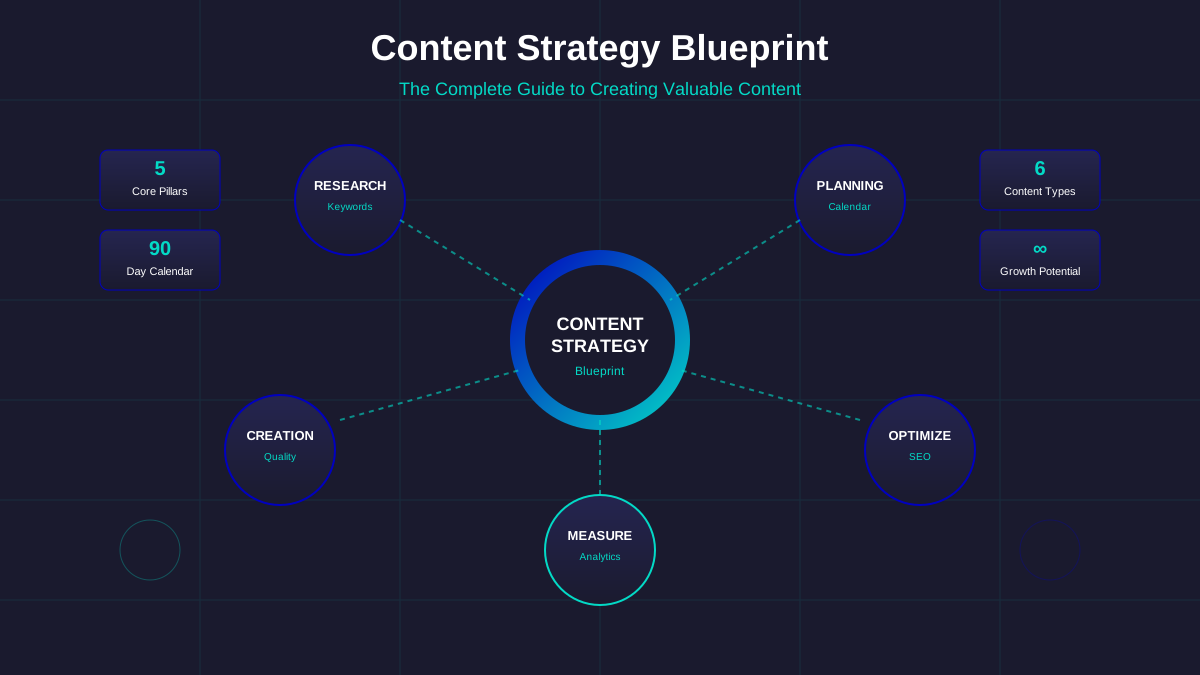
Start with free tools, focus on long-tail opportunities, and always match search intent. Build your content calendar around clustered topics, and track performance to continuously improve.
For more on creating content that monetises well, read our guide on Content Strategy for AdSense Approval.