If you write about money, investing, or personal finance, you need a financial disclaimer. Without one, you could face legal problems. This guide gives you a free template and explains exactly what to include.
What You'll Learn:
- Why finance blogs need a disclaimer
- What to include in your financial disclaimer
- A free copy-and-paste template
- Where to place your disclaimer
- Common mistakes to avoid
Why Your Money Blog Needs a Financial Disclaimer
When you write about money, readers might follow your advice. If they lose money, they could blame you. A financial disclaimer protects you by making clear that your content is not professional financial advice.
This is especially important for AdSense blogs. Google wants your site to be transparent and trustworthy. A clear disclaimer shows both Google and your readers that you take honesty seriously.
According to FTC guidelines, bloggers must be clear about the nature of their content, especially when discussing financial topics.
What to Include in Your Financial Disclaimer
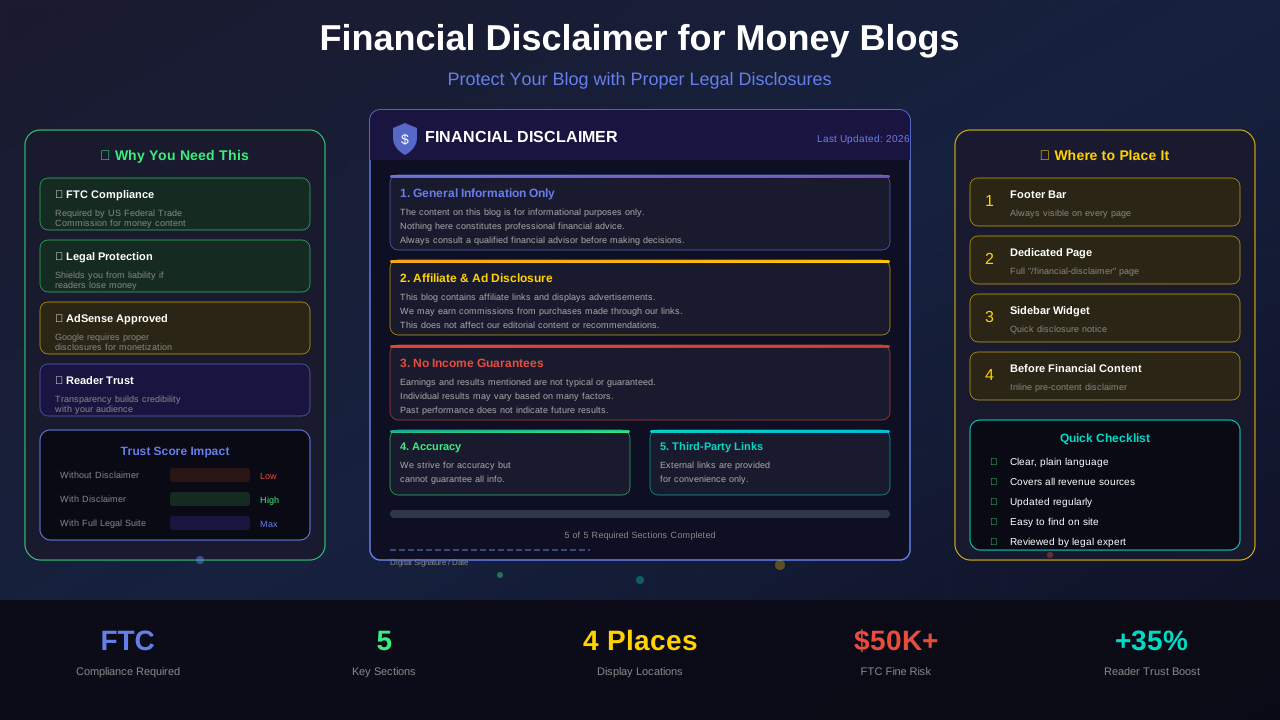
Your financial disclaimer should cover these key points:
1. Not Professional Advice
State clearly that your content is for information only. You are not a licensed financial advisor (unless you are).
2. Do Your Own Research
Tell readers to do their own research before making financial decisions. They should consult a professional.
For more on this topic, see our guide on Terms & Conditions Generator Guide: Protect Your Blog Legally in 2026 →
3. No Guarantees
Make clear that you don't guarantee any results. Past performance doesn't predict future results.
4. Affiliate Disclosure
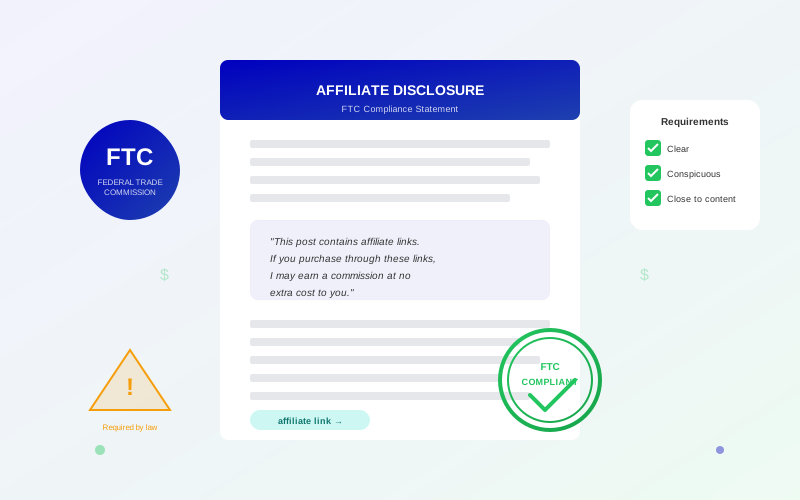
If you use affiliate links, mention this in your disclaimer. The FTC requires this transparency. See our affiliate disclosure guide for details.
5. Personal Experience
Note that your content is based on personal experience and research, not professional training.
Free Financial Disclaimer Template
Here's a template you can copy and customize for your blog:
For more on this topic, see our guide on COPPA Compliance for Bloggers: How to Protect Kids and Your AdSense Account →
Financial Disclaimer
The information on [Your Blog Name] is for general information purposes only. It is not intended as financial advice.
I am not a licensed financial advisor, and nothing on this website should be taken as professional financial advice. Always do your own research and consult with a qualified financial professional before making any investment or financial decisions.
We make no guarantees about the accuracy or completeness of the information provided. Any action you take based on the information on this website is at your own risk.
For more on this topic, see our guide on Image Attribution & Copyright: The Complete Blogger Guide →
[Your Blog Name] may contain affiliate links. We may earn a commission when you click on these links, at no extra cost to you. This does not affect our recommendations.
Past performance is not indicative of future results. All investments carry risk, and you could lose money.
Replace "[Your Blog Name]" with your actual site name. Add or remove sections based on your specific content.
Where to Place Your Disclaimer
Your disclaimer should be easy to find. Put it in these places:
Related reading: Copyright Laws for Bloggers: How to Use Images Legally →
| Location | Priority | Why |
|---|---|---|
| Dedicated disclaimer page | 🔴 Required | Central reference point |
| Footer link on every page | 🔴 Required | Always accessible to users |
| Top of finance articles | 🟡 Recommended | Context-specific warning |
| About page mention | 🟡 Recommended | Sets expectations early |
| Sidebar widget | 🟢 Optional | Extra visibility |
Most importantly, link to your disclaimer from your website footer. Our legal pages guide explains how to set this up.
Which Content Needs a Disclaimer
Not sure if your content needs a financial disclaimer? If you write about any of these topics, the answer is yes:
- Investing – Stocks, crypto, bonds, real estate
- Personal finance – Budgeting, saving, debt management
- Making money online – Side hustles, freelancing, blogging income
- Banking – Bank account reviews, credit card comparisons
- Insurance – Policy reviews and recommendations
- Taxes – Tax tips and strategies
- Retirement planning – 401k, IRA, pension guides
"Bloggers who provide financial advice must disclose their qualifications and any potential conflicts of interest. Transparency builds trust and protects both the blogger and the reader."
— Federal Trade Commission
Common Disclaimer Mistakes
Avoid these errors when creating your financial disclaimer:
See also: Sponsored Content Disclosure: Legal Requirements Every Blogger Must Know →
- Hiding it – Your disclaimer must be easy to find, not buried in fine print
- Using legal jargon – Write in plain language everyone understands
- Forgetting to update – Review your disclaimer when you change content types
- Missing affiliate disclosure – Always mention if you earn from links
- Not having one at all – This is the biggest mistake of all
Frequently Asked Questions
Can a disclaimer fully protect me from lawsuits?
A disclaimer reduces your risk but doesn't make you immune. It shows good faith and can help in legal disputes. For serious protection, consult a real lawyer.
Do I need a disclaimer if I'm not giving specific advice?
Yes! Even general money content can be interpreted as advice. It's always better to be safe with a disclaimer.
Should I have a separate disclaimer page or include it in my terms?
Both work. Many finance bloggers have a dedicated disclaimer page AND mention it in their terms of service. More visibility is better.
Does Google require a financial disclaimer for AdSense?
Google doesn't specifically require a financial disclaimer. But they do require transparency and legal compliance. A disclaimer helps meet both requirements.
Can I copy someone else's disclaimer?
Use templates as a starting point, but customize them for your blog. Every site is different. Make sure your disclaimer matches what you actually do.
Conclusion
A financial disclaimer is a must-have for any money blog. It protects you legally, builds reader trust, and helps with AdSense compliance.
Use the free template above as your starting point. Customize it for your blog. Place it on a dedicated page and link to it from your footer.
Don't wait until you have a problem. Add your financial disclaimer today. It takes just 15 minutes to set up, and it could save you a lot of trouble later!