If you publish health-related content, you need a medical disclaimer. Without one, you risk legal liability, AdSense policy violations, and loss of reader trust. This guide shows you exactly how to create a compliant medical disclaimer.
Health content falls under Google's YMYL (Your Money or Your Life) category. This means Google holds health blogs to higher standards. A proper medical disclaimer is essential for both legal protection and maintaining your monetization eligibility.
What You Will Learn:
- Why medical disclaimers are legally required
- 5 essential elements every disclaimer needs
- Where to place your disclaimer for maximum protection
- A ready-to-use template you can customize
- How health content affects AdSense approval
Why Medical Disclaimers Matter
A medical disclaimer protects you from legal liability when readers act on your health information. Even well-researched content can be misinterpreted or applied incorrectly.
The Legal Reality
Without a proper disclaimer, you could be held liable if someone:
- Follows your advice and suffers harm
- Delays seeking professional medical care
- Misunderstands your general information as personal advice
- Has an adverse reaction to something you recommend
Who Needs a Medical Disclaimer
| Blog Type | Needs Disclaimer? | Risk Level |
|---|---|---|
| Medical advice blogs | Absolutely required | Very high |
| Fitness and exercise | Required | High |
| Nutrition and diet | Required | High |
| Mental health | Required | Very high |
| Natural remedies | Required | High |
| Wellness lifestyle | Recommended | Medium |
| General health tips | Recommended | Medium |
"Health information on the internet is for educational purposes only. It should never replace the advice, diagnosis, or treatment from a qualified healthcare professional."
— American Medical Association Guidelines
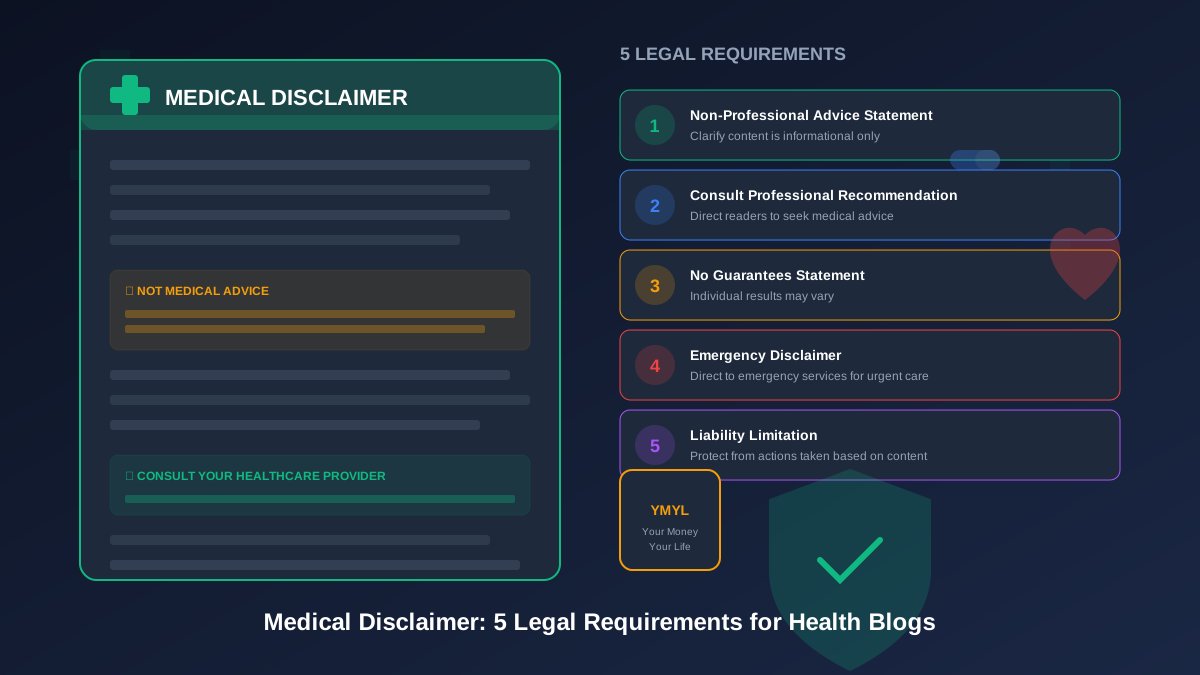
5 Legal Requirements for Medical Disclaimers
Your medical disclaimer must meet specific legal standards to provide real protection.
Requirement 1: Clear Statement of Non-Professional Advice
Explicitly state that your content is not professional medical advice. This is the foundation of your protection.
- Use clear, simple language
- State you are not a licensed medical provider (unless you are)
- Clarify the informational nature of your content
Requirement 2: Recommendation to Consult Professionals
Always direct readers to seek professional medical advice. This shows good faith and limits your liability.
- Recommend consulting a doctor before making health decisions
- Emphasize professional diagnosis is necessary
- Note that information cannot replace medical examination
Requirement 3: No Guarantees Statement
Make clear that you do not guarantee any outcomes. Health results vary by individual.
- Disclaim any specific health outcomes
- Note individual results may vary
- Avoid making promises about treatments
Requirement 4: Emergency Disclaimer
Include guidance for medical emergencies. Direct people to call emergency services.
For more on this topic, see our guide on Terms & Conditions Generator Guide: Protect Your Blog Legally in 2026 →
- State your site is not for emergencies
- Provide emergency contact guidance (call 911, local emergency)
- Emphasize urgency of professional care
Requirement 5: Liability Limitation
Limit your liability for how readers use your information. This is your legal safety net.
- State you are not liable for actions taken based on content
- Readers assume responsibility for their decisions
- Information is used at reader's own risk
What to Include in Your Disclaimer
A complete medical disclaimer covers several key areas. Here is your checklist.
Essential Elements Checklist
| Element | Purpose | Required? |
|---|---|---|
| Purpose statement | Defines content as educational | Yes |
| Not medical advice | Clarifies information type | Yes |
| Consult professional | Directs to proper care | Yes |
| No guarantees | Limits outcome expectations | Yes |
| Emergency guidance | Protects in urgent situations | Yes |
| Liability limitation | Legal protection | Yes |
| Affiliate disclosure | FTC compliance | If applicable |
| Author credentials | E-E-A-T signals | Recommended |
Language Guidelines
Your disclaimer must be understandable to average readers:
- Use plain English: Avoid legal jargon where possible
- Be direct: State facts clearly without ambiguity
- Keep it readable: Short sentences, simple words
- Be specific: Name the types of content covered
Where to Place Your Medical Disclaimer
Placement matters for legal protection. A disclaimer nobody sees provides weak protection.
Primary Locations
-
Dedicated disclaimer page:
Create a full page linked from your main menu and footer
-
Footer of every page:
Brief statement with link to full disclaimer
-
Within health articles:
Add disclaimer box at the start or end of health posts
For more on this topic, see our guide on COPPA Compliance for Bloggers: How to Protect Kids and Your AdSense Account →
-
Sidebar widget:
Visible reminder on all pages
Placement Best Practices
| Location | Visibility | Legal Strength |
|---|---|---|
| Top of article | High | Strong |
| End of article | Medium | Medium |
| Footer link only | Low | Weak |
| Popup on first visit | Very high | Strong |
| Sidebar widget | Medium-High | Medium-Strong |
In-Article Disclaimer Box
For health articles, include a visible disclaimer box. Here is example HTML:
<div class="medical-disclaimer">
  <strong>Medical Disclaimer:</strong>
  This article is for informational purposes only.
  It is not medical advice. Consult a healthcare
  professional before making health decisions.
</div>
Medical Disclaimer Template
Use this template as a starting point. Customize it for your specific blog.
Full Medical Disclaimer Template
MEDICAL DISCLAIMER
Last Updated: [Date]
The information provided on [Your Website Name] is for general informational and educational purposes only. It is not intended to be a substitute for professional medical advice, diagnosis, or treatment.
Not Medical Advice: The content on this website, including text, graphics, images, and other material, is for informational purposes only. It is not intended to be a substitute for professional medical advice, diagnosis, or treatment. Always seek the advice of your physician or other qualified health provider with any questions you may have regarding a medical condition.
No Doctor-Patient Relationship: Use of this website does not create a doctor-patient relationship between you and [Your Website Name] or any of its contributors. The information provided should not be used for diagnosing or treating a health problem or disease.
For more on this topic, see our guide on Image Attribution & Copyright: The Complete Blogger Guide →
Consult Your Healthcare Provider: Before starting any new diet, exercise program, or health regimen, consult with a qualified healthcare professional. This is especially important if you have existing health conditions, are pregnant, nursing, or taking medications.
No Guarantees: We make no representations or warranties regarding the accuracy, completeness, or usefulness of any information on this website. Individual results may vary. We do not guarantee any specific health outcomes from following our content.
Emergency Situations: This website is not designed to address medical emergencies. If you are experiencing a medical emergency, call your local emergency services (911 in the United States) or go to the nearest emergency room immediately.
Limitation of Liability: [Your Website Name] and its contributors shall not be liable for any damages arising from the use or inability to use the information on this website. You assume full responsibility for how you choose to use this information.
External Links: This website may contain links to external websites. We are not responsible for the content or accuracy of information on external sites.
By using this website, you acknowledge that you have read this disclaimer and agree to its terms.
Short In-Article Disclaimer
Use this shorter version within individual articles:
Related reading: Copyright Laws for Bloggers: How to Use Images Legally →
Disclaimer: This article is for informational purposes only and does not constitute medical advice. Always consult with a qualified healthcare provider before making any decisions about your health. If you are experiencing a medical emergency, please call emergency services immediately.
"A good disclaimer does not just protect you legally—it builds trust with readers by being transparent about the nature of your content."
— Healthcare Content Law Expert
AdSense and Health Content
Google treats health content carefully. Understanding their requirements helps you stay compliant.
Google's YMYL Standards
YMYL (Your Money or Your Life) content includes:
- Medical and health information
- Mental health and wellness
- Fitness and nutrition advice
- Drug and supplement information
What Google Looks For
| Factor | What Google Wants | How to Comply |
|---|---|---|
| Expertise | Qualified authors | Show credentials, cite sources |
| Authoritativeness | Trusted source | Build reputation, get citations |
| Trustworthiness | Honest content | Disclaimers, transparency |
| Accuracy | Factual information | Research, cite studies |
AdSense Policy Considerations
Health content must follow these AdSense guidelines:
- No dangerous claims: Avoid unproven medical claims
- No misleading content: Do not exaggerate benefits
- Proper disclaimers: Have visible, clear disclaimers
- Restricted topics: Some health topics have ad restrictions
Restricted Health Topics
These topics may have limited or no ads:
- Prescription drugs
- Recreational drugs
- Tobacco and vaping
- Adult health topics
- Dangerous supplements
Common Mistakes to Avoid
These mistakes can weaken your legal protection or hurt your site.
See also: Sponsored Content Disclosure: Legal Requirements Every Blogger Must Know →
Legal Mistakes
| Mistake | Problem | Solution |
|---|---|---|
| Hidden disclaimer | May not hold up legally | Make it visible and accessible |
| Outdated content | Medical info changes | Review and update regularly |
| Making health promises | Creates liability | Use "may help" not "will cure" |
| Missing emergency guidance | Incomplete protection | Always include emergency info |
| Generic copy-paste | May not fit your content | Customize for your specific topics |
Content Mistakes
- Diagnosing conditions: Never tell readers what they have
- Recommending specific treatments: Suggest they ask their doctor
- Citing unreliable sources: Use peer-reviewed research
- Ignoring credentials: If you are not a professional, say so
Formatting Mistakes
- Disclaimer text too small to read
- Low contrast colors (gray on white)
- Buried at the bottom of long pages
- Not linked from main navigation
"The best protection combines a good disclaimer with responsible content practices. One without the other leaves gaps in your protection."
— Digital Media Lawyer
Maintaining Your Disclaimer
A disclaimer is not a one-time task. Regular maintenance ensures ongoing protection.
When to Update
- Annually (at minimum)
- When adding new health topics
- After legal or regulatory changes
- When expanding to new regions
- After receiving legal advice
Update Checklist
- Review current disclaimer language
- Check all links still work
- Update the "Last Updated" date
- Ensure coverage of all current topics
- Verify placement on all relevant pages
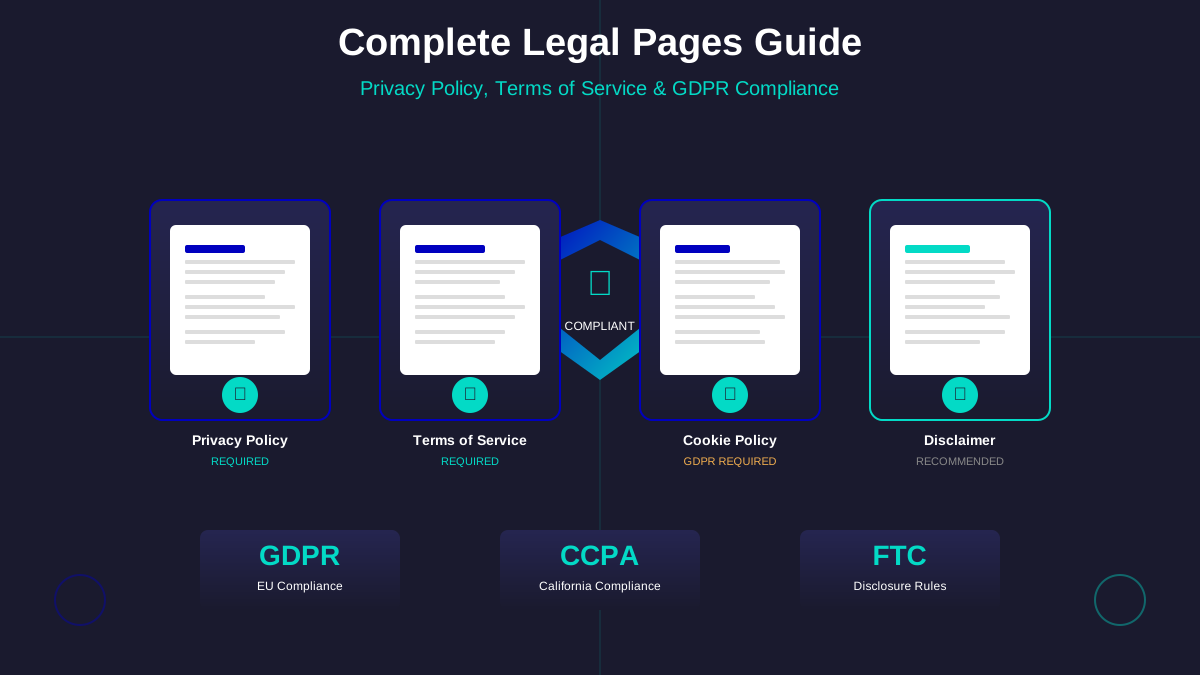
For complete legal page guidance, see our comprehensive legal pages guide.
Frequently Asked Questions
Do I need a lawyer to write my medical disclaimer?
For basic health and wellness blogs, a well-written template often suffices. However, if you provide specific medical information, discuss treatments, or operate a health business, consulting a healthcare attorney is wise. They can tailor the disclaimer to your specific situation and jurisdiction.
Can a disclaimer protect me from all lawsuits?
No disclaimer provides absolute protection. A disclaimer shows you acted in good faith and informed readers of limitations. Courts consider whether the disclaimer was visible, clear, and reasonable. Combined with responsible content practices, a disclaimer significantly reduces your legal risk.
Should I include my disclaimer on every page?
Yes, in some form. Your full disclaimer should be on a dedicated page linked from your footer. Health articles should include a brief disclaimer box within the content. This ensures readers see the disclaimer regardless of how they land on your site.
What if I am a licensed healthcare professional?
Even licensed professionals need disclaimers for online content. Your disclaimer should state your credentials but clarify that online content cannot replace in-person care. Note that reading your blog does not establish a patient relationship. Your professional license may have specific requirements—check with your licensing board.
Does a medical disclaimer affect my AdSense approval?
Having a proper medical disclaimer helps AdSense approval. It shows Google you understand responsible health content practices. Missing disclaimers on YMYL content may raise red flags during review. Google wants to see that health sites prioritize user safety and provide appropriate warnings.