![Domain Age for AdSense: How Old Should Your Website Be? [2025 Guide]](/images/articles/domain-age-adsense-approval.svg)
One of the most common questions new bloggers ask is: "How old does my website need to be for AdSense approval?" The answer varies by country and depends on several factors that many publishers overlook.
In this guide, we will explore the real impact of domain age on AdSense approval, discuss the specific requirements for different regions, and share strategies that help newer sites get approved faster.
What You Will Learn:
- Minimum domain age requirements by country
- Why Google cares about domain age
- How to maximize approval chances with a new domain
- The difference between domain age and site age
- Strategies to accelerate your timeline
Minimum Domain Age Requirements
Google's domain age requirements vary significantly based on where you live. This is one of the few hard requirements that Google officially states.
Countries With 6-Month Minimum
According to Google's eligibility requirements, the following countries require your domain to be at least 6 months old before applying:
- India
- China
"Your site must have been active for at least 6 months before applying for AdSense in certain countries including India and China."
— Google AdSense Help Center
Countries With No Official Minimum
For most other countries, including the United States, United Kingdom, Canada, Australia, Nigeria, and European nations, there is no official minimum domain age. However, this does not mean brand-new sites get approved easily.
Why Domain Age Matters to Google
Even without official requirements, domain age influences your approval chances for several reasons:
Trust Signal
Older domains have had time to establish a track record. Google can see whether the site has been consistently maintained, whether it has received backlinks naturally, and whether it has avoided spam or policy violations.
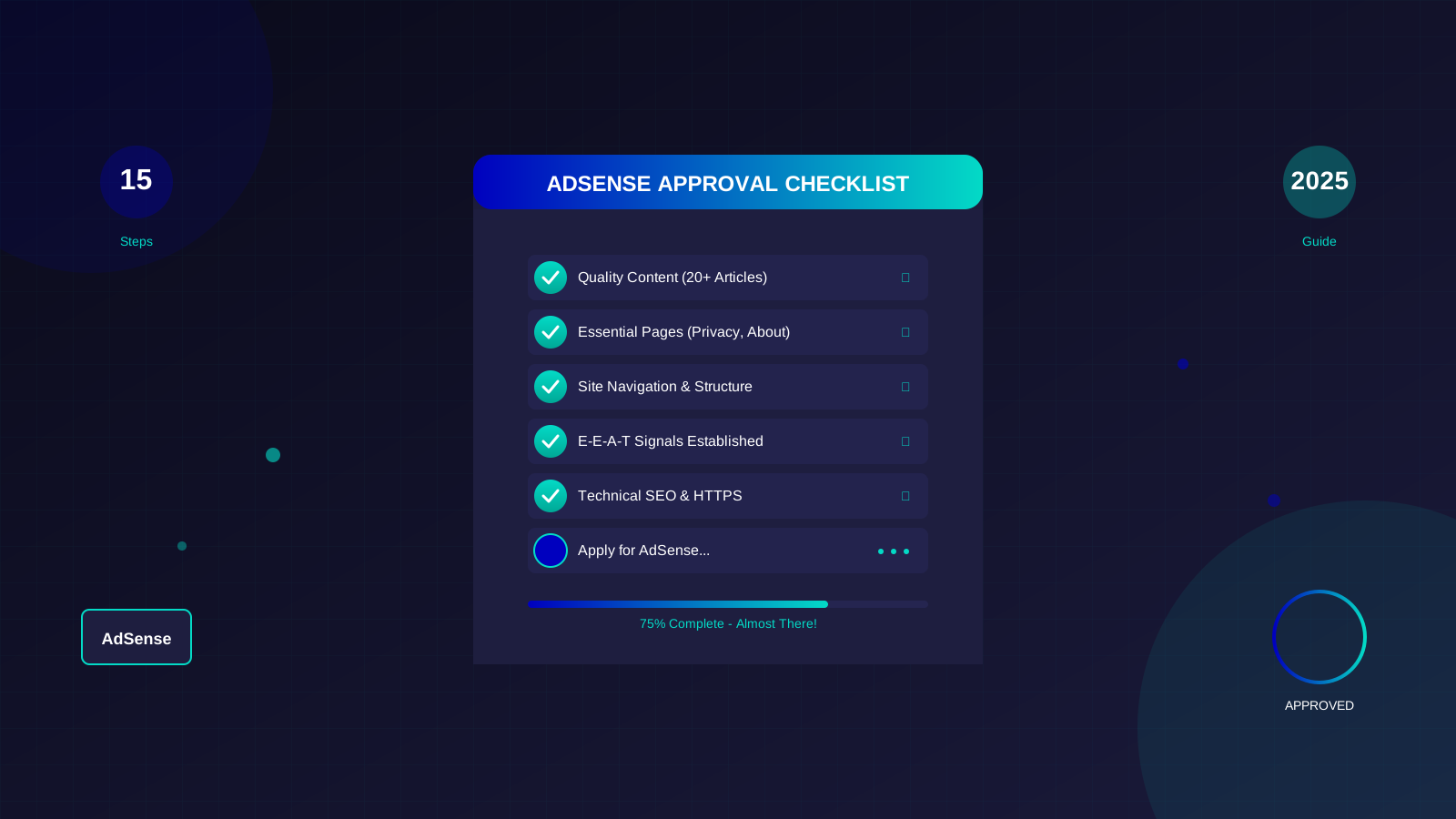
See also: AdSense Approval Checklist 2026: 15 Steps to Get Approved Fast →
Content History
Sites that have been publishing for several months demonstrate commitment. A 3-month-old site with 30 articles shows more dedication than a 1-week-old site with the same content.
Spam Prevention
Many spam sites are created, monetized quickly, and then abandoned. The age requirement helps filter out these low-quality operations that hurt the advertising ecosystem.
Quality Signal
Established sites tend to have better content, more natural traffic patterns, and a genuine audience. These are exactly the qualities Google wants in its publisher network.
Domain Age vs. Site Age: Understanding the Difference
Many publishers confuse these two concepts, but they are quite different:
Domain Age
This is when the domain was first registered. If you bought an existing domain that was registered in 2015, your domain age is from 2015—even if you just started using it.
See also: Google AdSense Best Practices 2026: What Works Now (and What Doesn't) →
Site Age
This is when your content first appeared on the domain. Google can see when pages were first indexed, regardless of when the domain was purchased.
What Google Actually Looks At
Google considers both factors but weighs site age (active content history) more heavily than raw domain age. Buying an old domain and immediately applying will not work—Google knows when your content actually started appearing.
"Domain age alone isn't a ranking factor—it's what you do with the domain over time that matters."
— John Mueller, Google Search Advocate
Strategies for New Sites to Get Approved
If you have a relatively new domain, these strategies can improve your chances:
Focus on Quality Over Speed
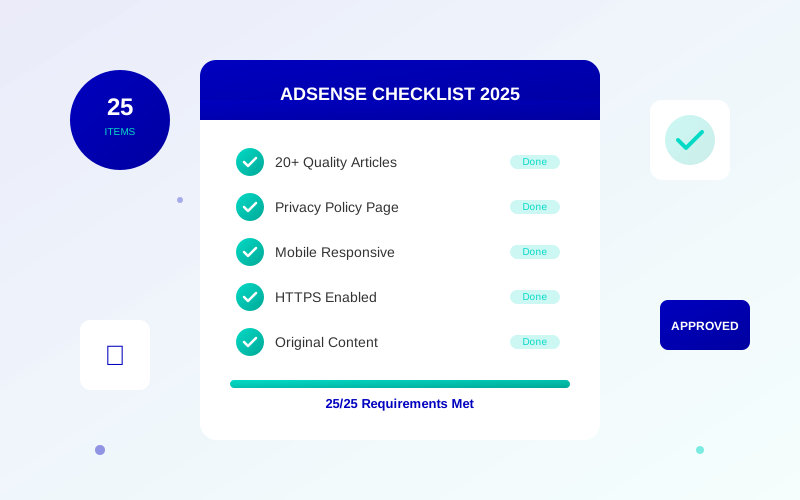
Do not rush to apply. Spend 3-4 months building a solid content foundation with 25-30 high-quality articles before submitting your application. Use our complete AdSense requirements checklist to ensure you meet all criteria.
Learn more in AdSense YouTube vs Website: Which Earns More Money in 2026? →
Build Natural Traffic
Work on SEO and social media to get genuine visitors to your site. Google sees these traffic signals and they indicate that real people find your content valuable.
Create Comprehensive Content
New sites can compensate for age with exceptional content quality. Focus on in-depth, original articles that thoroughly cover your topics.
Establish E-E-A-T Signals
Build Experience, Expertise, Authoritativeness, and Trustworthiness. Our E-E-A-T guide for blog monetisation explains how to demonstrate these signals through:
- Detailed author bios with credentials
- About page with real team information
- Links to social media profiles
- Contact information that can be verified
Get Indexed Consistently
Use Google Search Console to ensure your pages are being indexed. A longer indexing history helps, even if the domain is new.
Should You Buy an Old Domain?
Some publishers consider buying aged domains to bypass the wait. Here is what you need to know:
Learn more in Free vs Self-Hosted Blogs for AdSense: Which One Gets Approved? →
Potential Benefits
- Established domain authority may help with SEO
- May have existing backlinks
- Bypasses the 6-month requirement for India/China
Potential Risks
- Previous spam or policy violations may carry over
- Google may have penalized the domain
- Irrelevant backlinks could hurt rather than help
- AdSense may still see your content as new
Recommendation
Unless you thoroughly vet an old domain for previous issues, starting fresh with a new domain is usually safer. The few months of waiting is often better than inheriting unknown problems.
The Optimal Timeline for AdSense Application
Based on approval data from thousands of publishers, here is the recommended timeline:
Month 1-2: Foundation Building
- Set up your site with a professional theme
- Create all legal pages
- Publish 8-10 high-quality articles
- Set up Google Analytics and Search Console
Month 2-3: Content Expansion
- Publish 3-4 articles per week
- Build to 20+ total articles
- Start basic link building and social promotion
- Get pages indexed in Google
Month 3-4: Polish and Apply
- Reach 25-30 quality articles
- Fix any technical issues
- Verify all legal pages are complete
- Submit your AdSense application
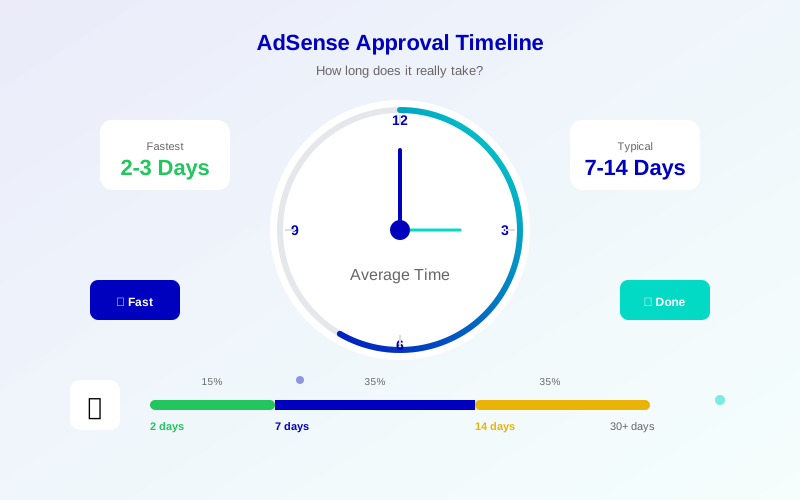
After applying, learn how long AdSense approval typically takes so you know what to expect.
Common Myths About Domain Age
Let us clear up some misconceptions:
Myth: You Must Wait 6 Months Everywhere
False. The 6-month requirement only applies to India and China. Other countries have no official waiting period, though patience still pays off.
Learn more in AdSense vs Alternatives: Which Ad Network Pays You More? →
Myth: Older Domains Always Get Approved
False. A 5-year-old domain with poor content will still be rejected. Age helps, but content quality is what ultimately determines approval.
Myth: Buying an Aged Domain Guarantees Approval
False. Google tracks when your content actually appeared, not just when the domain was registered. You cannot trick the system.
Myth: Subdomains Do Not Need to Wait
False. If you use a subdomain on an aged domain, Google still evaluates your specific subdomain's content and history.
Frequently Asked Questions
Can I apply for AdSense with a 1-month-old domain?
Technically yes (outside India and China), but approval rates are very low for sites this new. You are better served waiting 2-3 months and building more content.
Does domain registration length affect approval?
Some SEO experts suggest that registering your domain for multiple years shows commitment. While not officially confirmed by Google, it does not hurt and may provide a small signal of legitimacy.
I have a 10-year-old personal blog. Can I add AdSense now?
Yes, age is definitely on your side. Focus on ensuring your content meets current quality standards, update your legal pages, and apply. Long-established sites often get approved quickly.
How do I check my domain age?
Use a WHOIS lookup tool like ICANN WHOIS or domain age checker websites. They will show when your domain was first registered.
My domain is old but I just started adding content. Will this help?
Partially. The registered domain age helps, but Google also looks at your content history. Give yourself at least 2-3 months of consistent publishing before applying.