Evergreen content is the foundation of sustainable blog monetization. Unlike trending topics that spike and fade, evergreen articles continue attracting traffic and generating AdSense revenue for years after publication. Understanding how to create, optimise, and maintain evergreen content transforms your blog from a content treadmill into a compounding asset.
This comprehensive guide reveals the strategies professional bloggers use to build libraries of evergreen content that drive consistent traffic regardless of news cycles or seasonal trends.
What Is Evergreen Content?
Evergreen content remains relevant, useful, and searchable long after its publication date. Named after evergreen trees that retain their leaves year-round, this content type maintains its value because it addresses topics with enduring reader interest.
Characteristics of True Evergreen Content
- Timeless Topics: Addresses questions or problems that people will continue asking
- Fundamental Information: Covers basics, fundamentals, or core concepts
- Minimal Date Dependency: Does not rely on current events, statistics, or temporary trends
- Search Intent Alignment: Matches queries people make consistently over time
- Comprehensive Coverage: Thoroughly addresses the topic, reducing need for supplementary resources
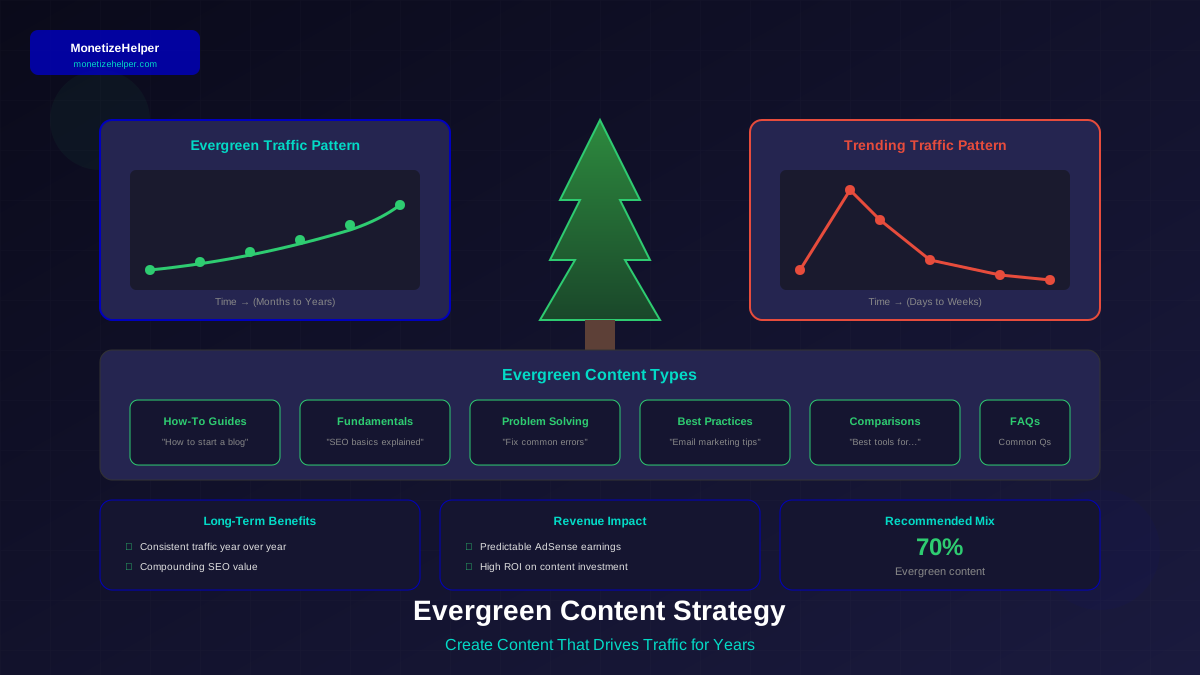
Evergreen vs Trending: A Critical Distinction
Identifying Evergreen Topics
Not all topics have evergreen potential. Here is how to identify subjects that will maintain search interest:
Use Google Trends Verification
Google Trends reveals search interest patterns over time. Look for topics with:
- Consistent search volume over 5+ years
- Minimal seasonal fluctuation (unless you account for it)
- No sharp decline in recent years
- Steady or growing interest trajectory
Evergreen Topic Categories
Certain topic types naturally lend themselves to evergreen status:
- How-To Guides: "How to start a blog," "How to tie a tie," "How to write a resume"
- Fundamental Concepts: "What is SEO," "Understanding compound interest," "Basics of photography"
- Common Problems: "How to remove stains," "Troubleshooting WiFi issues," "Common grammar mistakes"
- Best Practices: "Email marketing best practices," "Website security tips"
- Comparison/Listicles: "Best free photo editing software," "Top productivity tools"
- FAQ Content: "Frequently asked questions about..." addressing persistent queries
Niche-Specific Evergreen Ideas
Finance: Budgeting basics, investment fundamentals, debt management
Health: Exercise techniques, nutrition basics, sleep improvement
Technology: Software tutorials, troubleshooting guides, terminology explanations
Business: Marketing fundamentals, management skills, communication tips
Creating High-Quality Evergreen Content
Quality distinguishes evergreen content that ranks for years from content that fades. As HubSpot research confirms, high-quality evergreen content drives sustained organic growth. Here are the essential elements:
For more on this topic, see our guide on Blog Traffic Growth Strategies: 12 Proven Ways to Get More Readers in 2026 →
Comprehensive Coverage
Evergreen content should thoroughly address the topic, leaving readers with no need to search elsewhere. This means:
- Covering all major subtopics and common questions
- Including practical examples and applications
- Addressing beginner through intermediate levels
- Providing actionable steps and takeaways
Clear, Timeless Writing
Avoid elements that date your content:
- Avoid Specific Dates: Use "currently" or "at the time of writing" sparingly
- Skip Trending References: Do not mention current events, celebrity news, or temporary cultural phenomena
- Generalise Statistics: Use ranges or principles rather than specific numbers that will become outdated
- Focus on Principles: Teach underlying concepts rather than tool-specific steps that change
Structured for Scanning
Evergreen content often serves as reference material. Follow our blog post structure framework for optimal readability:
- Clear hierarchical headings (H2, H3, H4)
- Bulleted and numbered lists
- Table of contents for long articles
- Summary boxes and key takeaways
- Logical flow from basics to advanced
Visual Enhancement
Diagrams, charts, and images that illustrate concepts help content remain useful and shareable:
- Process flowcharts
- Comparison tables
- Instructional screenshots (choose stable interfaces)
- Concept diagrams
- Infographics summarising key points
SEO Optimisation for Long-Term Ranking
Evergreen content needs SEO optimisation that compounds value over time. Following Moz best practices ensures your content builds authority:
Learn more in SEO Content Writing Guide: How to Write Articles That Rank and Convert →
Target Primary and Secondary Keywords
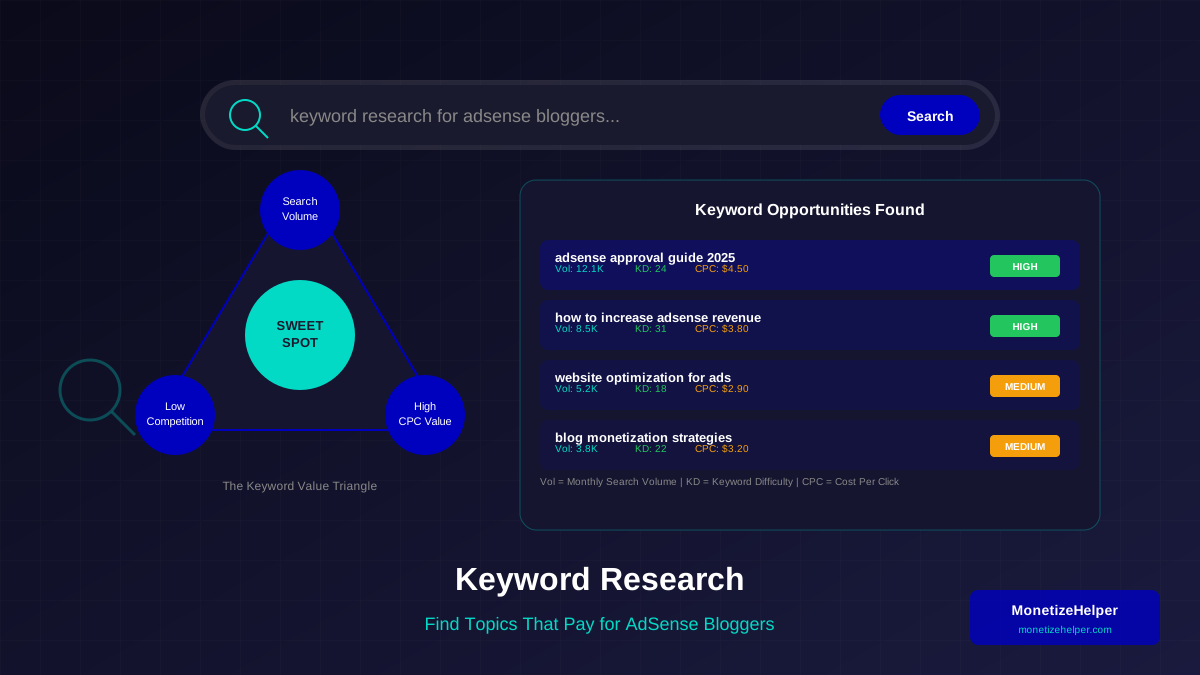
Use our keyword research guide to find keywords with consistent search volume:
- Primary keyword with stable monthly searches
- Secondary keywords covering related queries
- Question-based keywords from "People Also Ask"
- Long-tail variations for comprehensive coverage
Build Strong Internal Linking
Evergreen content serves as a hub for related articles:
- Link from new articles to evergreen pieces
- Link from evergreen content to detailed subtopic articles
- Create topic clusters with evergreen pillars
- Update internal links as your content library grows
Earn Quality Backlinks
Comprehensive evergreen content naturally attracts backlinks because:
- Other creators reference it as a definitive resource
- It serves as citation-worthy material
- The content remains link-worthy for years
Evergreen Content Maintenance Strategy
Truly evergreen content requires periodic maintenance to retain its value and rankings:
Scheduled Review Process
Implement a review schedule for your evergreen content:
For more on this topic, see our guide on Content Localization Strategy: Reach Global Audiences & Boost Revenue →
- Quarterly: Check for broken links, outdated screenshots, minor inaccuracies
- Bi-Annually: Review statistics, examples, and tool recommendations
- Annually: Comprehensive update including new sections, expanded coverage, and fresh visuals
Update Indicators
Watch for signals that evergreen content needs attention:
- Declining search rankings for target keywords
- Competitors publishing fresher content
- Reader comments pointing out outdated information
- Industry changes affecting content accuracy
- New relevant topics to add
Update Best Practices
When updating evergreen content:
- Update the publication date only for substantial changes
- Preserve URLs to maintain SEO value
- Add new sections rather than deleting existing content
- Refresh examples and screenshots
- Add new internal links to recent related content
Content Freshness Signal
Google values content freshness. When you make substantial updates to evergreen content, consider adding a "Last Updated" date visible on the page. This signals relevance to both users and search engines without changing the original publication date.
Monetization Optimisation for Evergreen Content
Evergreen content offers unique monetization opportunities due to its consistent traffic:
Ad Placement Strategy
Optimise ad placements for content that users often scan:
Related reading: AI Content and AdSense: How to Use AI Safely Without Getting Banned →
- Place ads near high-engagement sections (key information, how-to steps)
- Use in-content ads between major sections
- Test anchor ads for long-form content
- Consider sticky sidebar ads for desktop readers
Revenue Tracking
Monitor evergreen content performance specifically:
- Track RPM trends over time for each evergreen piece
- Identify which evergreen articles generate highest revenue
- Prioritise updates for highest-earning content
- Test ad configurations on stable traffic pages
Supplementary Monetization
Evergreen content supports additional revenue streams:
- Affiliate Links: Product recommendations that remain relevant
- Lead Generation: Resource downloads related to the topic
- Product Sales: Link to relevant courses, ebooks, or services
Balancing Evergreen and Timely Content
Whilst evergreen content should form your foundation, understanding the different types of blog content helps you build a balanced strategy that includes some timely pieces:
Recommended Content Mix
- 70% Evergreen: Foundation content that drives consistent traffic
- 20% Semi-Evergreen: Annual guides, yearly roundups that need regular updates
- 10% Timely: News commentary, trend analysis, seasonal content
Using Timely Content Strategically
Timely content can support your evergreen strategy:
- Use trending topics to attract new audiences, then direct them to evergreen content
- Create timely content that links to evergreen resources
- Convert successful timely pieces into evergreen guides after trends stabilise
Measuring Evergreen Content Success
Track these metrics to evaluate your evergreen content performance:
Learn more in Featured Snippets Optimization: Boost Traffic and Revenue Fast →
Long-Term Traffic Metrics
- 6-Month Traffic Retention: Does traffic stabilise or continue growing?
- Year-Over-Year Growth: Are older articles still gaining traffic?
- Organic Search Percentage: What portion of traffic comes from search?
Engagement Indicators
- Average time on page (longer indicates useful reference content)
- Scroll depth (are readers consuming the full content?)
- Return visitors (does content serve as a reference?)
- Social shares (is content worth sharing over time?)
Revenue Metrics
- Revenue per article over 12+ months
- RPM consistency (stable or improving?)
- Lifetime value of evergreen content vs creation cost
Frequently Asked Questions
How long does it take for evergreen content to start ranking?
New evergreen content typically takes 3-6 months to achieve stable rankings, though high-authority sites may see faster results. The key advantage is that once ranked, evergreen content maintains and often improves its position over years, unlike trending content that peaks quickly and fades.
Should I include dates in evergreen content?
Minimise specific dates within the content body. However, displaying a "Last Updated" date signals freshness to readers and search engines. Avoid titles like "2025 Guide" unless you commit to annual updates, as outdated year references hurt credibility.
Can trending topics become evergreen?
Yes, some trends stabilise into lasting topics. For example, "cryptocurrency basics" started as trending but became evergreen. Monitor your timely content—if a topic maintains search interest after the initial buzz, consider expanding it into comprehensive evergreen coverage.
How often should I update evergreen content?
Review evergreen content at least annually, with more frequent checks (quarterly) for rapidly evolving topics. Significant updates should occur whenever information becomes materially outdated or when you have substantial new value to add.
Is all how-to content evergreen?
Not automatically. "How to use [software version 3.0]" becomes outdated when version 4.0 releases. Focus on underlying principles rather than specific tool versions, or commit to updating content when tools change significantly.
Conclusion: Building Your Evergreen Foundation
Evergreen content represents the most sustainable approach to blog monetization. By investing time in comprehensive, timeless articles, you build assets that generate AdSense revenue for years with minimal ongoing effort.
Start by auditing your existing content for evergreen potential, then develop a publishing strategy that prioritises lasting value over temporary traffic spikes. Remember: one excellent evergreen article often outperforms dozens of quickly-outdated pieces over a multi-year timeline.
Your content library should grow like a diversified investment portfolio—steady, compounding, and resilient against market fluctuations. Evergreen content is how you build that portfolio.