Raptive, formerly known as AdThrive, is one of the most elite ad management platforms available to publishers. If you are earning modest revenue from AdSense and dreaming of a 3x to 10x earnings boost, Raptive is likely on your radar. But with a 100,000 monthly pageview requirement and strict content standards, getting accepted is no small feat. This guide walks you through every requirement, how the application works, and exactly what you need to do to qualify.
Whether you are six months away from hitting the traffic threshold or ready to apply today, this article gives you a complete roadmap. We cover everything from traffic sources and content quality to RPM comparisons, rejection reasons, and actionable growth strategies.
What Is Raptive (Formerly AdThrive)?
Raptive is a full-service ad management company that partners with content creators to maximize their advertising revenue. The company was originally founded as AdThrive in 2013 and rebranded to Raptive in 2023 after merging with CafeMedia. Together, they manage ads for over 5,000 publishers and reach more than 125 million unique visitors per month.
Unlike self-serve platforms like Google AdSense, Raptive takes a hands-on approach. They handle every aspect of ad optimization: header bidding, direct advertiser deals, layout testing, and real-time performance tuning. Publishers get a dedicated support team and access to proprietary technology that consistently delivers some of the highest RPMs in the industry.
Why Raptive Is Considered Top-Tier
Raptive is a Google Certified Publishing Partner, which gives them access to premium demand sources and exclusive ad inventory. They use server-side header bidding and compete dozens of demand partners against each other for every single ad impression on your site. This competition drives up the price advertisers pay, which directly translates to higher earnings for you.
Beyond ad revenue, Raptive offers creators tools for audience growth, email marketing, and even influencer partnerships. They position themselves not just as an ad network but as a full creator economy platform.
"We want to build a company that helps creators thrive — not just with ads, but with everything they need to grow a sustainable business."
— Lauren Sanchez, Raptive VP of Publisher Operations
Traffic Requirements: The 100,000 Pageview Minimum
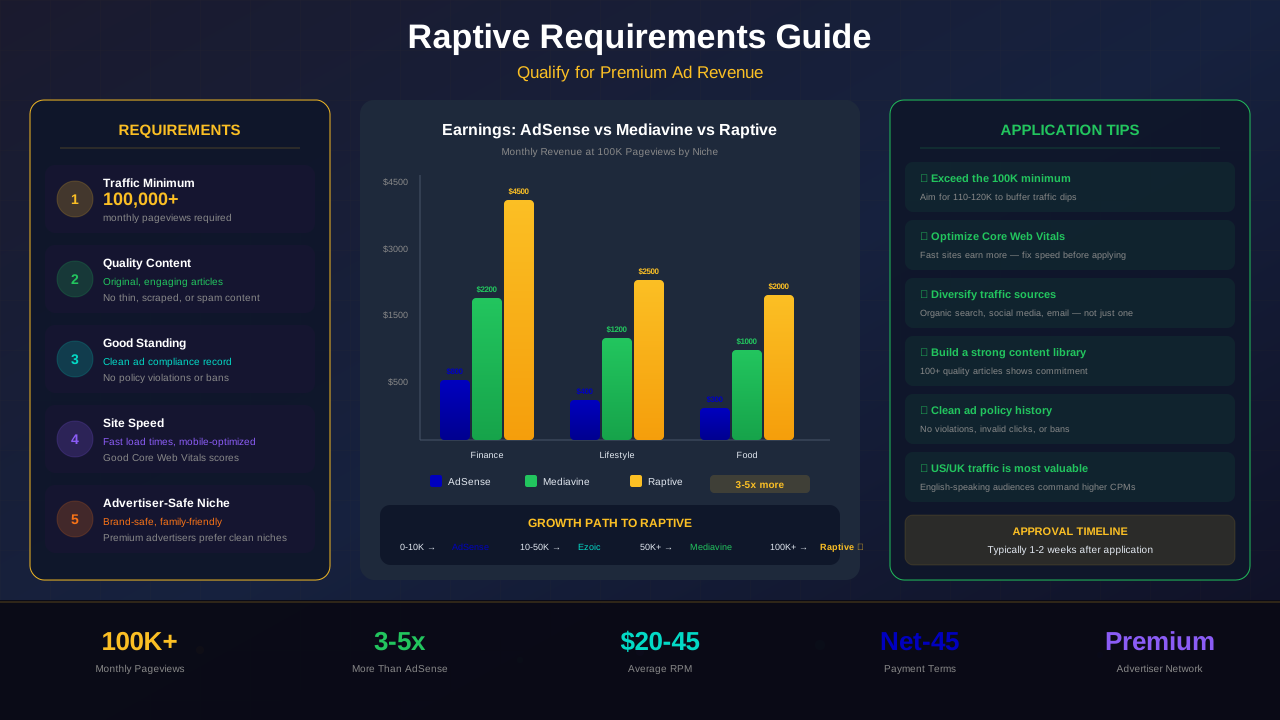
The single biggest barrier to joining Raptive is traffic. You need a minimum of 100,000 pageviews per month to be eligible. This is measured using Google Analytics data, and Raptive will verify your numbers during the application process.
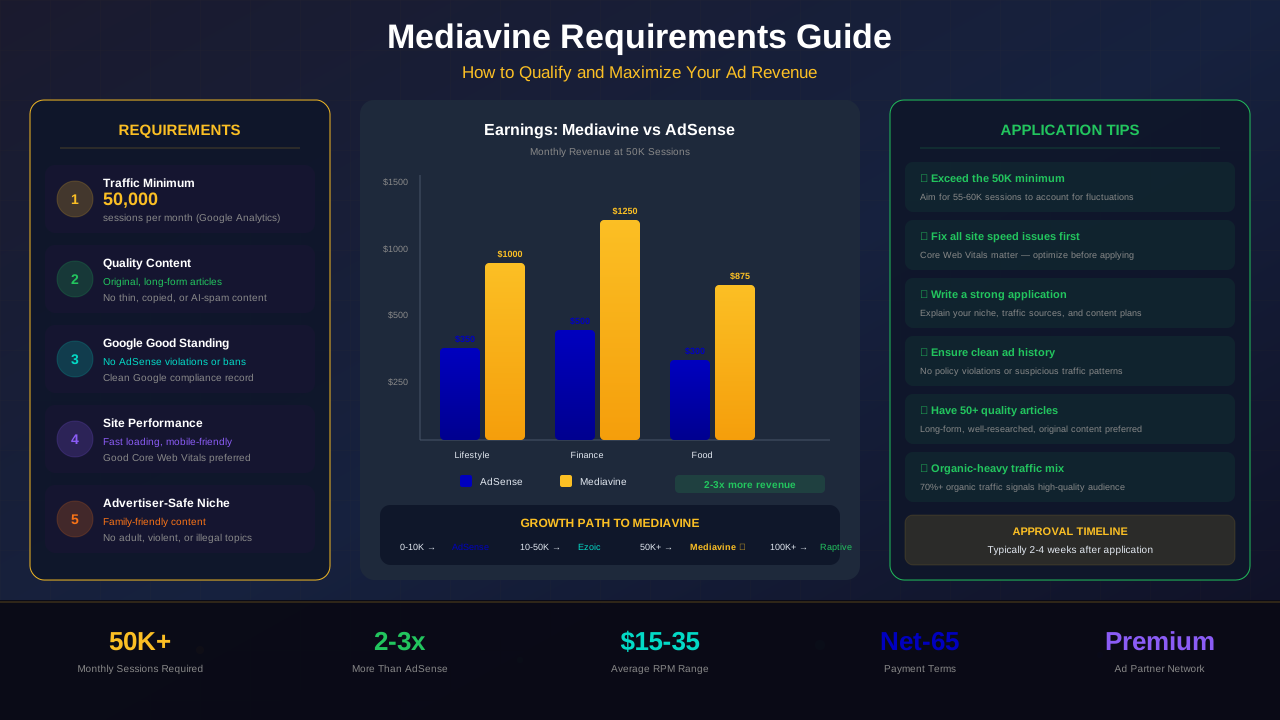
Note that Raptive measures pageviews, not sessions. This is different from Mediavine, which requires 50,000 sessions. Since a single session can generate multiple pageviews, the actual unique visitor count needed for Raptive may be lower than you think — but the raw pageview number must hit 100,000.
Consistency Matters More Than Spikes
A one-time viral post that pushes you over 100,000 pageviews in a single month is not enough. Raptive looks for consistent traffic over time. They typically review your most recent 30 to 90 days of analytics. If your traffic fluctuates wildly between 40,000 and 120,000 pageviews, they may ask you to reapply once the numbers stabilize.
Aim for at least three consecutive months above 100,000 pageviews before applying. This shows Raptive that your traffic is sustainable and that their ad placements will generate reliable revenue.
Which Traffic Sources Are Best?
Raptive values organic search traffic the most. Visitors from Google, Bing, and other search engines tend to have higher engagement, lower bounce rates, and better ad viewability. These factors directly impact your RPM.
Social media traffic is accepted but is generally less valuable. Pinterest traffic, for example, tends to have high bounce rates. Direct traffic and email traffic are also strong signals because they indicate a loyal audience.
Content Quality Standards
Raptive is extremely selective about the content on their network. Every site in their portfolio reflects on their brand and their relationships with premium advertisers. If your content is thin, duplicated, or in a non-advertiser-friendly niche, you will not be accepted.
For more on this topic, see our guide on Ezoic vs Mediavine: Which Ad Network Pays More in 2026? →
Original Content Is Non-Negotiable
Every article on your site must be original. Raptive will reject sites with scraped, spun, or heavily AI-generated content. They want to see articles written by real humans with genuine expertise or experience. If you use AI tools as part of your writing workflow, make sure the final output is heavily edited, fact-checked, and carries your unique voice.
Your site should have a substantial content library — ideally 75 or more published posts. This gives Raptive enough inventory to place ads across many pages and demonstrates that you are a committed, long-term publisher.
Niche and Topic Focus
Raptive works best with content in niches that attract premium advertisers. The highest-earning niches include finance, food, home and garden, parenting, travel, health, and technology. That said, Raptive accepts a wide range of topics as long as the content is brand-safe and high quality.
Avoid content that violates Google Ad Manager policies. This includes adult content, excessive profanity, violence, drug-related content, and controversial political topics. Even a few problematic posts can get your entire application rejected.
Engagement Signals
Raptive looks at more than just traffic numbers. They also evaluate engagement metrics like time on page, pages per session, and bounce rate. Sites where visitors stick around and read multiple articles are far more attractive than sites with sky-high bounce rates. Understanding how to increase your ad revenue through engagement applies to premium networks too.
Site Technical Requirements
Your site needs to be technically sound before Raptive will consider you. Their ad scripts are resource-intensive, and a slow or poorly built site will deliver a bad experience for both users and advertisers.
HTTPS and SSL
Your entire site must be served over HTTPS. This is a hard requirement. All pages, images, and resources must load securely. Most hosting providers offer free SSL certificates through Let's Encrypt. If you are still on HTTP, fix this immediately.
Site Speed and Performance
Aim for a page load time under 3 seconds. Use tools like Google PageSpeed Insights and GTmetrix to test your site. Compress images, use a CDN, minimize render-blocking scripts, and choose quality hosting. Raptive does help optimize site speed after onboarding, but your baseline needs to be respectable.
Mobile Responsiveness
Over 60 percent of web traffic now comes from mobile devices. Your site must be fully responsive and provide a good reading experience on phones and tablets. Raptive places mobile-specific ad units, and a broken mobile layout means lost revenue.
Clean Site Architecture
Your site should have a clear navigation structure, proper category pages, and no broken links. An XML sitemap and proper robots.txt configuration are also expected. These technical fundamentals show Raptive that you take your site seriously.
How Raptive Compares to Mediavine and AdSense
The three most commonly compared ad platforms for publishers are Raptive, Mediavine, and Google AdSense. Each serves a different tier of publisher, and understanding the differences can help you plan your monetization journey.
Related reading: AdThrive Requirements Guide: What You Need to Join Raptive in 2026 →
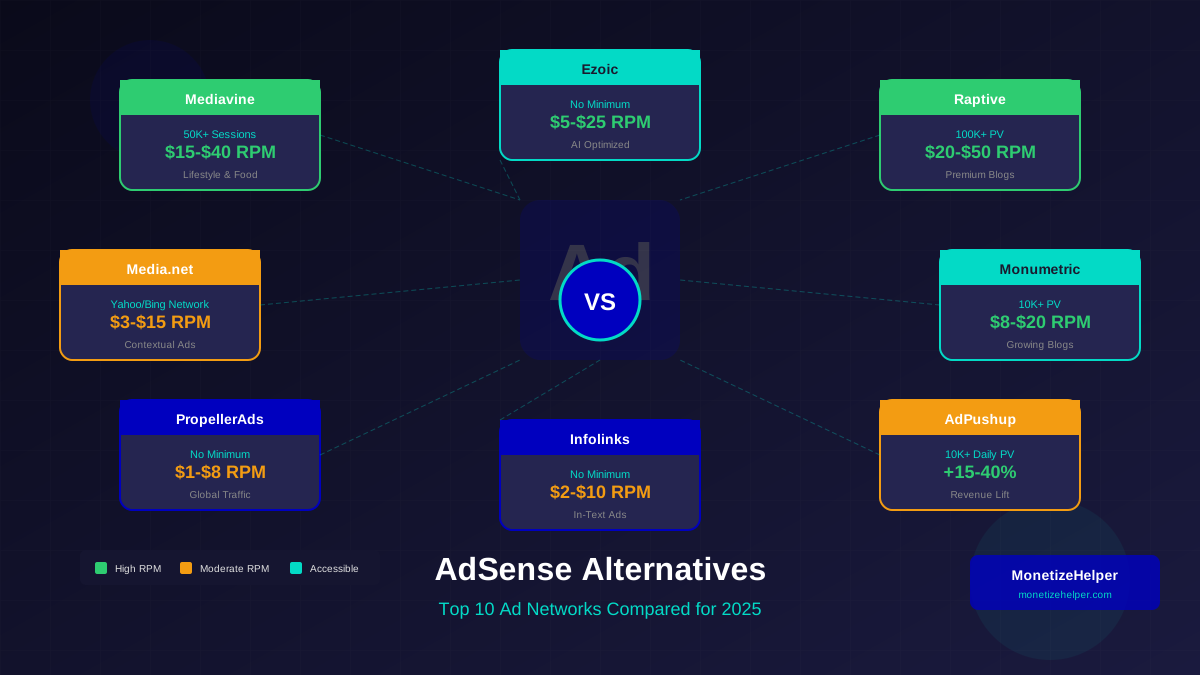
AdSense is the entry point. There is no traffic minimum, and anyone with a website and approved content can join. However, RPMs are typically the lowest of the three, ranging from $2 to $8 for most niches.
Mediavine is the middle tier. They require 50,000 sessions per month and offer RPMs in the $15 to $35 range. Mediavine is an excellent step up from AdSense and is often the first premium network bloggers join.
Raptive sits at the top. With a 100,000 pageview requirement and the most aggressive ad optimization technology, they consistently deliver the highest RPMs — often $20 to $50 or more depending on your niche and traffic quality.
RPM Ranges and Revenue Potential
Raptive publishers consistently report some of the highest RPMs in the industry. Your actual earnings depend heavily on your niche, traffic geography, and seasonality, but here are realistic ranges to expect.
RPM by Niche
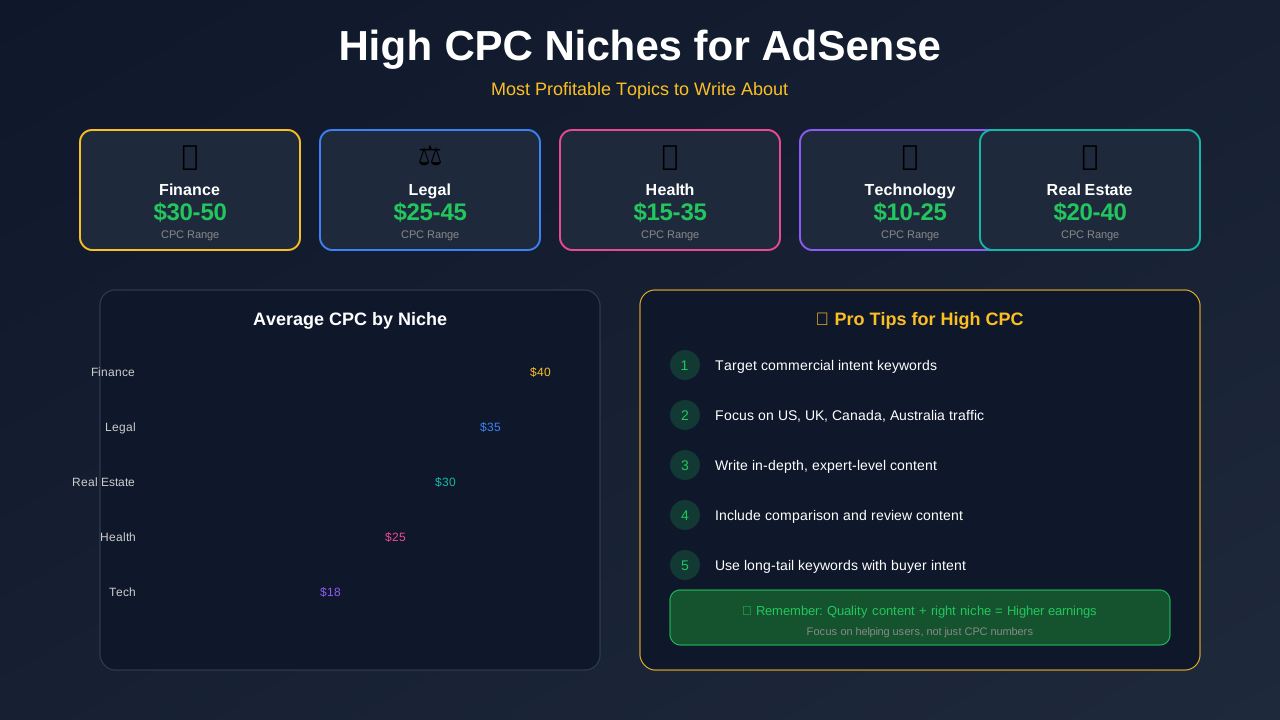
Finance and insurance niches can see RPMs of $40 to $70 or higher. Food and recipe sites typically earn $20 to $40 RPM. Lifestyle and parenting blogs average $15 to $30 RPM. Technology and gaming sites often see $10 to $25 RPM. For a deeper dive into niche-specific earnings, check our guide on high CPC niches and profitable ad categories.
Revenue Projections
At 100,000 monthly pageviews with a $25 RPM, you would earn approximately $2,500 per month. At 200,000 pageviews, that doubles to $5,000. Top Raptive publishers with 500,000 or more monthly pageviews regularly earn $10,000 to $25,000 per month from display ads alone.
Keep in mind that RPMs tend to spike dramatically in Q4 (October through December) as advertisers increase spending for the holiday season. Many Raptive publishers see their RPMs double during this period, making Q4 earnings a significant portion of their annual income.
Geographic Impact on Earnings
Traffic from the United States, United Kingdom, Canada, and Australia commands the highest ad rates. If the majority of your traffic comes from these Tier 1 countries, your RPMs will be substantially higher. Traffic from developing countries may only earn $2 to $5 RPM, even on Raptive. This is why Raptive prefers publishers with primarily English-speaking, Tier 1 traffic.
The Application Process Step by Step
Applying to Raptive is straightforward, but the review process is thorough. Here is exactly what to expect from start to finish.
Step 1: Submit Your Application
Visit the Raptive website and fill out the application form. You will need to provide your site URL, monthly pageview numbers, your primary niche, and basic contact information. Be honest about your traffic — they will verify everything.
Step 2: Google Analytics Verification
After submitting, Raptive will request read-only access to your Google Analytics account. They use this to verify your traffic claims, analyze your audience demographics, and evaluate your traffic sources. Make sure your GA4 property is properly configured before applying.
Learn more in Mediavine Requirements Guide: How to Qualify and Get Accepted →
Step 3: Content Review
A Raptive team member will manually review your site. They check for content quality, brand safety, site design, user experience, and policy compliance. This review typically takes 1 to 3 weeks depending on application volume.
Step 4: Approval or Feedback
If approved, you will receive an email with onboarding instructions. Raptive will guide you through installing their ad code and configuring your first ad placements. The entire onboarding process usually takes another 1 to 2 weeks.
If rejected, Raptive will typically provide feedback on why. Common reasons include insufficient traffic, content policy violations, or poor site performance. You can address the issues and reapply after 30 days.
Step 5: Ad Setup and Optimization
Once onboarded, Raptive handles the ad setup. They will test different ad placements, formats, and densities to find the optimal configuration for your specific site. Expect your RPMs to ramp up over the first 2 to 4 weeks as their system optimizes.
"The first month with Raptive, I saw my ad revenue jump from $400 on AdSense to nearly $2,800. By month three, after their optimization kicked in fully, I was consistently earning over $3,500."
— David Chen, Personal Finance Blogger
How to Grow Your Traffic to Meet Requirements
If you are not yet at 100,000 monthly pageviews, do not be discouraged. Most successful Raptive publishers spent 12 to 24 months building their traffic before qualifying. Here are proven strategies to get there faster.
Double Down on SEO
Search engine optimization is the most reliable path to consistent, high-quality traffic. Focus on keyword research, create comprehensive content that targets informational queries, and build a strong internal linking structure. Target long-tail keywords where you can realistically rank on page one.
Use tools like Ahrefs, SEMrush, or even free options like Google Search Console to find keyword opportunities. Aim to publish 3 to 5 well-researched, SEO-optimized articles per week.
Optimize Existing Content
Before creating new content, optimize what you already have. Update old posts with fresh information, improve meta titles and descriptions, add internal links, and enhance the overall depth of your articles. Refreshed content often sees immediate ranking improvements.
Build Topical Authority
Google rewards sites that demonstrate deep expertise in a specific topic area. Instead of writing scattered articles across many topics, create comprehensive content clusters around your core niche. A site with 100 articles on personal finance will outperform a site with 20 articles on five different topics.
Leverage Pinterest for Supplemental Traffic
While organic search should be your primary traffic source, Pinterest can provide a significant traffic boost for visual niches like food, fashion, home decor, and DIY. Create pinnable graphics for every post and pin consistently using a scheduler like Tailwind.
Learn more in RPM by Blog Niche: Which Topics Pay the Most in 2026 →
Improve Pages Per Session
Remember, Raptive measures pageviews, not sessions. If you can get each visitor to view 2 or 3 pages instead of 1, you effectively double or triple your pageview count without needing more visitors. Use related post widgets, compelling internal links, and series-style content to encourage multi-page visits.
Common Rejection Reasons and How to Fix Them
Getting rejected from Raptive is discouraging but common. Understanding the most frequent reasons for rejection can help you avoid these pitfalls or fix them before reapplying.
Insufficient Traffic
This is the number one reason. If you are close to 100,000 pageviews but not consistently above it, wait until you have a solid three-month track record before applying. There is no penalty for waiting, but multiple rejections could delay your eventual acceptance.
Low-Quality or Thin Content
Sites with short, shallow articles (under 500 words) or content that does not provide genuine value will be rejected. Audit your content before applying. Remove or significantly improve any weak posts. Every page on your site should reflect well on you as a publisher.
Policy Violations
Content that violates Google Ad Manager policies is an automatic rejection. This includes adult content, hate speech, illegal activities, and certain health or financial claims that could be considered misleading. Review your entire site for any potentially problematic content.
Poor Site Design and User Experience
A cluttered, slow, or unprofessional-looking site signals to Raptive that you are not ready for premium ad partnerships. Invest in a clean, modern theme with fast load times. Remove any intrusive pop-ups, auto-playing videos, or excessive existing ad placements.
Non-English or Low-Tier Traffic
If the majority of your traffic comes from non-English-speaking countries with low advertiser demand, Raptive may decline your application even if you meet the pageview threshold. Focus on creating content that attracts Tier 1 English-speaking audiences.
Duplicate Content or Copyright Issues
Any content that appears to be plagiarized, scraped, or duplicated from other sources will lead to immediate rejection. Run your articles through plagiarism detection tools and ensure every piece is uniquely yours.
Is Raptive Worth the Wait?
Absolutely. For publishers who qualify, Raptive consistently delivers the highest ad revenue in the industry. The jump from AdSense to Raptive is typically a 4x to 10x increase in monthly earnings. Even compared to Mediavine, many publishers report a 15 to 30 percent RPM increase after switching to Raptive.
Beyond raw revenue, Raptive offers a complete creator support ecosystem. You get a dedicated account manager, access to site speed optimization tools, influencer brand deal opportunities, and a community of successful publishers to learn from.
The 100,000 pageview requirement means you are already running a successful site before you join. Raptive simply takes that success and amplifies it. If you are currently on AdSense earning $500 per month, reaching Raptive's threshold could mean earning $3,000 to $5,000 per month from the same content.
For more on this topic, see our guide on Best Niches for AdSense Beginners: Top 15 Profitable Topics in 2026 →
The Long-Term Benefits
Raptive publishers also benefit from increasing RPMs over time. As your traffic grows and Raptive's optimization algorithms learn your audience better, your RPMs tend to improve. Many long-term Raptive publishers report RPMs 20 to 40 percent higher than their initial rates after 12 months on the platform.
There is no contract lock-in, so you are free to leave at any time. However, very few publishers leave Raptive once they join. The earnings and support speak for themselves.
What to Do While You Wait
If you are not yet at 100,000 pageviews, use the time wisely. Start with AdSense to monetize immediately, then graduate to Mediavine at 50,000 sessions, and eventually apply to Raptive once you cross the 100K pageview mark. Each step up the ladder brings significantly higher earnings.
Frequently Asked Questions
What is the difference between Raptive and AdThrive?
They are the same company. AdThrive rebranded to Raptive in 2023 after merging with CafeMedia. All AdThrive publishers were automatically transitioned to Raptive. The service, technology, and team remain the same — only the name changed.
Can I apply to Raptive with less than 100,000 pageviews?
Raptive occasionally makes exceptions for sites with slightly lower traffic if the content quality is exceptional and the traffic trend is strongly upward. However, this is rare. Your best bet is to wait until you consistently exceed 100,000 monthly pageviews before applying.
How long does the Raptive application take?
The review process typically takes 1 to 3 weeks. During high-volume periods, it can take up to 4 to 6 weeks. After approval, onboarding and ad setup usually takes another 1 to 2 weeks. Plan for about a month from application to your first Raptive ad impression.
Does Raptive work with WordPress only?
No. While the majority of Raptive publishers use WordPress, they support virtually any CMS or custom-built site. They provide JavaScript-based ad code that works on any platform, including Squarespace, Wix, Ghost, and custom HTML sites.
Can I use Raptive alongside other ad networks?
Raptive generally requires exclusivity for display ad placements. You cannot run AdSense or other display ad networks alongside Raptive. However, affiliate links, sponsored content, and non-display monetization methods are perfectly fine and encouraged.
What happens if my traffic drops below 100,000 after I join?
Raptive does not immediately remove publishers whose traffic dips below the threshold. They understand that traffic fluctuates seasonally. However, a sustained and significant drop (below 50,000 pageviews for several months) could lead to a conversation about your membership status.
How does Raptive pay publishers?
Raptive pays on a Net 45 basis, meaning you receive payment 45 days after the end of each month. For example, January earnings are paid by mid-March. Payments are made via direct deposit (ACH), PayPal, or wire transfer depending on your location.
Is Raptive better than Mediavine?
Both are excellent premium ad networks. Raptive tends to deliver slightly higher RPMs for sites with primarily US traffic and high-CPC niches. Mediavine is often praised for its publisher tools and community. The best choice depends on your specific niche, traffic, and what you value most. Many publishers have done well with either network. For more ad network comparisons, see our comprehensive alternatives guide.