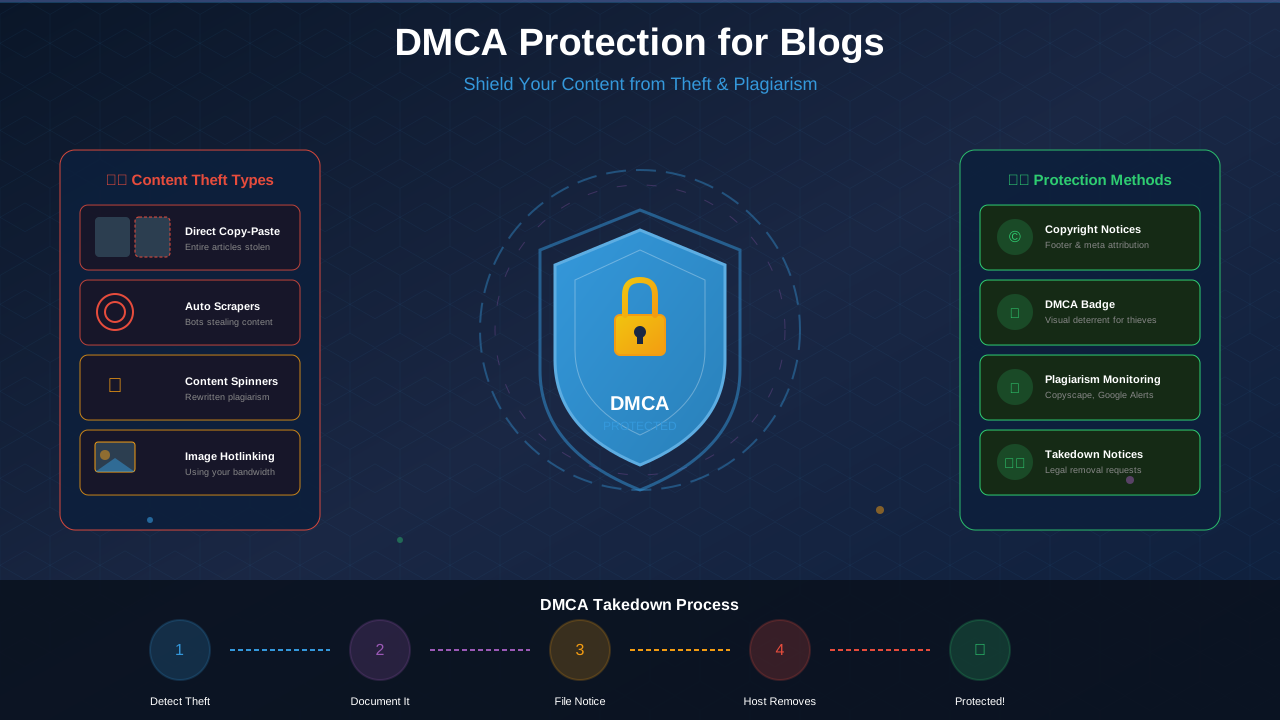
Content theft is a growing problem for bloggers and website owners. Your original articles, images, and creative work can be copied and republished without permission, damaging your SEO rankings, diluting your brand, and stealing your potential revenue. The Digital Millennium Copyright Act (DMCA) provides powerful tools to fight back.
This comprehensive guide explains how the DMCA protects your content, how to file effective takedown notices, and proactive strategies to prevent theft before it happens.
Understanding the DMCA
The Digital Millennium Copyright Act is a United States copyright law enacted in 1998 that addresses digital content and online copyright infringement.
Key DMCA Provisions for Bloggers
- Safe Harbor: Protects platforms from liability if they respond to takedown notices
- Takedown Notices: Formal requests to remove infringing content
- Counter-Notices: Process for disputing wrongful takedowns
- Anti-Circumvention: Prohibits bypassing copyright protection measures
Detecting Content Theft
You cannot protect content you do not know has been stolen. Implement these detection methods:
Automated Monitoring Tools
- Google Alerts: Set alerts for unique phrases from your articles
- Copyscape: Scan the web for duplicate content
- Plagiarism Checker Tools: Grammarly, Quetext, or Turnitin
- DMCA.com: Automated monitoring and protection badges
Manual Detection Methods
- Search for unique sentences from your articles in quotes
- Use Google reverse image search for your original images
- Monitor referral traffic for unusual patterns
- Check backlink reports for suspicious sites linking to you
💡 Pro Tip: Create Detection Phrases
Include unique, uncommon phrases in your articles that are unlikely to appear elsewhere naturally. These "fingerprint phrases" make it easier to find copied content through search. Something like "As we discussed in our unique framework..." can be searched to find copies quickly.
Filing a DMCA Takedown Notice
A DMCA takedown notice must include specific elements to be legally valid:
For more on this topic, see our guide on Terms & Conditions Generator Guide: Protect Your Blog Legally in 2026 →
Required Elements
- Your signature: Physical or electronic signature of copyright owner
- Identification of work: Description of the copyrighted content
- Infringing material location: URL(s) where the stolen content appears
- Contact information: Your name, address, phone, and email
- Good faith statement: Belief that use is not authorised
- Accuracy statement: Information is accurate under penalty of perjury
Sample DMCA Takedown Notice
Subject: DMCA Takedown Notice

To Whom It May Concern:

I am writing to notify you of copyright infringement
pursuant to the Digital Millennium Copyright Act (17 U.S.C. § 512).

I am the copyright owner of the content located at:
[YOUR ORIGINAL URL]

This content has been copied without permission and is
currently appearing at:
[INFRINGING URL]

I have a good faith belief that use of the copyrighted
materials as described above is not authorised by the
copyright owner, its agent, or the law.

I swear, under penalty of perjury, that the information
in this notification is accurate and that I am the
copyright owner or am authorised to act on behalf of
the owner.

Signature: [YOUR NAME]
Date: [DATE]
Contact: [EMAIL, PHONE, ADDRESS]
Where to Send Takedown Notices
Filing DMCA with Google
Getting stolen content removed from Google search results is often as important as removing the content itself:
Google Search Removal Process
- Visit the Google Legal Removal Request page
- Select "I have a legal issue that isn't mentioned above"
- Choose "Copyright infringement"
- Complete the form with required information
- Submit and track your request in Search Console
After Removal
Once Google processes your request:
- Infringing URLs will be removed from search results
- A notice will appear on Lumen Database (transparency)
- Removal typically happens within 1-7 days
- The content still exists—contact host for full removal
Preventing Content Theft
Proactive protection is more effective than reactive enforcement:
For more on this topic, see our guide on COPPA Compliance for Bloggers: How to Protect Kids and Your AdSense Account →
Technical Prevention Measures
- Disable right-click: Deters casual copying (not foolproof)
- Disable text selection: Prevents easy copy-paste
- RSS excerpt only: Prevent full-content RSS scraping
- Watermark images: Visual ownership markers
- Hotlink protection: Prevent direct image embedding
Legal Deterrents
- Copyright notices: Clear © statements in footer
- Terms of Service: Explicit content usage restrictions
- DMCA badges: Visible protection indicators
- Content licensing: Specify allowed usage clearly
A well-crafted terms of service page with clear intellectual property provisions serves as an important legal deterrent against content theft.
⚠️ Important Limitation
Technical measures like disabling right-click can be easily bypassed and may frustrate legitimate users. They work as deterrents against casual copying but will not stop determined scrapers. Focus on detection and enforcement for comprehensive protection.
WordPress DMCA Protection
For WordPress users, several plugins assist with protection:
For more on this topic, see our guide on Image Attribution & Copyright: The Complete Blogger Guide →
- WP Content Copy Protection: Disables text selection and right-click
- DMCA Website Protection: Adds badges and monitoring
- iThemes Security: Prevents scraping and bot access
- Wordfence: Blocks malicious crawlers
Establishing Content Ownership
Proving you created content first is essential for successful DMCA claims:
Timestamp Evidence
- Publish dates: Ensure visible, accurate dates on all content
- Wayback Machine: Archive your pages after publishing
- Search Console: Shows when Google first indexed your pages
- CMS timestamps: Internal creation/modification dates
Your legal pages, including your privacy policy, should also include copyright ownership statements to strengthen your intellectual property claims.
Copyright Registration
While copyright exists automatically upon creation, registration with the U.S. Copyright Office provides additional benefits:
Related reading: Copyright Laws for Bloggers: How to Use Images Legally →
- Creates public record of ownership
- Required before filing lawsuit in US courts
- Enables statutory damages and attorney's fees
- Registration within 3 months of publication strengthens claims
Impact on AdSense Revenue
Content theft directly impacts your monetisation:
How Theft Hurts Revenue
- Duplicate content penalties: Search rankings may drop
- Traffic diversion: Visitors land on copies instead
- Brand dilution: Multiple versions confuse your audience
- Ad revenue theft: Scraped sites often run their own ads
Reporting to AdSense
If stolen content displays AdSense ads, report to Google through their AdSense policy violation process:
- Document the infringement with screenshots
- Note the AdSense publisher ID if visible (ca-pub-xxxxx)
- Report through AdSense policy violation form
- Include your DMCA notice and ownership proof
International Considerations
The DMCA is US law, but content theft crosses borders:
See also: Sponsored Content Disclosure: Legal Requirements Every Blogger Must Know →
Global Enforcement Options
- WIPO Treaties: Many countries have similar provisions
- EU Copyright Directive: European protections
- Platform Policies: Most platforms enforce globally
- Host Location: DMCA applies to US-based hosts worldwide
Challenging Jurisdictions
Some countries have weak copyright enforcement. Focus on:
- Removing from search engines (global impact)
- Contacting payment processors and ad networks
- Using CDN abuse channels (Cloudflare is US-based)
- Social media platform reports
Professional DMCA Services
For frequent infringement, consider professional services:
Conclusion: Protect Your Content Investment
Your content represents significant investment in time, expertise, and creativity. The DMCA provides powerful tools to protect that investment from theft, but proactive measures are essential.
Implement monitoring to detect theft quickly, establish clear ownership documentation, and do not hesitate to file takedown notices when infringement occurs. For high-value content or frequent theft, consider professional protection services. Additionally, your disclaimer page should include copyright notices and fair use information.
Remember that the goal is not just removing stolen content—it is protecting your SEO rankings, maintaining traffic, and ensuring your AdSense revenue comes from your original work, not someone else's copy.