Google AdSense keeps evolving. What worked in 2024 isn't necessarily the best approach in 2026. From the shift to per-impression payments to AI-powered ad optimization, here's what you need to know to maximize your AdSense revenue right now.
What You'll Learn:
- Key AdSense changes in 2025-2026
- Best practices for ad placement and formats
- Content strategies that boost RPM
- Technical optimizations for better performance
- Common mistakes that cost you money
What's Changed in AdSense (2025-2026)
Google has made significant changes to AdSense over the past year. Understanding these changes is crucial for optimizing your revenue.
Per-Impression Payments
As of early 2024, AdSense shifted from per-click (CPC) to per-impression (CPM) payments. This means you earn money every time an ad is shown, not just when someone clicks. For publishers, this changes how you think about optimization.
With CPM payments, viewability matters more than ever. An ad that loads below the fold and never gets seen earns you nothing. But an ad in a highly visible position earns money with every pageview, regardless of clicks.
AI-Powered Auto Ads
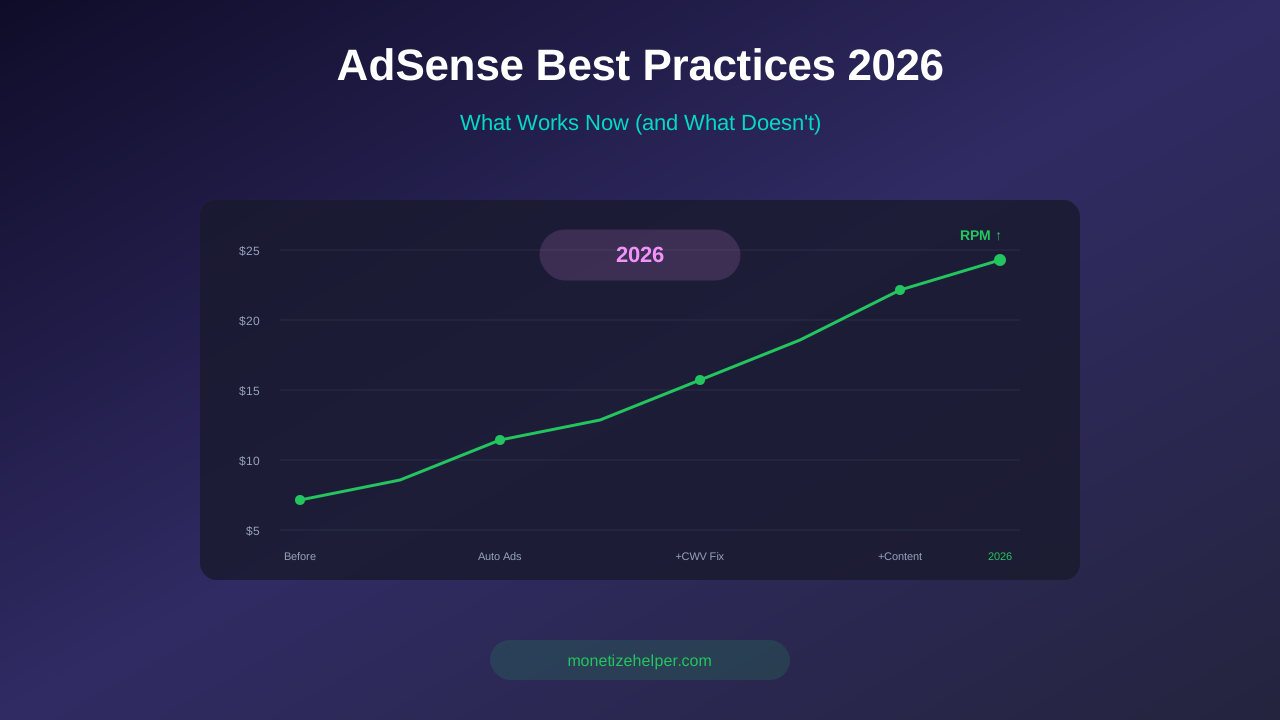
Google's Auto Ads have gotten significantly smarter. The AI now considers page layout, content type, user behavior, and device type to place ads optimally. In many cases, Auto Ads now outperform manual placements — especially on mobile.
Enhanced Privacy Controls
With third-party cookies being phased out, Google has rolled out new contextual targeting features. The Privacy Sandbox APIs (Topics, Attribution Reporting) are now the primary signals for ad targeting. This means content quality and topical relevance matter more than ever for ad revenue.
Core Web Vitals Integration
Google now factors your Core Web Vitals scores into ad delivery. Sites with poor performance scores may receive lower-quality ads or fewer ad requests. Fast, well-optimized sites earn more per impression.
Ad Placement Best Practices
Above the Fold: Still King
Ads visible without scrolling have the highest viewability rates. Place your first ad unit near the top of the page, but not before the first paragraph of content. Google wants users to see content first, then ads.
See also: AdSense Approval Checklist 2026: 15 Steps to Get Approved Fast →
In-Content Ads
Ads placed within your article content (between paragraphs) perform extremely well. Users encounter them naturally while reading. Place in-content ads every 300-500 words for the best balance of revenue and user experience.
Sticky Sidebar Ads
On desktop, a sticky sidebar ad that follows the user as they scroll can significantly boost impressions. Use CSS position: sticky with appropriate offset. Make sure it doesn't overlap content on smaller screens.
Anchor Ads (Mobile)
Google's anchor ads stick to the bottom of the mobile screen. They have high viewability and don't disrupt reading. Enable them in Auto Ads settings — they're one of the highest-performing mobile formats.
What to Avoid
- Don't stack ads. Multiple ads right next to each other lower viewability and annoy users.
- Don't hide ads below long content. If users don't scroll that far, the ads never earn.
- Don't place ads near interactive elements. Accidental clicks lead to invalid traffic warnings.
- Don't exceed 3-5 ad units per page. More ads dilute competition in the auction, lowering CPM.
Content Strategies That Boost Revenue
Target High-CPM Niches
Not all content earns equally. Advertisers pay more for some topics than others. High-CPM niches in 2026 include:
- Finance and insurance: $15-50+ CPM
- Legal services: $10-30+ CPM
- Technology and SaaS: $10-25 CPM
- Health and wellness: $8-20 CPM
- Education and online courses: $8-18 CPM
- Real estate: $8-15 CPM
You don't need to change your entire blog's focus, but writing occasional articles in higher-CPM topics can boost overall revenue.
Learn more in AdSense YouTube vs Website: Which Earns More Money in 2026? →
Write Longer, More Detailed Content
Longer articles mean more ad placements and more time on page. Articles over 2,000 words typically earn 2-3x more than 500-word posts because they accommodate more in-content ad units and have higher engagement.
Focus on Search Intent
Content that matches search intent keeps users on your page longer. Higher engagement means more ad impressions and better viewability. Write content that fully answers the user's question so they don't bounce back to search results.
Update Existing Content
Refreshing old articles can bring traffic back to pages that have lost rankings. Update statistics, add new sections, and keep information current. This is often more effective than writing entirely new articles.
Technical Optimization
Lazy Load Ads Below the Fold
Don't load all ad units at once. Lazy load ads that are below the fold, so they only request ad auctions when users scroll near them. This improves page speed and doesn't waste impressions on ads that never get viewed.
Optimize Core Web Vitals
Your performance scores directly affect ad quality. Focus on:
Learn more in Free vs Self-Hosted Blogs for AdSense: Which One Gets Approved? →
- LCP (Largest Contentful Paint): Under 2.5 seconds. Pre-allocate space for ads with CSS so they don't cause layout shifts.
- CLS (Cumulative Layout Shift): Under 0.1. Always set explicit width and height on ad containers.
- INP (Interaction to Next Paint): Under 200ms. Don't let ad scripts block user interactions.
Check our Core Web Vitals guide for detailed optimization steps.
Use Ad Size Optimization
Responsive ad units typically outperform fixed-size units. They automatically adjust to fill available space, which means better viewability and higher CPMs. Use the responsive ad code snippet that Google provides.
Auto Ads vs Manual Placement
This is one of the biggest debates in the AdSense community. Here's the truth for 2026:
When Auto Ads Win
- You have a simple blog layout
- You don't have time for manual optimization
- Your traffic is primarily mobile
- You're just starting out with AdSense
When Manual Placement Wins
- You have a complex layout with custom sections
- You want precise control over user experience
- Some pages need different ad configurations
- You've tested and found better-performing positions
The Best Approach: Hybrid
Use a hybrid approach. Place 2-3 manual ad units in positions you've tested and know perform well. Then enable Auto Ads with the "Existing ad units" setting turned on. This lets Google's AI fill additional spots while keeping your proven positions.
Common Mistakes That Cost You Money
1. Too Many Ads
More ads doesn't mean more revenue. When you have too many ad units, advertisers compete less for each slot, lowering CPMs. Additionally, heavy ad loads slow your site, which hurts both SEO and ad performance. Stick to 3-5 well-placed units.
Learn more in AdSense vs Alternatives: Which Ad Network Pays You More? →
2. Ignoring Mobile
Over 60% of web traffic is mobile. If your ads aren't optimized for mobile screens, you're leaving money on the table. Use responsive ad units, enable anchor ads, and test your site on actual phones — not just browser dev tools.
3. Not Testing
Use AdSense Experiments to A/B test different configurations. Test ad sizes, positions, and formats. What works on one blog may not work on yours. Let data guide your decisions, not assumptions.
4. Violating AdSense Policies
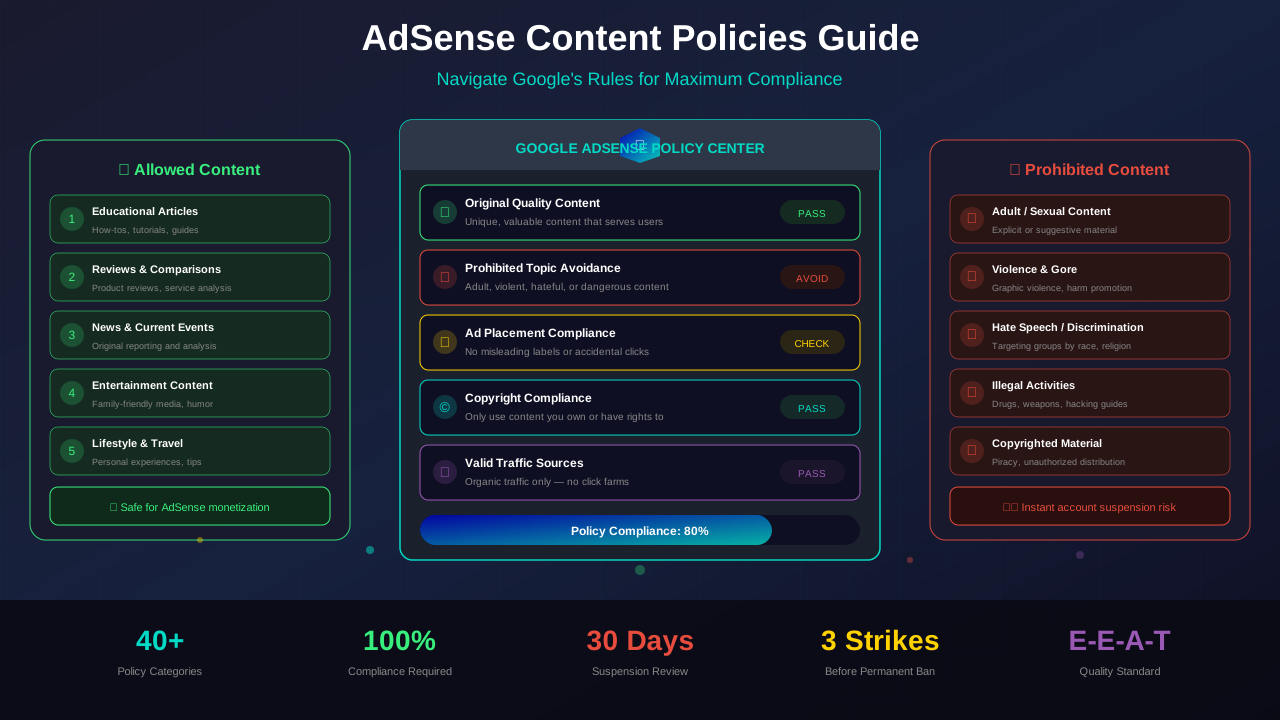
Policy violations can lead to ad serving restrictions or account termination. Common violations include:
- Clicking your own ads (even once can trigger a review)
- Placing ads on pages with thin or no content
- Using deceptive layouts that encourage accidental clicks
- Running ads on prohibited content types
Review the full AdSense content policies guide to stay compliant.
5. Not Blocking Low-Quality Ads
Some ad categories pay very little and annoy your viewers. Use the AdSense Blocking Controls to review and block categories that perform poorly on your site. Focus on allowing high-quality, relevant ads.
See also: Multiple AdSense Accounts: Rules, Risks & What Google Allows →
Frequently Asked Questions
How many ads should I put on a page?
3-5 ad units is the sweet spot for most blogs. This gives you good coverage without overwhelming users or diluting ad competition. On longer articles (2,000+ words), you can go up to 5-6 units with in-content placement.
Should I use Auto Ads or manual placement?
Use a hybrid approach. Place 2-3 manual units in proven positions, then let Auto Ads find additional spots. Test for 2-4 weeks and compare total revenue per 1,000 pageviews.
Why did my RPM drop suddenly?
Common causes: seasonal advertiser budget changes, a Core Web Vitals drop, policy violations, or traffic quality issues. Check your AdSense account for any notifications, review Search Console for performance changes, and compare your traffic sources.
Is AdSense still worth it in 2026?
Yes, for sites with under 50,000 monthly pageviews, AdSense is often the best option. It has no minimum traffic requirement and works with any niche. For larger sites, consider premium networks like Mediavine or Raptive for potentially higher RPMs.
How do I increase my AdSense RPM?
Focus on: writing about high-CPM topics, improving ad viewability, optimizing site speed, targeting high-value geographies (US, UK, Canada, Australia), and using responsive ad units. Small improvements in each area compound to significant gains.
Will AI content affect my AdSense earnings?
Google cares about content quality, not how it was created. AI-generated content that's thin, generic, or unhelpful may hurt your rankings and ad revenue. But well-edited, original, and valuable content — regardless of how it was drafted — performs well.
Conclusion
AdSense in 2026 rewards publishers who focus on the fundamentals: quality content, fast sites, viewable ads, and great user experience. The shift to CPM payments makes viewability the most important metric, while privacy changes make topical relevance more valuable than tracking.
Start with the quick wins checklist above. Enable responsive ads, set proper container sizes, and turn on anchor ads for mobile. Then work on the bigger optimizations: Core Web Vitals, content updates, and A/B testing.
The publishers earning the most in 2026 aren't using tricks or hacks. They're building great sites with useful content and letting Google's systems work optimally. Focus on building a site you'd want to visit, and the revenue will follow.